Thirty Years Since Docklands Horror: A Survivor's Haunting Account
Three decades have passed since a massive 3,000lb IRA bomb tore through London's Docklands, claiming two lives and leaving more than 100 people injured. Mirror journalist Ros Wynne-Jones, who was present during the catastrophic event, shares her vivid recollections of that terrifying night that forever changed the landscape and lives in London's financial district.
The Moment Everything Shook
At precisely one minute past seven on Friday, February 9, 1996, the entire 235-meter Canary Wharf tower experienced what felt like an earthquake. The enormous IRA bomb detonated at South Quay, just a stone's throw from One Canada Square, sending shockwaves through the surrounding area. Inside the buildings, a deafening bang echoed as structures juddered and swayed violently.
"Books and papers slid off desks, computer equipment crashed to the floor, and people stumbled or fell," Wynne-Jones recalls. "The building itself seemed to groan under the impact." She was working two floors below the Daily Mirror offices at the Independent newspaper, in a tower that also housed the Telegraph and Live TV at that time.

Chaos and Confusion in the Aftermath
Immediately following the explosion, communication systems collapsed. Phone lines went dead in the busy newsroom, mobile networks became jammed, and elevators stopped functioning. As quiet panic spread through the 20th floor, people gathered at the stairwells in the building's core.
Television screens continued broadcasting rolling news, with some stations incorrectly reporting that the tower's base had been struck and was ablaze. In 1996, with the World Trade Center still standing in New York, such destruction remained unthinkable—yet everyone had seen disaster films like Towering Inferno, adding to the surreal atmosphere of fear.
Emerging Into a Nightmare Scene
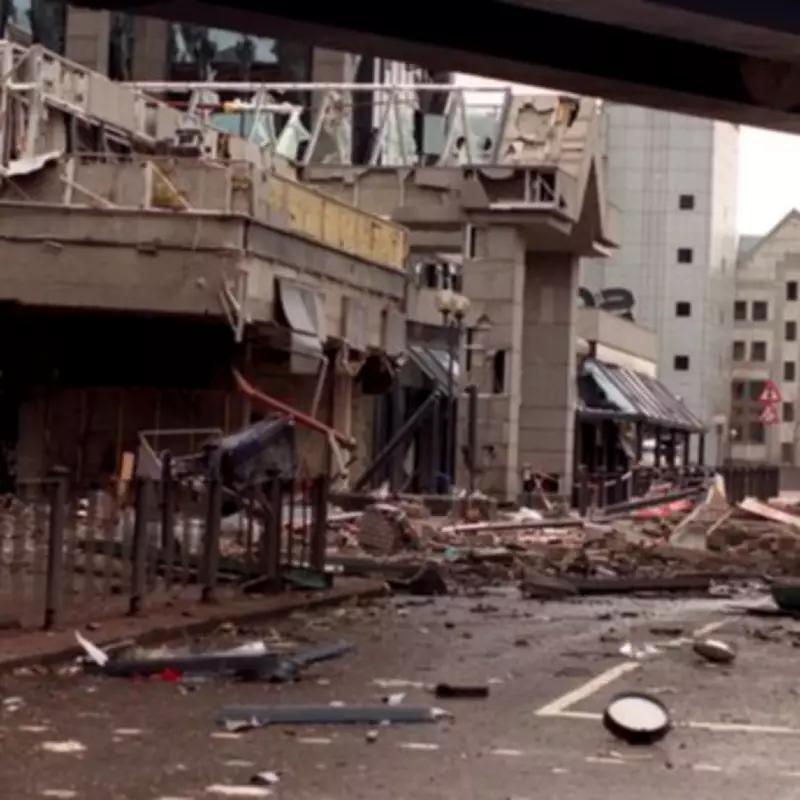
As journalists rushed down into the black night, they encountered a landscape transformed by violence. Broken glass covered everything like snow, while ambulances and fire engines raced past in blurs of blue light. The search for payphones to contact worried families quickly gave way to the realization that others hadn't been so fortunate.
Later reports would confirm two fatalities and more than 100 injuries, with 39 people requiring hospital treatment. The bomb—constructed from Libyan Semtex, garden fertilizer, and icing sugar—had created a crater measuring 32 feet across and 10 feet deep.
The Human Cost of Terrorism
Fire raged across the water at South Quay, with damage visible throughout Canary Wharf. Concrete building cores stood exposed amidst an industrial wasteland of twisted metal, loose wires, and awkwardly perched desk chairs. But beyond the physical destruction lay the personal tragedies.
Many journalists regularly parked at South Quay and walked over the bridge to Canary Wharf each morning. The car park that any of them might have been returning to at that fateful minute past seven on a Friday evening had been obliterated.
The morning ritual for numerous reporters involved collecting newspapers from the 'Newstop 2000' kiosk and chatting with friendly newsagents Inam Bashir or John Jeffries (known as JJ). When the IRA attacked Docklands—marking the end of their ceasefire—the action was likely styled as an assault on capitalism and John Major's government. Yet, as terrorism invariably does, it instead claimed the lives of two cheerful friends beloved by the journalists who frequented their newsstand.
"The IRA may have intended to strike at symbols of power," Wynne-Jones reflects, "but they ultimately took Inam and John—ordinary people going about their daily lives." Three decades later, the sound of that explosion and the memory of those lost continue to resonate with those who witnessed the Docklands bombing firsthand.