White House Altered Image Raises Legal Questions but Unlikely to Derail Case
Legal authorities have indicated that the White House's decision to publish a digitally manipulated photograph of a woman arrested in Minneapolis will probably be brought up during court proceedings. However, they suggest it is improbable to completely derail the criminal case against her.
Doctored Image Shows Activist with Darkened Skin and Tears
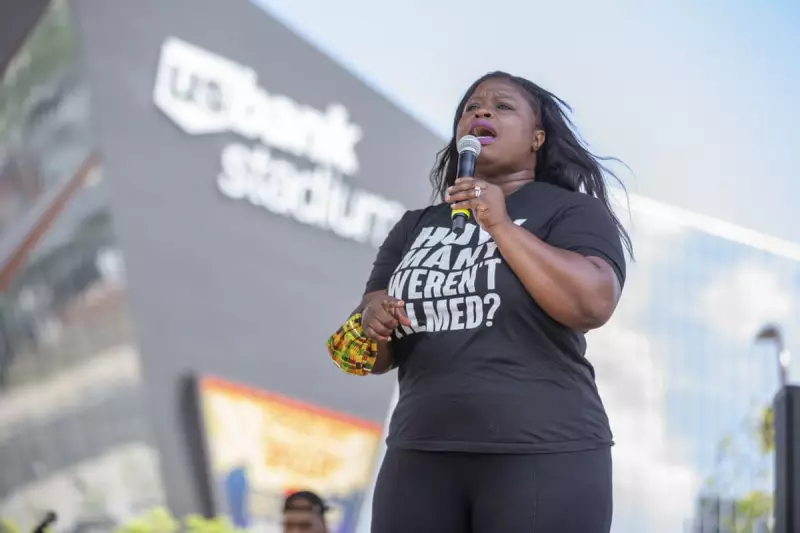
The woman featured in the controversial image is Nekima Levy Armstrong, one of three individuals apprehended on Thursday in relation to a disruptive protest at a church service. Approximately thirty minutes after Homeland Security Secretary Kristi Noem shared a picture of Armstrong's arrest, the White House posted an altered version. In this manipulated photograph, Armstrong's skin appears to have been darkened, and artificial tears are visible streaming down her face.
It is noteworthy that Secretary Noem posted images of two other defendants arrested during the same protest, but only Armstrong's photograph was subjected to digital alteration by the White House.

Legal Experts Weigh In on Potential Courtroom Impact
In the United States, criminal defendants are presumed innocent until proven guilty. Consequently, prosecutors are expected to avoid making statements that could prejudice a jury or create bias against a defendant.
Jordan Kushner, the attorney representing Armstrong, expressed strong criticism during a CNN interview on Thursday evening. "This is supposed to be a legal process, not a political circus, which they've made it," Kushner stated. "To do altered video, let's not sugar coat this – this is the hallmark of a fascist regime, where they actually alter reality, in this case literally, in order to meet their narrative."
The White House has not contested that the image was digitally altered. When questioned about the photograph on Thursday, White House officials directed inquiries to a social media post by Kaelan Dorr, the White House deputy director of communications. The post declared, "YET AGAIN to the people who feel the need to reflexively defend perpetrators of heinous crimes in our country I share with you this message: Enforcement of the law will continue. The memes will continue. Thank you for your attention to this matter."
Potential Defense Strategies and Prosecutorial Challenges
This altered image could potentially provide Armstrong's defense team with opportunities to challenge the government's credibility regarding video and photographic evidence. Additionally, they might argue that the case has been tainted by prejudice from the outset.
Barbara McQuade, former US attorney for the eastern district of Michigan, explained one potential legal angle. "One of the arguments against perp walks, which is prohibited under DOJ policy, is that it could prejudice the potential jury pool," McQuade noted. "Most often such prejudice can be overcome during jury selection by choosing jurors who have not seen it, but it certainly creates an issue that prosecutors will have to litigate."
Nevertheless, several legal experts believe the White House's decision to post the image might not be sufficient on its own to doom the prosecution's case.
Samuel Buell, a former federal prosecutor now teaching law at Duke University, offered his perspective. "This might have been done by non-attorneys in the government without prosecutors' knowledge and they would not be subject of course to an attorney disciplinary process, which is how these rules are enforced," Buell observed. "I have no doubt defense counsel will raise this issue if there is an opportunity to do so."

Ken White, another former federal prosecutor now working as a defense lawyer in Los Angeles, shared a similar assessment. "It's very sleazy, and a good example of the juvenile and petulant ethos of the sort of people who work for the Trump administration," White commented. "Though contemptible it falls very far short of the sort of misconduct that federal courts require to find 'outrageous government misconduct' that might trigger a remedy like dismissal. It's also significantly short of the kind of evidence that could support a motion to dismiss for vindictive prosecution."
Broader Context and Racial Dimensions
White did suggest there might be underlying motivations for posting the altered photograph. "The reason this prosecution is so appealing to the administration is that the parishioners were white and the defendants are Black," he proposed. "The opportunity to degrade a Black woman thrills the kind of people who work in the Trump administration and appeals to the kind of people who support the Trump administration."
The incident has sparked broader discussions about:
- The appropriate boundaries between political messaging and ongoing legal proceedings
- The ethical responsibilities of government communications regarding defendants
- The potential racial dimensions of how different defendants are portrayed publicly
- The evolving challenges of digital evidence manipulation in legal contexts
As the case progresses through the legal system, observers will be watching closely to see how the court addresses these complex issues surrounding government conduct, defendant rights, and the integrity of photographic evidence in criminal proceedings.