Archaeologists Battle Tides to Save Historic 17th-Century Shipwreck
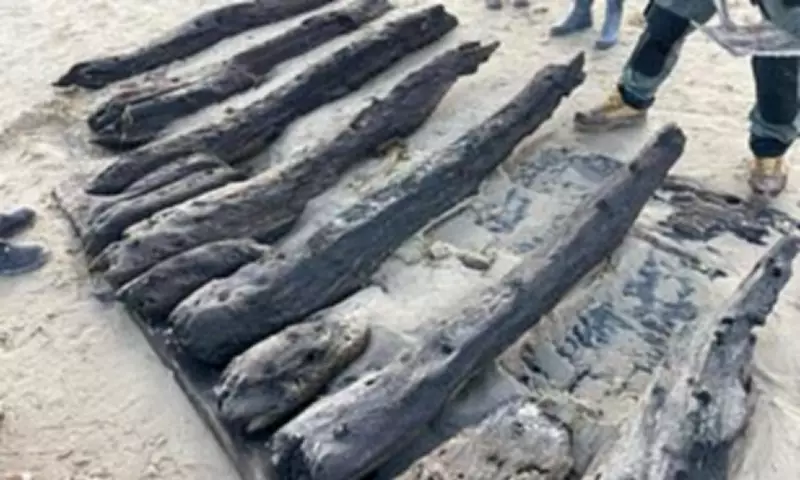
Marine archaeologists have engaged in a dramatic race against time and tides to rescue a significant 17th-century shipwreck from a popular nudist beach in Dorset. The remarkable remains, exposed by severe winter storms, are believed to form part of the historically important Swash Channel Wreck, representing a Dutch merchant vessel named The Fame of Hoorn that met its fate while approaching Poole Harbour in 1631.
Storm Exposure and Urgent Excavation
The ancient timbers were revealed at Studland Beach in late January when Storm Chandra's powerful waves washed away the protective sand layers that had concealed them for nearly four centuries. However, with further stormy weather forecasted that threatened to destroy the fragile remains permanently, scientists were compelled to launch an immediate emergency excavation operation.
On Thursday, marine archaeologists from Bournemouth University collaborated with the National Trust's youth group, comprising local school students, to carefully remove the wreck from its sandy grave. The team began their work as the tide retreated at 10am, meticulously removing tonnes of sand to enable the careful lifting and dismantling of the wooden structure before the returning tide could reclaim it.

The Shipwreck's Dimensions and Significance
The recovered section measures approximately six metres (20 feet) in length and two metres (seven feet) in width, with experts identifying it as likely originating from a midship hull section. Tom Cousins, the Bournemouth University marine archaeologist who led the timber survey, explained: 'During our 2013 excavation of the Swash Channel wreck, we noted missing pieces of the ship. We strongly believe this newly revealed section at Studland represents part of that same vessel's hull.'
Archaeologists estimate that The Fame of Hoorn would have originally measured an impressive 40 metres (130 feet) in length, 10 metres (33 feet) in width, and stood 15 metres (50 feet) high. The vessel was constructed in the Netherlands in 1628 but tragically sank just three years later when a violent storm drove it onto the treacherous Hook Sands sandbank.
Historical Context and Armament
Historical records indicate that the ship's crew of 45 abandoned the vessel safely and reached land, after which The Fame of Hoorn was likely stripped by looters and salvagers. The merchant ship was notably armed with at least 26 cartridge-mounted guns, which would have provided defense against pirates during its Caribbean salt transport missions or enabled it to serve as an impromptu warship when necessary.
The Swash Channel Wreck was initially discovered by divers during the 1990s, with subsequent excavations successfully recovering a substantial 40-metre (130-foot) portion from the sea floor. These earlier discoveries included a magnificent 8.4-metre (28-foot) rudder featuring an enormous carved head of a moustachioed man. At the time, this represented the largest marine excavation since the raising of the Mary Rose wreck in 1982, though significant sections of the ship and approximately 20 of its guns remained unaccounted for.
Structural Details and Preservation
The recently excavated section consists of 15 wooden frames connected with wooden treenails—large pegs traditionally used to join wooden components—to five outer hull planks. While the frames show considerable deterioration, the outer hull planks remain remarkably well preserved. Archaeologists note there would originally have been an additional inner layer of planking that appears to have been lost over time.
Sarah Coggins, coast and marine advisor for the National Trust, provided geographical context: 'In 1630, this section of beach would have been open sea. Over the past 400 years, sand deposition has created the dunes, wetlands, and shoreline visible at Studland today. This explains why this historic wreck was buried in sand rather than resting on the seabed.'

Scientific Verification and Historical Importance
The definitive test will involve dendrochronology analysis to determine when the trees used for the planks were felled. If the age and origin match those of the confirmed Swash Channel Wreck pieces, this will provide compelling evidence that they belong to the same vessel. Hefin Meara, maritime archaeologist from Historic England, emphasized the significance: 'The Swash Channel wreck is one of only 57 shipwrecks around England's coast designated under the Protection of Wrecks Act 1973. Firmly dated remains of vessels predating 1700 are exceptionally rare. While we cannot yet confirm these fragments originate from that wreck site, it represents an intriguing possibility.'
This urgent rescue operation highlights the ongoing importance of preserving Britain's maritime heritage against natural elements, with archaeologists successfully safeguarding these historically valuable remains for future study and public appreciation.