Newborn Fights for Life in Beirut Tent Camp Amid Escalating Conflict
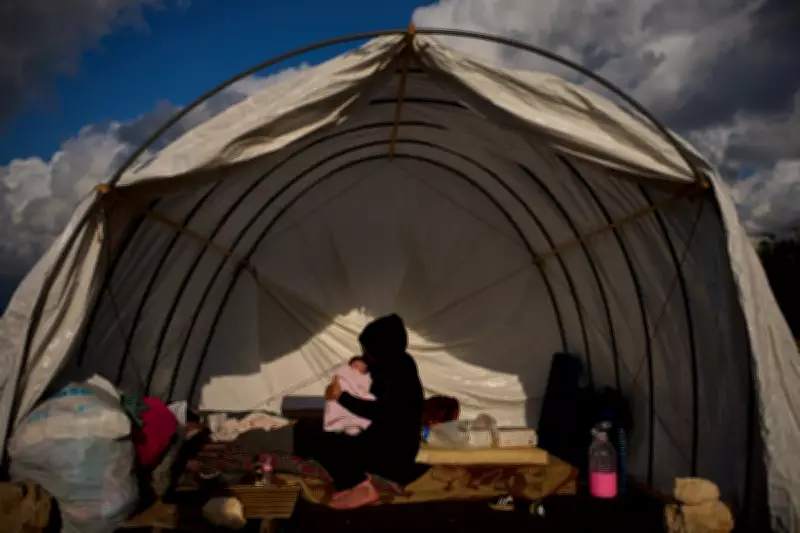
In the makeshift displacement camps along Beirut's waterfront, a 16-day-old infant named Shiman experiences a world defined by deprivation and danger. Born into mud and sheltered only by a flimsy tent, her existence is marked by the pervasive stench of mildewed blankets, the constant irritation of swarming insects, and the terrifying screams of Israeli warplanes striking the Lebanese capital.
Family Forced to Flee with Nothing
Shiman's mother, 34-year-old Haifa Kenjo, was nine months pregnant when Israeli attacks targeted Beirut's southern suburbs of Dahiyeh. With explosions shaking their home, Kenjo, her husband, and their 2-year-old son Khalid fled immediately in sandals and pajamas, leaving behind all possessions—clothes, cash, and essentials—in the chaos.
They found precarious refuge in a donated tent near downtown Beirut, securing the tarp with rocks against winds that threatened to tear it from the ground. This tent has become their only shelter in a crisis that has uprooted over 1 million people in Lebanon due to the latest war between Israel and the Iran-backed Hezbollah group.

Critical Maternal Care Crisis for Displaced Women
The United Nations' sexual and reproductive health agency issued a stark warning this week, revealing that among those displaced, 13,500 are pregnant women, with more than 1,500 expected to deliver within the next month. Many face severe challenges accessing adequate maternal care, compounding the humanitarian emergency.
Kenjo, originally from Syria but having spent nearly half her life in Beirut after marrying a Lebanese man, had envisioned giving birth at the city's main public hospital, where she delivered Khalid during peacetime. However, as a non-Lebanese citizen, she must pay for access to public hospitals, unlike Lebanese mothers who receive free childbirth services.
Birth in Desperate Conditions Without Medical Support
When Kenjo went into labor on March 28, her water breaking prompted a frantic call for an ambulance. Her husband managed to scrape together the $40 admission fee, but the $500 required for Shiman's delivery at the hospital was buried in the ruins of their home, destroyed just a week earlier in an Israeli airstrike.
Forced to return to the tent, they summoned a midwife named Umm Ali and prayed for a safe delivery. Umm Ali did her utmost under dire circumstances, but the tent was filthy, rain seeped inside, and they could only wash tiny Shiman with bottled water. Kenjo, unable to produce breast milk, faces the agonizing reality that infant formula costs more than her husband earns in a day installing water tanks.
Infant Suffers from Hunger and Harsh Environment
Volunteers distributing food in the displacement camp provided just enough formula to last a few days, leaving Shiman's future nourishment uncertain. The baby does not cry like a typical infant; instead, she coughs persistently, her skin cold, clammy, and pockmarked with insect bites from the unsanitary conditions.
"She is so precious," Kenjo said, gently stroking her daughter. "But for her we have nothing. We have less than zero." This poignant statement underscores the profound desperation faced by families caught in the crossfire of conflict, where even the most basic needs for a newborn's survival remain unmet.
The ongoing war has not only displaced vast populations but has created a generation of children like Shiman, whose earliest memories are forged in adversity, highlighting urgent calls for humanitarian aid and peaceful resolution to prevent further suffering.