Beirut Overwhelmed by Unprecedented Wave of War Displaced
Beirut is bursting under a massive influx of displaced people, as Israel's attacks and evacuation orders drive families from southern and eastern Lebanon into the capital. This surge is dramatically reshaping the city's geography and daily life, with over 1 million people fleeing conflict zones since hostilities escalated a month ago.
Unprecedented Scale of Displacement
Experts describe the current displacement as unprecedented in scale and intensity. Israeli evacuation orders, covering an estimated 15% of Lebanon, have emptied villages and pushed almost the entire population of Beirut's southern suburbs into the capital. Dalal Harb, spokesperson for the UN refugee agency in Lebanon, notes that the official figure of 1 million displaced is likely an undercount, missing those who haven't registered formally.
The displacement represents about 20% of Lebanon's total population, creating a rapid demographic shift that is straining Beirut's infrastructure and social fabric. Urban researcher Mona Harb observes that the visible presence of vulnerable people in open spaces is a relatively new phenomenon, forcing residents to confront the war's misery directly in their daily routines.

Transformation of Urban Spaces
The massive influx has physically transformed Beirut's landscape:
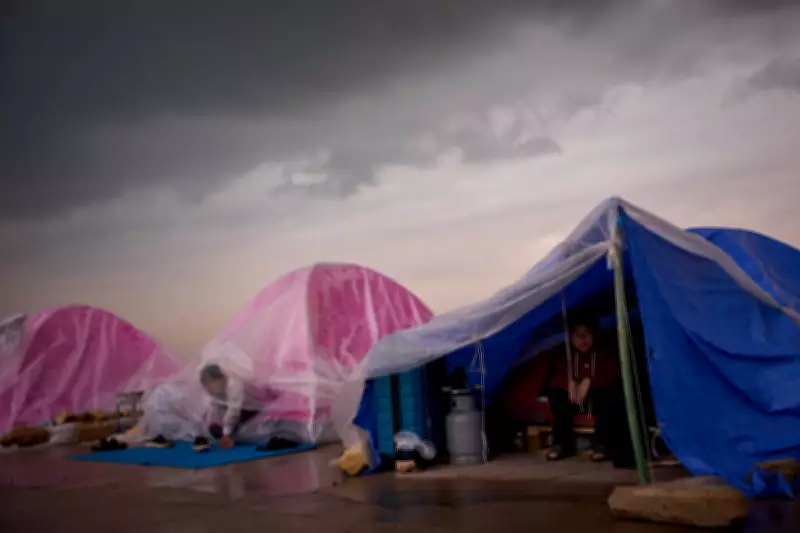
- A huge tent encampment has sprouted between a yacht club and nightlife venue on the waterfront
- Families are squatting in storefronts, living in mosques, and sleeping in their cars
- Tents made from tarps line the coastal corniche and surround Horsh Beirut park
- Double- and triple-parked convoys clog thoroughfares
Noor Hussein, who fled Israeli airstrikes on Dahiyeh in early March, expressed the displaced community's distress: "We feel this tension, that we're not wanted here. We have nothing here and nowhere to go." Her family watches as wealthy joggers navigate through tents and soiled mattresses, highlighting the stark contrasts within the city.
Government and Community Response
The Lebanese government has converted hundreds of public schools into shelters and pitched tents beneath the bleachers of the main sports stadium. Charities have repurposed abandoned buildings, including a slaughterhouse destroyed in the 2020 port explosion, now housing nearly 1,000 displaced people.
Despite these efforts, many families struggle to find space in official shelters. Hawraa Balha, 42, explained why her family of four prefers to squeeze into their small car rather than travel north to better accommodations: "The further away we go, the more we'll lose hope about finding our way back. We don't want to move again."
Sectarian Tensions and Humanitarian Concerns
The movement of hundreds of thousands of Shiites has inflamed sensitivities about Lebanon's fragile sectarian balance. Maha Yahya of the Carnegie Middle East Center warns that this displacement "may cause a significant transformation in the demographic balance within the country."
Living conditions in makeshift camps are deteriorating rapidly:
- Children are developing skin rashes from poor sanitation
- Recent heavy rainfall flooded tents and left soggy belongings
- Fights have broken out during donation distributions
- Families lack basic facilities, with some going nearly a month without proper bathrooms
Lina Shamis, 51, who fled Dahiyeh with her three daughters and grandchildren, lamented: "We're not used to living like this — we had a house, we had normal lives. Now the kids are out of school and hungry, and our neighborhood is gone. All I feel is despair."
Worsening Crisis Ahead
With Israel threatening to advance further into Lebanon, potentially reaching the Litani River 30 kilometers north of the border, the situation is expected to deteriorate. UN spokesperson Dalal Harb warns: "The needs will continue to increase. It's an imminent humanitarian catastrophe."

The displaced maintain hope of returning home, making furtive dashes back to their neighborhoods despite the threat of bombardment to retrieve belongings or check on their properties. This determination to remain near their original communities, combined with the unprecedented scale of displacement, creates a complex humanitarian challenge that continues to reshape Beirut's identity and future.