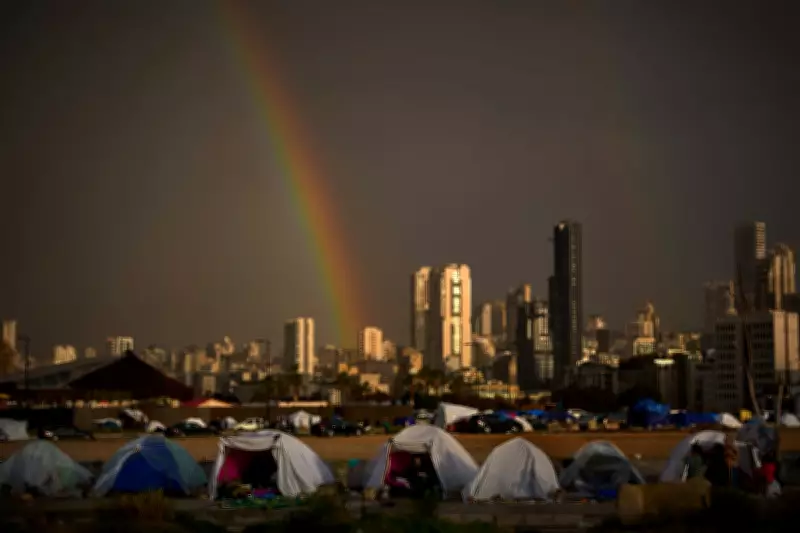
Hundreds of thousands of Lebanese civilians, uprooted by the rapidly escalating war between Israel and Hezbollah, have flooded into Beirut, seeking safety and shelter wherever they can find space. The capital city has been transformed into a vast refuge, with displaced families from southern Lebanon and the southern suburbs of Beirut, known as Dahiyeh—a key Hezbollah operational and support base—now occupying every available corner.
Makeshift Shelters Across the City
Public spaces in Beirut have been hastily converted into temporary living quarters. Along the iconic Beirut corniche, rows of makeshift tents have sprung up, housing families who fled with little more than the clothes on their backs. Classrooms in schools have been turned into crowded shelters, while a major sports stadium now serves as a massive dormitory. Even hospitals, already overwhelmed with casualties, are accommodating displaced persons in corridors and unused wards.
Strain on Resources and Infrastructure
The sudden and massive influx of displaced people has placed immense strain on Beirut's limited resources. Essential services such as water, electricity, and sanitation are struggling to cope with the increased demand. Local authorities and aid organizations are scrambling to provide food, medical care, and basic necessities, but the scale of the crisis is overwhelming.

Entire communities have been forcibly uprooted, driven from their homes by relentless airstrikes and official evacuation orders that have emptied villages and neighborhoods. The displacement is not just a matter of logistics; it represents a profound humanitarian crisis, with families facing uncertainty, trauma, and a lack of long-term solutions.
Escalating Conflict and Its Human Cost
The war between Israel and Hezbollah has intensified dramatically, leading to widespread destruction in southern Lebanon and Beirut's southern suburbs. The conflict has forced civilians to make impossible choices, often leaving behind everything they own in search of safety. The photos curated by AP photo editors vividly capture the desperation and resilience of those affected, highlighting the human cost of the escalating hostilities.
As the war continues with no immediate end in sight, the situation in Beirut remains precarious. The city, already grappling with economic challenges and political instability, now bears the additional burden of hosting a displaced population with nowhere else to go. The international community is being called upon to increase humanitarian aid and support efforts to find a peaceful resolution to the conflict.