Rare Blood Moon Total Lunar Eclipse to Illuminate Skies Across North America and Australia
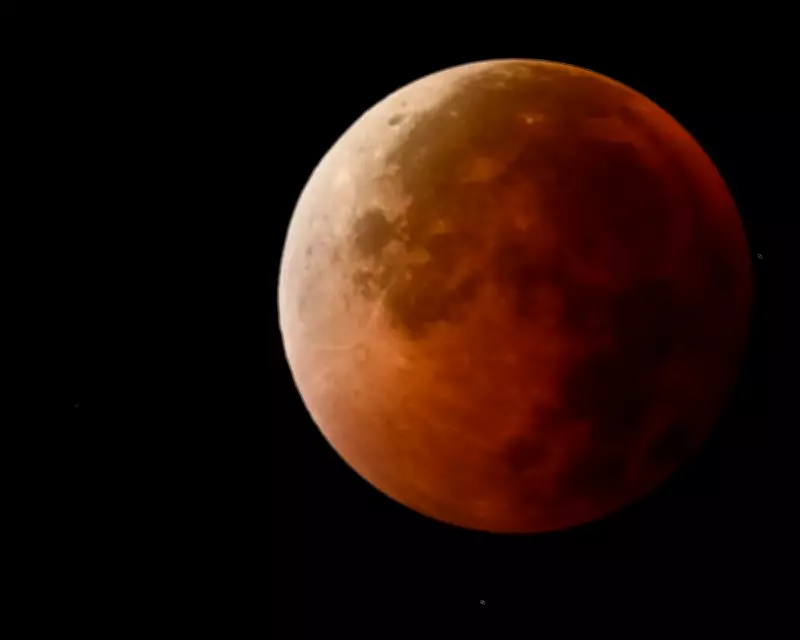
A rare total lunar eclipse, famously dubbed a 'blood moon,' is set to grace the night skies tonight, offering a spectacular celestial show for observers in Australia, North America, and various other parts of the world. This event, occurring on March 3, will transform the full moon into a deep, coppery red hue, marking the last opportunity to witness such a phenomenon for nearly three years.
What Is a Blood Moon?
A lunar eclipse happens when the Earth aligns directly between the sun and the moon, casting a shadow that blocks direct sunlight. However, during some eclipses, indirect sunlight filters through Earth's atmosphere, painting the moon in vibrant sunset colors. Dr. Rebecca Allen, an astrophysicist at Swinburne University, explains that this process results in the moon appearing as a 'deep and coppery red.' Similarly, Dr. Brad Tucker from the Australian National University notes that the red color arises from sunlight skimming the atmosphere, much like the red hues seen at sunrise or sunset.
For optimal viewing, experts recommend finding a dark location away from city lights and allowing 10 to 15 minutes for your eyes to adjust. Additionally, Jupiter will be visible high in the sky, creating a stunning pairing with the eclipsed moon.

Viewing Times for the Blood Moon
The eclipse will be visible at different times depending on your location. Here are the best viewing times for key regions:
- Australia: Sydney, Canberra, Melbourne, Hobart – starts at 10:04 PM, ends at 11:02 PM; Brisbane – starts at 9:04 PM, ends at 10:02 PM; Adelaide – starts at 9:34 PM, ends at 10:32 PM; Darwin – starts at 8:34 PM, ends at 9:32 PM; Perth – starts at 7:04 PM, ends at 8:02 PM.
- New Zealand: The eclipse will reach its deepest point shortly after midnight on Tuesday, with visibility across the entire country. Professor Richard Easther from the University of Auckland encourages everyone to look up and enjoy the night sky.
- North America: New York and Washington DC – starts at 3:44 AM, ends around 6:30 AM; Detroit – starts at 3:44 AM, ends at 7:06 AM; New Orleans and Chicago – starts at 2:44 AM, ends around 6:24 AM; San Francisco and Los Angeles – starts at 12:44 AM, ends around 6:23 AM.
- Other International Cities: Tokyo – starts at 5:44 PM, ends at 11:23 PM; Beijing – starts at 6:00 PM, ends at 10:23 PM; Manila – starts at 5:57 PM, ends at 10:23 PM; Jakarta – starts at 6:06 PM, ends at 9:23 PM.
Future Lunar Eclipses
Total lunar eclipses typically occur every 18 months to three years. The next total eclipse is scheduled for New Year's Eve 2028, visible in Europe, Asia, Australia, and Africa, but not in the Americas. North America will have to wait until June 2029 for its next view. A partial eclipse is due on August 28, 2026, best seen from the Americas and Africa, though it will be largely invisible from Australia and New Zealand.
Cultural and Historical Significance
In modern times, a blood moon is celebrated as a breathtaking astronomical event, reminding us of our dynamic solar system. However, historically, it held darker connotations. Ancient cultures, such as the Inca, viewed the red moon as a jaguar attacking it, while Mesopotamians saw it as an assault on their king. Native American Luiseño tribes performed healing rituals, believing the moon was wounded. More recently, the 'blood moon prophecy' from a 2013 book by Christian minister John Hagee sparked apocalyptic superstitions.
Additionally, the March full moon is traditionally called the 'worm moon' in the northern hemisphere, symbolizing the return of life as soil warms up.