Sacred Register of Bounty Mutineers' Descendants Returns to South Pacific After Centuries
A handwritten volume that chronicles the lives of descendants from one of naval history's most infamous events—the mutiny on HMS Bounty—is finally making its way back to the South Pacific. The Pitcairn Register, which meticulously records births, marriages, and deaths within the community established by mutineers and the Tahitian women they enslaved, has been housed at London's National Maritime Museum for decades. Now, it will be displayed on Norfolk Island, where over a quarter of residents trace their ancestry to these turbulent origins.
The Journey of the Pitcairn Register
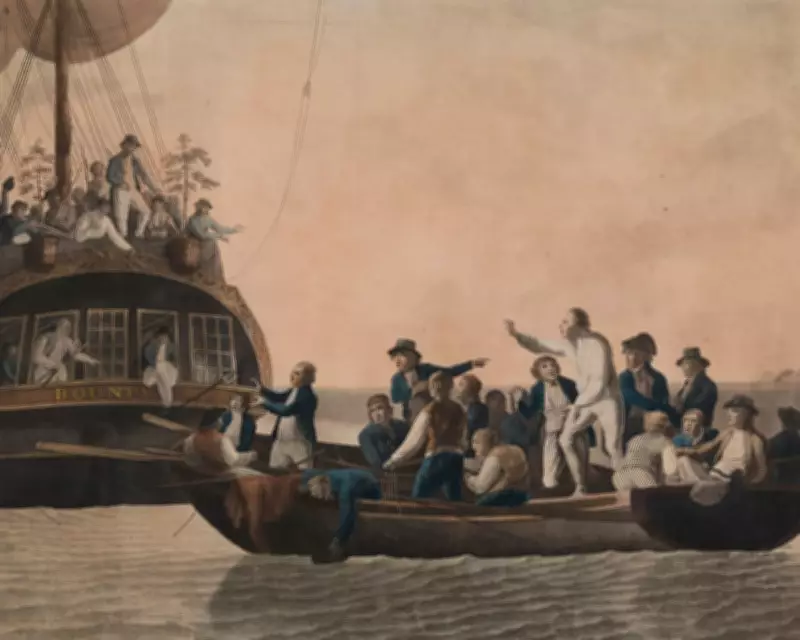
After the mutiny in 1789, nine sailors seized control of HMS Bounty, kidnapping Polynesian women from Tahiti and forcing six Polynesian men into slavery. They settled on uninhabited Pitcairn Island in 1790 to evade the Royal Navy. By the time visitor George Hunn Nobbs arrived nearly 40 years later, he found a devout Christian community formed by the mutineers' offspring. English shipwright John Buffett had begun documenting their vital events in the register, a task Nobbs later continued.
In 1854, the register suffered water damage, leading Nobbs to gift it to an acquaintance in England, describing it as a "dilapidated" manuscript that might "amuse" over "after-dinner toast and water." It eventually found its way to the National Maritime Museum. Today, the museum is lending the register to the Norfolk Island Museum Trust for at least three years, marking its first display in the region where its subjects' legacy lives on.

Uncovering the Women's Narrative
Dr. Pauline Reynolds, chair of the Norfolk Island Museum Trust and a descendant of six mutineers and their Polynesian spouses, emphasizes the register's significance in highlighting the often-overlooked role of women. "Historically, there's been quite a male narrative about the Bounty," she notes. "But the Pitcairn Register tells the story of us, the women, as well." The Indigenous women's skills in cloth-making, crop cultivation, and herbal medicine were crucial for the community's survival.
The register reveals a harrowing tale of resilience and conflict. The mutineers treated the educated, landowning Tahitian men "like slaves," leading to violence that, by 1794, resulted in the deaths of all six Polynesian men and five mutineers. Amidst this turmoil, mothers attempted to protect their children, with records indicating the women once built a raft to escape, though it ultimately failed. By 1808, only one mutineer remained alive, alongside 10 Tahitian women and the first generation of island-born children.
Community Efforts and Emotional Homecoming
Descendants on Norfolk Island, where more than 25% of the 2,188 inhabitants share ancestry with the mutineers, formally requested the register's return and crowdfunded approximately A$26,000 (£13,700) to bring it "home" for the annual Bounty Day celebrations on June 8. Reynolds describes the register as "sacred" and "a foundational document of the Pitcairn and Norfolk Island people," adding that its arrival will be "very emotional" for the community.
Helen Mears, head of curatorship at the National Maritime Museum, praises the register for showcasing the "extraordinarily resilient" and resourceful nature of the Tahitian women, enriching the narrative beyond the traditional "male, anglocentric lens" of the mutiny. She notes that working with Reynolds and other descendants has been inspiring, fostering an ongoing collaboration that deepens understanding of this maritime history's legacy.
Reynolds expresses gratitude for the museum's support, stating, "There's a lot of places in the world that will not work on these things, so to get the full support of the National Maritime Museum has been phenomenal." The register's return not only honors the past but also reaffirms the enduring identity of a community shaped by survival and strength.