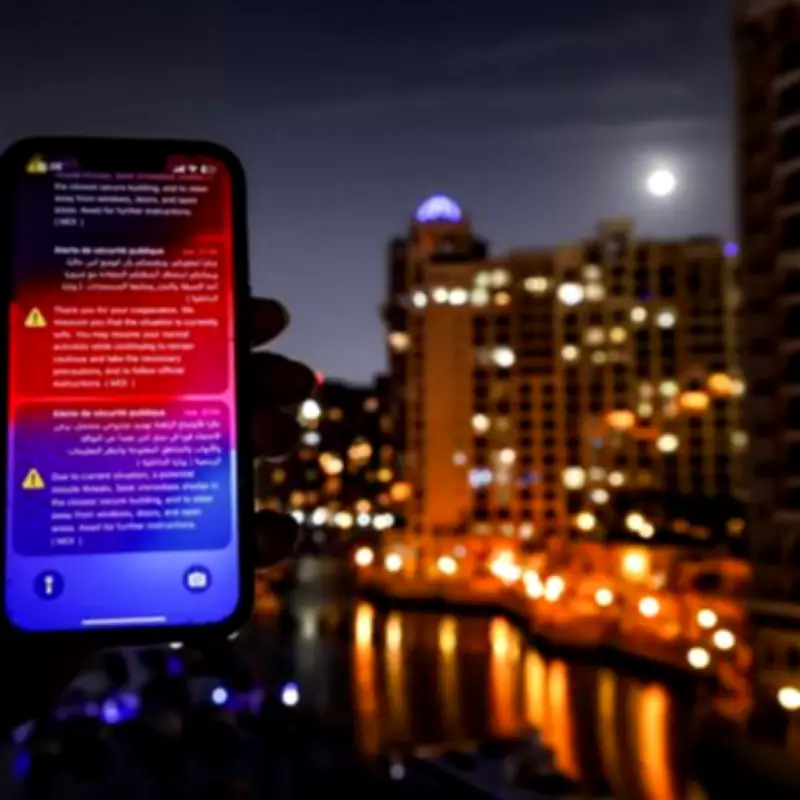
Brits Fleeing Dubai Expose Propaganda War Hiding Reality of Iranian Missile Attacks
British nationals who have fled Dubai are warning of a sinister propaganda campaign by the state, designed to conceal the harsh reality of the ongoing conflict with Iran. According to their accounts, official announcements about Iranian missile strikes "do not match reality," with strict rules imposed on tourists and social media influencers to prevent any footage of rocket and drone attacks from being shared publicly.
Strict Censorship and Human Rights Concerns
Human rights groups have raised alarms that the rule of law does not operate effectively in the United Arab Emirates. Under the country's cyber crime laws, individuals charged with offences face no protection and convictions are almost guaranteed. Foreign nationals risk deportation or detention, and even images of the advanced defence systems protecting Dubai's airspace are banned from circulation.
Ben Keith, an international human rights barrister who has represented many arrested in Dubai, explained the motivation behind these measures. "They want to show that the UAE is safe for foreign tourists and workers," he said. "They do not want to show any images of the missiles getting through. They will do anything to protect the image of Dubai."

Impact on Tourism and Economy
Tourism is a critical sector for the Gulf state, generating approximately $30 billion annually, especially as it lacks the substantial oil reserves of neighbouring countries. The conflict has led tens of thousands of workers and tourists to flee, with British Airways cancelling flights to the region. The Dubai Government stands accused of attempting to cover up the war's impact to safeguard this revenue.
Despite UAE defence systems intercepting over 90 percent of 1,700 Iranian projectiles, significant targets were hit, including military installations and the Fairmont Hotel on Dubai's iconic tree-shaped island. Dubai International Airport, one of the world's busiest aviation hubs, was forced to close temporarily.
Personal Accounts of Escape and Censorship
One British escapee, who fled with his family to Oman, described the disparity between official accounts and reality. "We watched the rockets in the skies and then saw the official accounts from the Government. They were simply not right and did not match reality. You realised it was part of the propaganda war," he told the Mirror.
In a notable incident, a 60-year-old Londoner was among 21 individuals of various nationalities arrested for filming missiles in the sky. Campaign group 'Detained in Dubai' is assisting those affected, highlighting the severe penalties for causing "reputational harm" to Dubai, which can include fines up to £200,000 and prison sentences ranging from a decade to life.
Broader Regional and Technological Impacts
The crisis extends beyond Dubai, affecting all Gulf states, including Qatar and Saudi Arabia. Attacks on two data centres briefly disrupted digital payments for residents, while British financial giant Standard Chartered evacuated its staff from the Dubai International Financial Centre following Iranian threats to target economic interests linked to the US and Israel.
Tehran's Revolutionary Guard has listed major tech companies like Google, Microsoft, and Oracle as targets, advising people to stay away from banks. Additionally, campaign groups report that WhatsApp video and voice calls are banned due to their encryption, which hinders regime surveillance efforts.
Contrasting Experiences and Repatriation Efforts
While many have fled, some, like a mother and daughter from Falmouth, Cornwall, chose to continue their holiday in Oman despite the missile strikes. Bella, 33, expressed sympathy for locals, noting, "Our guide kept taking calls from people who were cancelling trips. It is their livelihoods, and yet it has nothing to do with them."
Jamie Mallon, a financial advisor from Southampton, and his daughter Izzy were caught in the conflict shortly after arriving in Abu Dhabi, fleeing to Oman like thousands of other UK nationals. Recent data shows 168,000 Brits registered across several Middle Eastern countries, with over 12,000 repatriated from the UAE on government-chartered and scheduled flights.

The Gulf Cooperation Council has declined US offers to intervene, with a Dubai businessman criticising "reckless American decisions" for escalating the regional war. As the situation unfolds, the tension between maintaining Dubai's global image and the harsh realities of conflict continues to pose significant challenges for residents and visitors alike.