Burkina Faso's Military Leader Urges Citizens to Abandon Democratic Aspirations
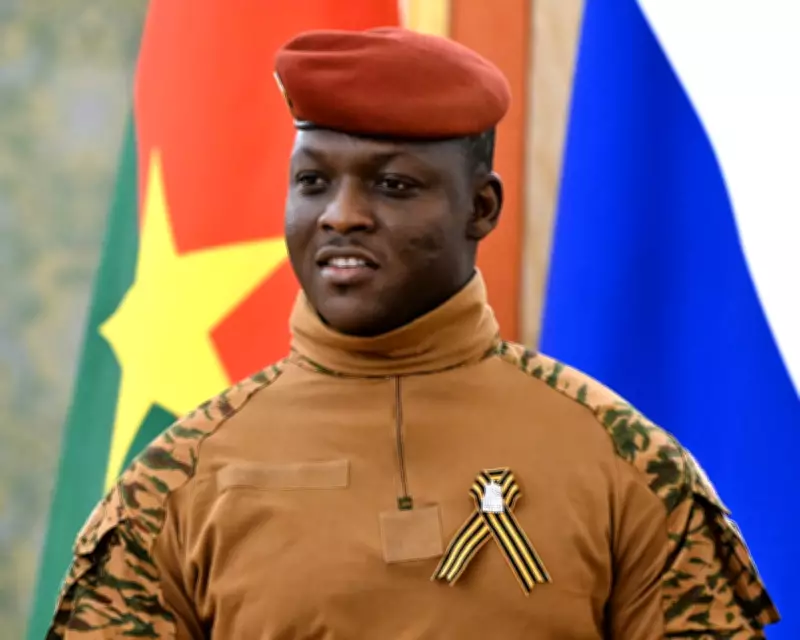
In a stark declaration, Burkina Faso's military president, Ibrahim Traoré, has asserted that democracy is fundamentally incompatible with the West African nation, calling on its people to relinquish any hopes for a democratic future. During an interview with the state broadcaster Radiodiffusion Télévision du Burkina (RTB) on Thursday, Traoré emphasised that discussions about elections are currently off the table, insisting that the populace must move beyond the concept of democracy altogether.
A Firm Rejection of Democratic Governance
"We're not even talking about elections, first of all ... People need to forget about the question of democracy," Traoré stated unequivocally. He elaborated by describing democracy as a "false" system, rhetorically questioning its merits: "Democracy, we kill children. Democracy, we drop bombs, we kill women, we destroy hospitals, we kill civilian population. Is that democracy?" This forceful critique underscores his administration's pivot away from Western political models.
Consolidation of Power Amidst Political Suppression
Traoré, who seized control in a coup in September 2022, overthrowing a previous junta that had itself taken power just nine months earlier, has systematically tightened his grip on the country. His regime has stifled opposition voices and, in a decisive move this January, outright banned all political parties. Originally, a transition to democratic rule was slated for 2024, but the junta extended Traoré's tenure until 2029, effectively postponing any potential return to civilian governance.

Popular Appeal and Ideological Foundations
Despite his authoritarian measures, Traoré has cultivated a significant following across Africa, largely through his vehement anti-French and anti-western rhetoric. He often invokes the legacy of Thomas Sankara, the revolutionary Marxist leader who served as Burkina Faso's president from 1983 until his assassination in 1987 and renamed the country from Upper Volta. This ideological alignment resonates with many who view Sankara as a symbol of anti-imperialism and self-reliance.
Ongoing Security Crisis and Human Rights Concerns
However, Traoré's leadership has failed to quell a persistent jihadist insurgency that has plagued Burkina Faso since 2014, resulting in thousands of fatalities and displacing approximately 2.1 million people, or about 9% of the population, according to the latest official data from three years ago. A recent report from Human Rights Watch (HRW) released on Thursday highlights the severity of the situation, noting that more than 1,800 civilians have been killed since 2023 by various actors, including the military, allied militias, and the al-Qaida-linked group Jama’at Nusrat al‑Islam wa al‑Muslimin (JNIM).
The HRW report accuses all sides of committing crimes against humanity and war crimes, with specific allegations that the junta and its allied militias have engaged in ethnic cleansing of Fulani civilians, whom they accuse of supporting JNIM. These actions include targeted killings and forced displacements of communities. In April 2024, HRW further accused the military of executing 223 civilians in a single day two months prior, a claim the government denied, subsequently banning HRW and several international media outlets, including the Guardian, that reported on the incident.
Broader Implications for Governance and Stability
Traoré's dismissal of democracy and the extension of military rule until 2029 signal a profound shift in Burkina Faso's political trajectory. As the nation grapples with internal conflict and international scrutiny over human rights abuses, the future remains uncertain. The leader's call to abandon democratic ideals reflects a broader trend in some regions where security concerns are prioritised over political freedoms, raising questions about the long-term stability and governance of Burkina Faso amidst these turbulent times.