Mines in War-Torn DRC at Heart of Trump's Fortune-Hunting in Africa
World affairs editor Sam Kiley reports from the Democratic Republic of Congo where conflict, international aid, and valuable minerals all intersect. This investigation explores what Donald Trump's brazen commercial interest in the war-torn country actually means for the region and global politics.
Dangerous Depths: The Rubaya Mine Tragedy
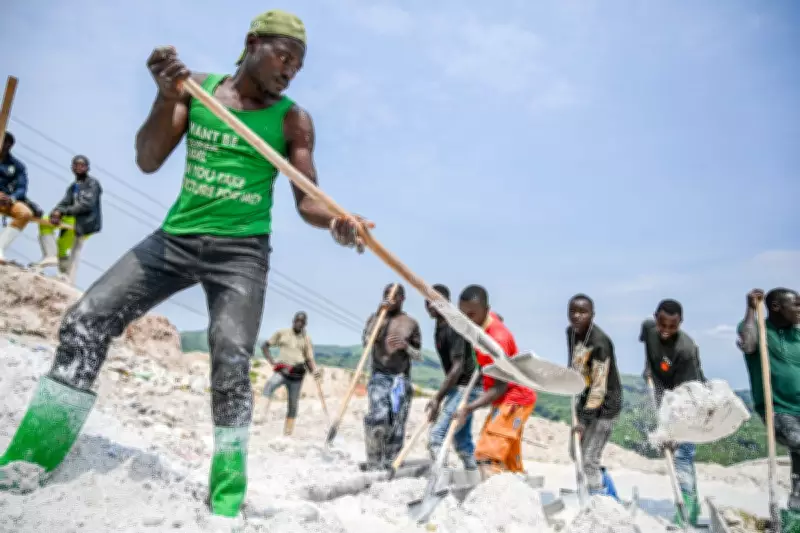
Their eyes shining from dust-white faces, latticed by trails of sweat from working hundreds of feet underground, thousands of miners burrow into a rebel-held hillside. These workers know the risks intimately and are prepared to take them to earn just a few dollars each day.
Dragging sackfuls of columbo-tantalite, commonly known as coltan, to the surface via makeshift shafts at the Rubaya mine in eastern DRC remains perilous work. So much so that in late January this year, approximately 200 young men were buried alive when their mine collapsed down the slope. Dozens more are feared dead after a second catastrophic collapse occurred at the beginning of March.

Rebel Control and Regional Conflict
Run by the M23 rebel group and backed by neighboring Rwanda with thousands of troops armed with sophisticated weapons including anti-aircraft missiles, the Rubaya mine lies in a region that has been at the centre of successive civil wars and invasions since 1994. Over the past three decades, more than $50 billion in aid has been funnelled to the country with limited impact on solving one of the world's most prolonged crises.
Donald Trump recently compared the situation to World War Two in scale and complexity. Now Rubaya, along with the vast mineral wealth throughout the DRC, stands at the centre of Trump's efforts to secure long-term supplies of critical minerals for the US economy.
Trump's Global Mineral Strategy
Over the last year, Trump has threatened to take over Greenland, toppled Venezuela's president, and exploited Ukraine's war with Russia in parallel efforts to secure access to raw materials that modern US industries demand. His strategic intent remains clear despite setbacks like the war on Iran – he aims to make foreign mines American assets.
The eastern DRC is rich in tin, gold, timber, and other resources that have attracted both opportunists and multinational corporations since the collapse of Mobutu Sese Seko's dictatorship in the mid-1990s. Above all, the region has served as a lucrative source of foreign currency for Uganda and Rwanda, just hours drive across nearby borders.
The Value of Coltan
Coltan produces tantalum, a grey-green metal with extreme stability at high temperatures that has become essential for high-end engineering across aerospace and computing industries. The Congo holds approximately 80 percent of the world's coltan reserves, with about 15 percent located beneath the unstable earth around Rubaya. At its peak production, this single mine can generate up to 30 percent of global coltan consumption.
For around $5 a day, the miners here find themselves at the centre of an enormous global business. They also stand at the heart of the violent storm that Trump attempted to calm with a peace deal brokered between the DRC and Rwanda last year.
Peace Deal and Profit Motives
"They've spent a lot of time killing each other and now they're going to spend a lot of time hugging and holding hands and taking advantage of the United States of America," Trump declared in December. He added a revealing motivation for pursuing peace: "We're going to take out some of the rare earth and the assets and pay. And everybody's going to make a lot of money."
As part of the agreement, DRC President Felix Tshisekedi signed a "security for minerals deal" with the United States. Although challenged by his parliament, this arrangement might provide his government leverage in securing access to minerals that rebel groups have controlled for decades with support from neighboring armies.

Rebel Profits and Mining Conditions
Before the mine collapse, M23 rebels and their allies were netting at least $1 million monthly from taxing output sold in Rwanda and Burundi, where no coltan exists naturally. Miners descended shafts 100 to 200 meters deep where temperatures soared and humidity approached 100 percent. Ventilation relied on small household-style fans attached to duct pipes similar to bathroom extractors, while webs of cabling and hand-cut streams for washing minerals crisscrossed the landscape.
"It's estimated that 10,000 to 11,000 people work here," said Patrice, an M23-appointed mine manager, speaking before the collapse. Michel, emerging from a hole disappearing into blackness while carrying white sacks of ore, expressed contentment with his wages and hopes to buy a small shamba garden near Goma with his wife someday.
Government Challenges and Chinese Dominance
Historically, the mine witnessed fierce fighting between militia and government forces competing for control of such valuable assets. Currently, it remains outside central government control while national armed forces maintain a reputation as among the worst human rights abusers in the region.
China currently dominates the DRC mining industry, investing at least $11 billion between 2008 and 2018. According to the Africa Centre for Strategic Studies, "China now controls over half of global critical minerals production and an estimated 87 percent of processing and refining." Beijing has diversified upstream by acquiring major African mining assets with little regard for political probity or human rights concerns.
US Commercial Interests and Regional Realities
US companies have received encouragement to re-enter the Congolese market. Mining giant Glencore currently negotiates selling 40 percent of its copper and cobalt operations to US investment firm Orion. However, these mines reside in southern Katanga province – far from North and South Kivu where M23 rebel leaders have denounced the US deal while using controlled minerals to expand their conflict.
The only slowing in M23 mining operations since Trump's deal with the DRC government has been the Rubaya mine collapse – a consequence of unregulated greed rather than diplomatic achievement. As regional violence continues and global powers compete for resources, the miners of eastern DRC remain caught between dangerous labor and geopolitical ambitions far beyond their control.