Duterte's ICC Pre-Trial Hearing Commences as Victims' Families Rally in Manila
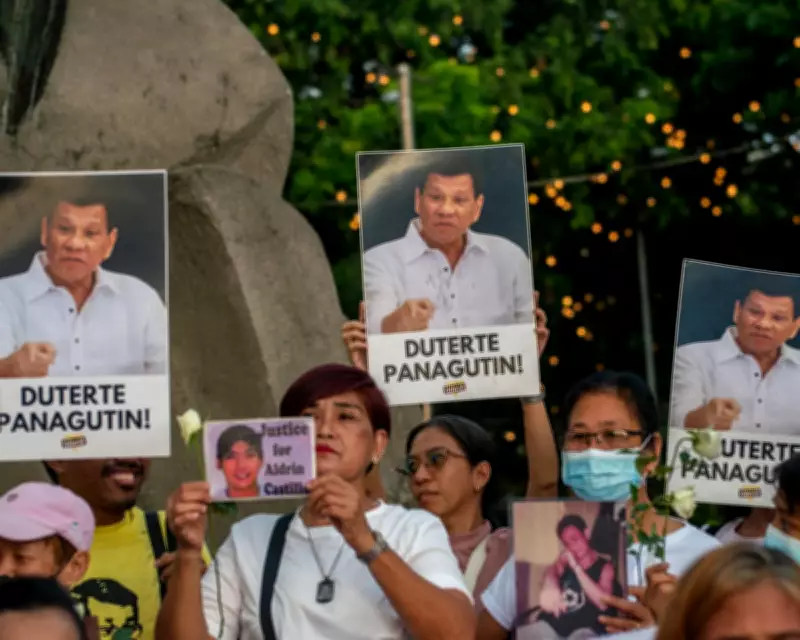
In a poignant display of solidarity, members of the Catholic Church have joined relatives of victims from former Philippine President Rodrigo Duterte's controversial drug war in Manila. This gathering occurs just days before the International Criminal Court (ICC) initiates a pre-trial hearing against Duterte, who has adamantly refused to attend the proceedings.
Charges and Defiance in The Hague
The pre-trial hearing for Duterte, aged 80, is scheduled to begin on Monday at the ICC in The Hague. He faces accusations of crimes against humanity stemming from an anti-drugs crackdown that resulted in the deaths of thousands of individuals across the Southeast Asian nation. Despite being arrested in Manila and transported to The Hague last year, Duterte announced last week that he will not appear in court, describing himself as "old, tired and frail" and suffering from memory loss. He has dismissed allegations of overseeing extra-judicial killings as "an outrageous lie" and does not recognize the court's jurisdiction.
Judges have granted a request from Duterte's defense team to waive his attendance at this week's hearings, though they noted the reasons provided were "speculative." This decision follows a ruling last month that Duterte is fit to participate, rejecting claims of cognitive impairment. The pre-trial hearing aims to determine if there is sufficient evidence to establish substantial grounds for charges of murder and attempted murder as crimes against humanity. It will conclude on Friday, with a written decision expected within 60 days; if confirmed, the case will proceed to trial.

Victims' Families Voice Outrage and Courage
Families of the victims have long awaited justice and have accused Duterte of cowardice for his refusal to attend. Sarah Celiz, 61, whose two sons Almon and Dicklie were killed in separate incidents in 2017, expressed her frustration: "He should face everything he did to us and to the families of the other victims." Despite supporters citing Duterte's age and health to garner sympathy, Celiz responded firmly, "He never showed us any mercy. My son begged for mercy, but he showed none. So why should we show him mercy? No."
Llore Pasco, who lost her sons Crisanto and Juan Carlos in 2017 during anti-drug operations, stated last week that Duterte is "just a coward desperate to escape accountability." Many families fear retaliation, especially with Duterte's daughter, current Vice-President Sara Duterte, announcing her candidacy for the 2028 presidential election, where polling suggests she is a strong contender. However, Celiz remains undeterred, saying, "Since my sons died, fear is no longer in my vocabulary." She emphasized that the ICC is their only hope for justice, urging the court to act swiftly.
Background and International Scrutiny
Duterte was elected in 2016 after promising a violent crackdown to eradicate drugs from the Philippines. Upon taking office, he publicly encouraged civilians to kill addicts and assured police immunity for extrajudicial executions. In a speech, he compared himself to Hitler, stating he would be "happy to slaughter" millions of drug addicts, and later admitted to personally killing suspected criminals during his tenure as mayor of Davao.
The ICC's investigation covers alleged crimes from November 2011 to June 2016, including extrajudicial killings in Davao, and extends through his presidency until March 16, 2019, when the Philippines withdrew from the court. Estimates cited by the ICC prosecutor indicate that between 12,000 and 30,000 civilians were killed in connection with the drug war. Despite international outrage, Duterte maintained high popularity domestically.
In a recent statement, Duterte described his arrest as a "kidnapping" facilitated by current President Ferdinand Marcos Jr., claiming it violated Philippine sovereignty. He expressed resignation, saying, "I have accepted the fact that I could die in prison. But those that desire this fate for me should know that my heart and soul will always remain in the Philippines." As the legal proceedings unfold, the world watches closely, with victims' families holding onto hope for accountability and justice in this landmark case.