Gaza's Ramadan: A Candle of Hope Amidst Ruin and Resilience
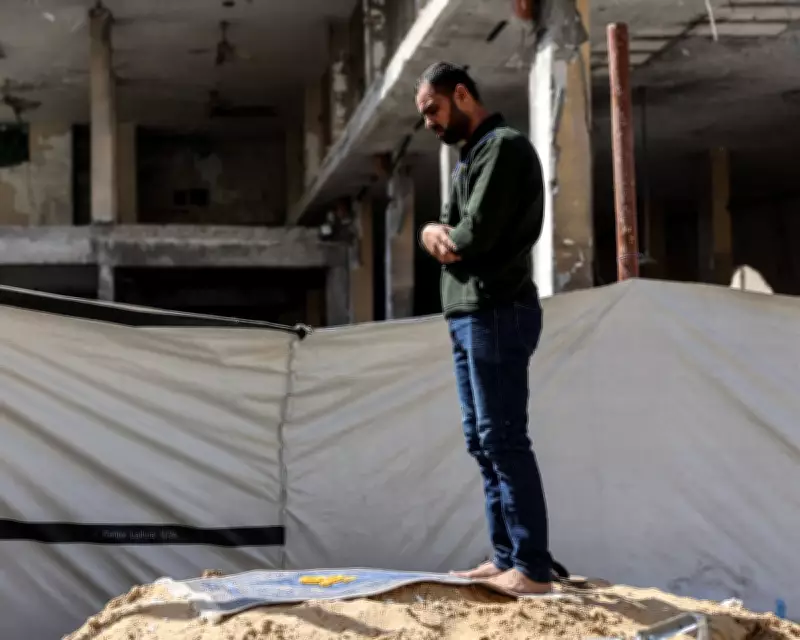
In Gaza City, on 20 February 2026, a man prays on a mound of sand outside the Alkanz mosque, a poignant symbol of displacement and faith in a landscape scarred by conflict. This Ramadan, as Muslims worldwide seek spiritual sanctuary, those in Gaza grapple with a fragile ceasefire, soaring costs, and the haunting silence of uncertainty, yet they forge a solidarity that rises above hunger.
A Sanctuary Shattered by Conflict
For Majdoleen Abu Assi, a woman displaced from Gaza City to Al-Zawayda, Ramadan no longer brings the golden lanterns and vibrant gatherings of before. Instead, it arrives with the roar of bulldozers clearing rubble and the constant buzz of Israeli surveillance drones, known as zanana, overhead. These drones often drown out the adhan, the call to prayer, serving as a stark reminder that calm here rests on the edge of a sudden strike. The world may term this a ceasefire, but from her window, the silence feels heavy, laden with the fear of unpredictable death.
She mourns the loss of Gaza City's vibrant life—the scents of Al-Zawiya market, the collective prayers at al-Omari mosque that once felt like an unbreakable fortress. Ramadan used to embody true warmth, with family tables in the Rimal neighborhood filled with laughter and peace, teaching that hearts had room for everyone. Now, rituals have become mountains to climb, with food costs skyrocketing from 1,000 to 3,500 shekels, barely meeting basic needs.

Defiance in the Face of Despair
Walking home through rubble and sand that sting the eyes, Majdoleen calculates meager iftar meals from lentils and cupboard scraps, a far cry from the anticipation of past Ramadans. Yet, amidst this grief, she witnesses a defiant hope. In Al-Zawayda, neighbours share small portions of lentils or dates with a dignity that transcends hunger, embodying a sacred resistance. Lighting a single candle becomes not a shield against darkness, but a victory over despair itself.
For children, Ramadan is the hardest part; they have learned the language of war, distinguishing shells from explosions before knowing Ramadan songs. Their questions about returning bombings mask deeper fears about having a future—a question no one can answer. Yet, when they hang torn decorations on tents, it reveals an essential truth: in Gaza, hope is not a feeling but a deliberate decision.
Quiet Is Not Peace: The Right to the Ordinary
While outsiders may hear of quiet and fragile ceasefires, real peace means the right to ordinary life—walking to intact markets, praying in undamaged mosques, returning to unflattened neighborhoods, and sleeping without dread. This Ramadan in Gaza carries a different spirit, with the adhan bringing flickers of tranquility not from justice or an end to suffering, but from the mere act of remaining and weaving hope from threads of ruin.
As Muslims fast and pray, they reclaim their souls from wreckage, standing together in a solidarity that defies destruction. This story underscores the resilience of Gaza's people, who, despite displacement and fear, continue to share, pray, and light candles as beacons of hope in a shattered world.