Global South Unites in Condemnation of US-Israeli Military Action Against Iran
The US-Israeli war on Iran has sparked widespread condemnation across the global south, with numerous nations denouncing the military action as illegal and a violation of international norms. China led the criticism, stating it was unacceptable to "blatantly kill the leader of a sovereign state," referring to the killing of Iranian Supreme Leader Ayatollah Ali Khamenei.
International Law Violations and Diplomatic Failures
Many countries expressed outrage that negotiations between the US and Iran over its nuclear programme and missile capabilities were abruptly abandoned before Washington and Israel commenced bombing. Pakistan's Prime Minister Shehbaz Sharif offered condolences for Khamenei's death, emphasizing that international law explicitly prohibits targeting heads of state.
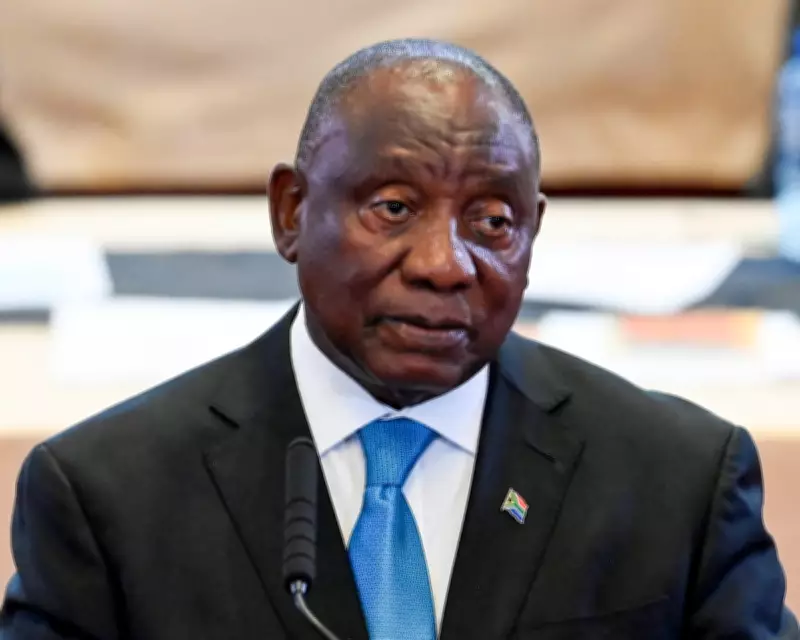
South African President Cyril Ramaphosa questioned the "pre-emptive" justification for the war, arguing that self-defence is only permissible in response to an armed invasion. "There can be no military solution to fundamentally political problems," Ramaphosa declared, highlighting the diplomatic failures preceding the conflict.

Regional Reactions and Security Concerns
Brazil voiced grave concerns, noting that "the attacks occurred amid a negotiation process between the parties, which is the only viable path to peace." Turkey's President Recep Tayyip Erdoğan deplored the attacks, blaming Israeli Prime Minister Benjamin Netanyahu for instigating them.
Oman's Foreign Minister Badr Albusaidi, who had previously indicated a deal was within reach, urged the US not to escalate further, stating "This is not your war." Oman reported downing two drones, with another crashing near Salalah port, underscoring regional security threats.
Broader Global South Criticism
Cuba, facing substantial pressure from the Trump administration, accused the US and Israel of "threatening and seriously endangering regional and international peace, stability, and security." Malaysia and Indonesia called for disputes to be resolved through dialogue and diplomacy, with Indonesia offering to travel to Tehran to reopen negotiations.
The Indonesian Ulema Council urged their government to withdraw from Trump's Board of Peace in protest. Many developing nations also criticized Iran's attacks on Gulf neighbours, though maintained their condemnation of the US-Israeli action.
Analytical Perspectives on Imperialist Motives
Analysts contextualized the conflict within past wars of regime change in Iraq and Libya, Israel's impunity in Gaza since 2023, and colonial history. Siphamandla Zondi, Professor of Politics at the University of Johannesburg, argued that western wars are often viewed with moral purpose, while the global south sees conflict as evil.
"This is a war of domination and subordination, therefore it has imperialist undertones and motives," Zondi stated. "It makes the world unsafe for all of us." Commentators noted European double standards, vigorously defending international law regarding Trump's Greenland annexation attempts but remaining muted on this war.
Geopolitical Shifts and Coalition Building
Amitav Acharya, author of The Once and Future Global Order, observed that the US now acts primarily through coercion, contrasting with growing Chinese soft power through investments in developing countries. He predicted Russia would benefit as Iran and other foreign policy shocks divert attention from Ukraine.
"Many countries in the global south are going to look for a coalition of powers that will stand up to the United States, as the United States is seen as so aggressive, so imperial," Acharya explained.
Distinguishing Criticism from Support
Critics emphasized that condemning the war does not equate to supporting the Iranian regime. Heraldo Muñoz, former Foreign Minister of Chile, stated, "I condemn the Iranian theocratic regime for its dictatorial and repressive nature, but these ongoing attacks are a violation of international law."
Muñoz suggested domestic US politics motivated the attacks, referencing Trump's empowerment after military actions in Venezuela. The Trump administration bypassed UN Security Council approval and domestic elected representatives, analysts noted.

Latin American Fears and Systemic Erosion
Oliver Stuenkel, Professor of International Relations at Fundação Getulio Vargas in São Paulo, expressed fears in Latin America that Trump, emboldened by actions in Venezuela and Iran, might target Cuba next.
"There is a profound sense that international law is being eroded more systematically," Stuenkel warned. "This has profound consequences for many countries in the global south, which are militarily weak and vulnerable, have rich natural resources, and have long made a bet on international rules and norms."
Diplomatic Distrust and Future Repercussions
Maleeha Lodhi, Pakistan's former ambassador to the US, accused the Trump administration of negotiating with Iran in bad faith, using talks as a smokescreen to prepare for attack. "Who can trust the Trump administration now? It acts unilaterally in total defiance of international law and any norms of diplomacy," Lodhi asserted. "This will come back to haunt them."