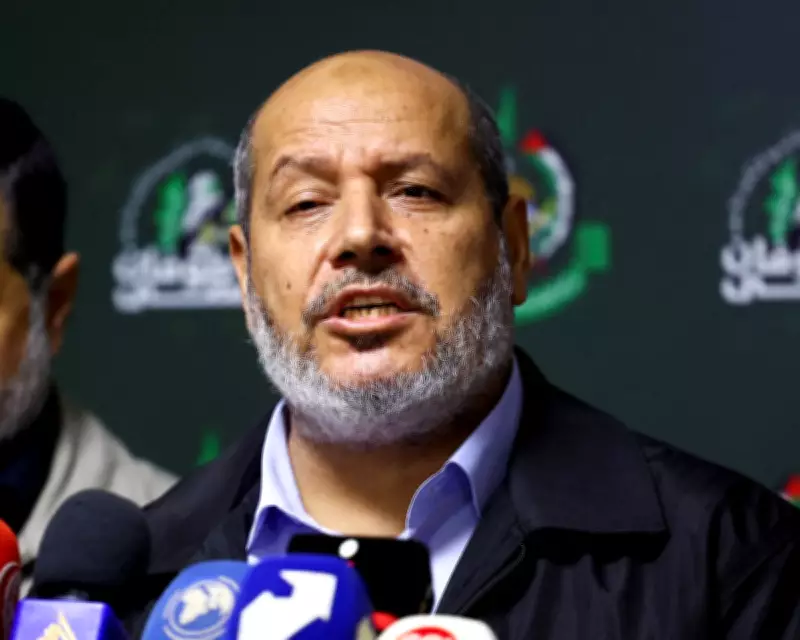
Hamas Leadership Vote Commences at Pivotal Moment for Militant Group
Hamas has reportedly initiated leadership elections among its members, a critical juncture for the militant Palestinian movement as it confronts imminent decisions that could shape its survival and the prospects for peace in Gaza. According to sources including the BBC and Gulf press reports, members in Gaza have already cast ballots, with those in the West Bank, Israeli prisons, and the diaspora expected to follow suit to elect delegates to the movement's 50-member general Shura council. This council will ultimately select the politburo and a new interim leader, a process anticipated to span several weeks.
Frontrunners Present Clear Choice for Hamas's Direction
The leadership contest is believed to feature two main contenders: Khalil al-Hayya and Khaled Meshaal, both of whom survived an Israeli airstrike in Doha in September last year. Their candidacies offer a stark contrast in potential future paths for Hamas. Khalil al-Hayya, leading the Gaza wing while residing in the Gulf, is viewed as a hardliner and the heir to the late Yahya Sinwar, with strong ties to Iran among Hamas's foreign sponsors. In contrast, Khaled Meshaal, a founding member and former overall leader for over two decades, now heads the movement abroad from Doha and is seen as more flexible, maintaining closer relationships with Qatar and Turkey.
Michael Milshtein, a former Israeli military intelligence colonel now at Tel Aviv University, commented: "Meshaal wants to consider a political settlement with Israel – not a recognition but maybe a long-term settlement – and even reconciliation with the Palestinian Authority, and once again be part of the formal political system in the Palestinian arena. These two represent two different camps, and different agendas about the future and the goals of Hamas."

Critical Decisions Await New Leader
The incoming leader will face monumental choices, including the extent of cooperation with a US-sponsored peace plan, potential disarmament and arsenal reduction, demands for Israeli withdrawal from Gaza, and whether to seek inclusion in a new Gaza government or recede into the political background. This comes amid a backdrop of significant losses for Hamas, with much of its leadership killed by Israel in a military campaign that has devastated Gaza and resulted in over 75,000 Palestinian deaths over 28 months. Key figures such as Yahya Sinwar, Mohammed Deif, Saleh al-Arouri, and Ismail Haniyeh have been assassinated, intensifying the stakes for the new leadership.
Secrecy and Survival Concerns Dominate Election Process
The vote is being conducted under conditions of extreme secrecy due to the high risk of assassination for anyone identified in a leadership role within Hamas. Khaled Elgindy, a senior research fellow at the Quincy Institute for Responsible Statecraft in Washington, noted: "Whoever is in the leadership – whether it's the Shura council or the actual top leadership – the question is who wants to be in that position knowing that they will most likely be on an Israeli hitlist? It's clear that this is going to be a new chapter for Hamas, and it may even be existential. Will Hamas survive? What will it look like? Obviously, they're going to do anything and everything to avoid the optics of a surrender."
Elgindy added that Meshaal's potential leadership could foster better ties with Arab states like Qatar and Turkey, potentially reducing reliance on Iran as Tehran faces its own challenges. However, it remains uncertain how internal frustrations with Hamas among the populace might influence the voting membership.

Trump's Peace Plan and Hamas's Rebuilding Efforts
Under Donald Trump's peace proposal, a group of non-affiliated Palestinian technocrats, known as the National Committee for Administration of Gaza (NCAG), is intended to assume control of Gaza's governance and oversee Hamas's disarmament. While Hamas leaders have informally indicated willingness to surrender heavier weapons such as rockets and mortars to a Palestinian body, fighters are likely to resist giving up personal firearms, citing self-defence needs against armed clans and criminal gangs in Gaza, some allegedly backed by Israel. Concurrently, Reuters has reported that Hamas is actively rebuilding its organisation, collecting taxes on goods entering Gaza under a ceasefire deal and replacing senior officials in ministries and district governors.
This leadership election marks a defining moment for Hamas, as the group navigates internal divisions, external pressures, and the complex dynamics of Middle East diplomacy, all while striving to maintain its influence and survival in a rapidly evolving geopolitical landscape.