Holi 2026: The Hindu Festival of Colors Celebrates Spring and Renewal
Holi, the exuberant Hindu festival of colors, heralds the arrival of spring with an annual celebration rich in cultural and religious significance. Observed widely across India, Nepal, other South Asian nations, and global diaspora communities, this festival serves as a profound celebration of love, symbolising rebirth and rejuvenation. It is a time to embrace positivity and release negative energies, fostering unity and joy among participants.
What is Holi and How is it Celebrated?
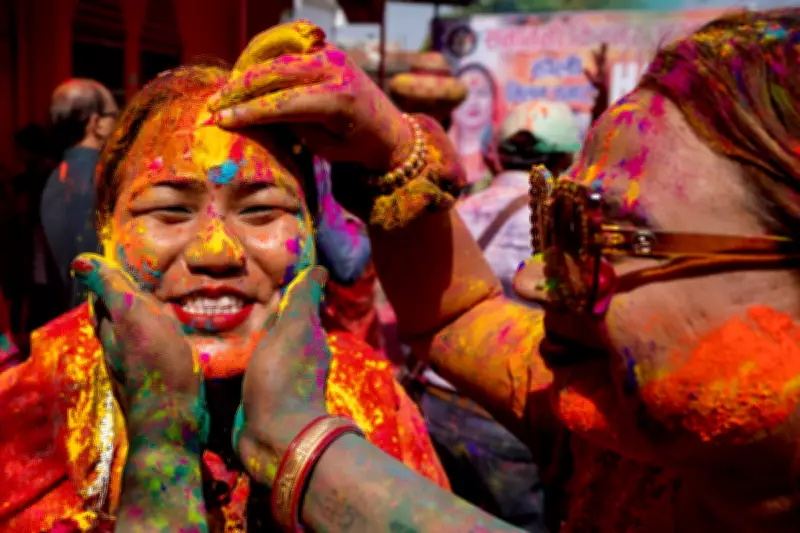
One of Holi's most iconic traditions involves participants, often dressed in white, taking to the streets to playfully douse each other with vibrant powdered dyes. This creates a kaleidoscope of pigments and shared happiness, accompanied by music, dancing, and an abundance of festive foods. Holi marks the transition from winter to spring, celebrated on the last full moon day of the Hindu luni-solar calendar month of Falgun. While its exact date varies with the lunar cycle, it typically falls in March, with this year's festivities set for March 4, 2026.
On the day of Holi itself, entire streets and towns become a riot of color as people throw powdered dyes into the air. Some fling balloons filled with colored water from rooftops, while others use squirt guns. For one day, all is fair game, with cries of "Holi hai!" – meaning "It's Holi!" – echoing through the streets. The festival's vibrant energy has been romanticised and popularised through decades of Bollywood cinema, enhancing its global appeal.

Mythological Origins and Symbolic Traditions
The origins of Holi are deeply rooted in Hindu mythology and lore. In many parts of India, large bonfires are lit on the eve of the festival, symbolising the destruction of evil and the triumph of good. Various mythological tales explain this observance. One prominent story recounts King Hiranyakashipu, who demanded worship from his kingdom. When his son Prahlad, a devout follower of Lord Vishnu, defied him, the king ordered his sister Holika, who possessed immunity to fire, to take the child into a bonfire. However, as the pyre blazed, the boy's unwavering devotion to Lord Vishnu protected him, leaving him unharmed, while Holika, despite her supposed immunity, perished in the flames.
Another tradition, particularly in southern India, is known as Kama Dahanam, commemorating Lord Shiva's incineration of Kamadeva, the god of love, with his third eye. This act symbolises the destruction of lust and earthly attachments, paving the way for higher spiritual pursuits before the joyous explosion of colors. Some also link Holi to Lord Krishna and his beloved Radha, as well as his cosmic play with his consorts and devotees, known as "gopikas," revered for their unconditional love and devotion to Krishna.
Symbolism of Colors and Festive Foods
Each hue used during Holi carries deep significance. Blue often represents Lord Krishna's complexion, green symbolises spring and rebirth, while red denotes marriage or fertility. Both red and yellow, frequently used in rituals, signify auspiciousness and prosperity. A delectable array of special foods accompanies the festivities, enhancing the celebratory atmosphere.
- Gujia: A flaky, deep-fried sweet pastry filled with milk curd, nuts, and dried fruits.
- Thandai: A cooling beverage crafted from almonds, fennel seeds, rose petals, poppy seeds, saffron, milk, and sugar, often served to refresh participants.
Global Celebrations and Diaspora Observances
Across the diaspora, particularly in North America and other nations with significant Hindu populations, Holi is marked by Bollywood-themed parties, vibrant parades, and a multitude of public and private gatherings. Some US temples are set to observe Holika Dahan this year on February 2 or 3, coinciding with the full moon and a rare total lunar eclipse. Hindu temples and community centres across the US frequently organise cultural programmes, friendly cricket matches, and other festivities surrounding the holiday, uniting communities in a spirit of joy and renewal.

In regions like Prayagraj, India, events are organised by foundations such as the Trishla Foundation to include children with conditions like cerebral palsy, ensuring inclusivity. Similarly, in Mathura, India, women devotees symbolically beat men with wooden sticks to mark Lathmar Holi during celebrations at the Shri Krishna Janmabhoomi Temple complex. In Kathmandu, Nepal, people gather at Basantapur Durbar Square to throw colored powders on each other, showcasing the festival's widespread appeal and cultural diversity.
Holi's enduring popularity lies in its ability to bring people together, transcending boundaries through shared traditions of color, music, and mythology. As communities worldwide prepare for the 2026 celebrations, the festival continues to embody themes of love, renewal, and the vibrant spirit of spring.