Iran War Strands Tens of Thousands in Middle East as Evacuations Intensify
Tens of thousands of people, ranging from Romanian religious pilgrims to tourists and family members of diplomats, are currently stranded across the Middle East as the escalating Iran war spreads chaos throughout the region, severely complicating routes home. Major airlines have canceled flights to and from the area, and airspace across the Gulf is now closed, leaving many trapped in precarious situations.
Safety Warnings and Evacuation Efforts
In a significant development on Monday, the U.S. State Department urgently advised all U.S. citizens to depart from more than a dozen Middle Eastern countries due to the severe safety risks posed by ongoing military escalations. U.S. Assistant Secretary of State for Consular Affairs Mora Namdar emphasized on social platform X that Americans in nations including Iran, Iraq, Jordan, Lebanon, and Israel should "DEPART NOW" using any available commercial transportation options.
The State Department has also evacuated non-emergency personnel and families from six countries, adding the United Arab Emirates to its list on Tuesday. The UAE, traditionally viewed as a stable hub in the Middle East, has been drawn into the conflict with reported interceptions and attacks. Meanwhile, in Israel, the U.S. ambassador informed Americans that the best evacuation route is through Egypt's Sinai Peninsula, noting that Ben Gurion Airport in Tel Aviv remains closed with "VERY LIMITED options" available.

Global Government Responses
Governments worldwide are actively scrambling to repatriate their citizens caught in the turmoil. In Italy, the government has facilitated flights to Milan and Rome following criticism of Defense Minister Guido Crosetto, who was stranded in Dubai with his family during the initial phase of the conflict. Crosetto returned to Rome on a military aircraft, but the incident has sparked political controversy, with opposition calls for his resignation.
An estimated 30,000 German tourists remain on cruise ships, in hotels, or at closed airports in the Middle East, with the first evacuation flight from Dubai to Frankfurt expected to land soon. The German government is seeking to charter planes at taxpayer expense to prioritize vulnerable individuals, including ill travelers, children, and pregnant people. Similarly, France is organizing the return of thousands of its citizens, with authorities estimating that roughly 25,000 French visitors are currently in the affected region out of 200,000 residents.
Personal Accounts of Stranded Travelers
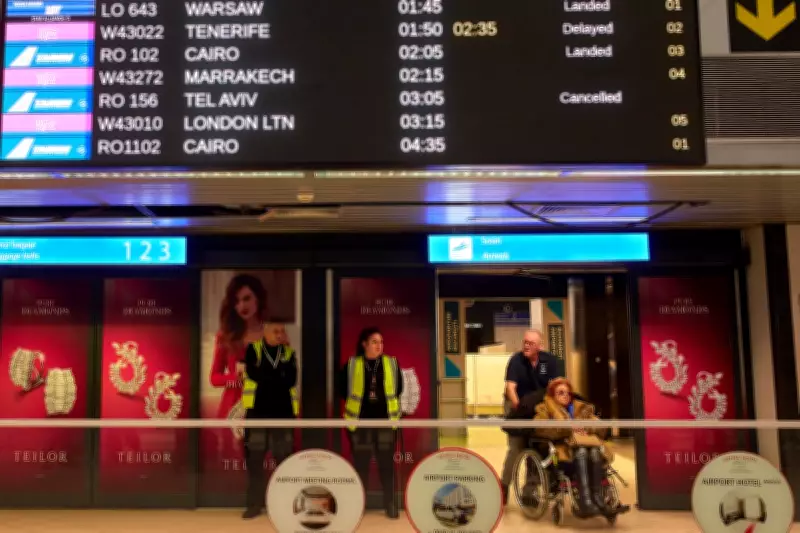
Early Tuesday, Romanian tourists arrived in Bucharest after a harrowing journey from Israel to Cairo to escape the conflict. Hundreds of Romanian Orthodox Church pilgrims were stranded in Israel while visiting Bethlehem when the war erupted, forcing them to cut their trip short. Pilgrim Mariana Muicaru described terrifying moments as rockets flew across the sky, prompting emotional calls to family members.
In the United Arab Emirates, British traveler Adam Barton recounted receiving alerts about potential missile attacks while at the airport before departing. He expressed relief upon landing safely at London's Heathrow Airport with his family. Additionally, a flight from Dubai landed in Belgrade, Serbia, with approximately 200 passengers, one of whom reported being given only 15 minutes to pack at a hotel before evacuation.
The situation underscores the widespread impact of the Iran war on civilian travel and safety, with ongoing efforts to navigate the complex logistics of mass evacuations amid regional instability.