Dozens of Iranians crossed into northern Iraq on Sunday, marking the first day the border had reopened since conflict engulfed their homeland. The travelers sought relief from soaring food prices, internet blackouts, and economic desperation exacerbated by constant airstrikes.
Border Crossing Becomes Lifeline
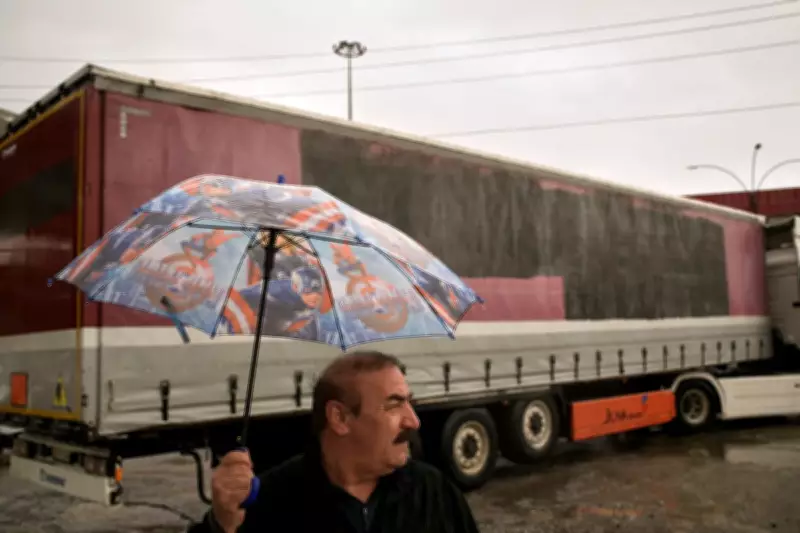
Trucks laden with goods wound through the Haji Omeran crossing from Iraq's Kurdish region, offering a crucial respite from the high costs and scarcity on the Iranian side. Even prior to the U.S. and Israeli military actions against Iran, Iranian Kurds frequently traversed into Iraqi Kurdistan, leveraging deep familial, cultural, and economic ties across porous borders that facilitated steady trade and regular visits.
Now, Iraq's Kurdish region has transformed into an essential lifeline for Iranians in war-torn areas, enabling them to connect with the outside world. "When this border was closed, it affected everyone. Poor people, rich people, workers," explained Khider Chomani, a truck driver transporting goods to Iran.

Security Fears and Anonymity
The border closure was a response to heightened regional military tensions, with Iraqi Kurdish authorities awaiting Iranian counterparts to permit reopening. Nearly all Iranian Kurds interviewed requested anonymity, citing fears for their safety and potential reprisals from Iranian intelligence, which they allege monitors media interactions.
They reported that numerous Iranian military bases, intelligence offices, and other security sites had been destroyed. The bombardment has severely restricted security forces' movements, with officers avoiding official buildings, sheltering in civilian locations like schools and hospitals, or remaining mobile in vehicles instead of reporting to their offices.
Essential Needs Drive Crossings
A Kurdish woman from Piranshahr traveled 15 kilometers to cross the border on Sunday, aiming to contact relatives and purchase essentials. "I came here to make a phone call. In most of Iran there is no internet," she said. "For more than 16 days my relatives haven't heard from me, and they are worried."
She noted that many Iranians buy Iraqi SIM cards and gather near the frontier to connect with family and friends abroad due to widespread internet outages. After securing a SIM, she visited the local market to buy groceries at a fraction of the cost back home, focusing on basic staples like rice and cooking oil that have become prohibitively expensive amid wartime inflation.
"The situation in Iran is terrible. People don't feel safe, things are expensive, people don't want to leave their homes," she added, before hurrying back across the border with two plastic bags of groceries to her waiting children.
Economic Desperation and Personal Tragedies
An elderly woman, veiled in a black shawl and thinly dressed against pouring rain, walked alone across the border from Sardasht in Iran's West Azerbaijan province. She was bound for Choman in Iraq's Kurdish region, about 40 kilometers away, to seek help from distant relatives.
Her son, a cross-border smuggler of cigarettes and other goods, was shot and killed by Iranian soldiers 14 months ago. Smuggling is a common livelihood in the porous frontier region, and his death left the family penniless, caring for three children with the eldest just five years old.
With food prices surging, she struggles to feed them and is two months behind on rent, owing roughly $200. "I don't have anyone there to help me survive," she said through tears. "The war made things worse — everything is more expensive." Unable to call ahead, she hoped her relatives could assist, stating, "I am powerless, but the kids are hungry and I must do my best for them." Later, she stood in the rain awaiting a passing car for a ride.
Workers Seek Employment Across the Border
Iranian workers from three cities piled into one taxi as they returned from a visit home, heading back to their jobs in the Iraqi Kurdish region. The men, employed by the same construction company, plan to stay for a month to earn enough money to manage rising costs back home.
"The situation will only become worse and civilians will be the only ones affected," one worker remarked. "We left our kids and wives just to come and work here and make some money, otherwise we would not have left them alone."

Airstrikes and Displaced Authorities
Iranian Kurds living near sites used by Iranian authorities reported being forced to flee to safer areas to avoid bombardment. A house painter from Urmia who works in Irbil, northern Iraq, described constant bombardment as a fact of life. He briefly returned home at his mother's urging after she was frightened by explosions, reassuring her that the family had no links to authorities and nothing to fear.
The dire situation prompted another Iranian Kurdish metal factory worker living in the Iraqi Kurdish region to implore his family in Urmia to relocate and live with him. His family, including his wife and three children, arrived on Sunday and rested at a roadside restaurant. He noted that security forces no longer shelter in their bases after repeated strikes, with many military, intelligence, and police installations lying in ruins.
"They don't stay in their offices," he said. "They stay in their cars, under bridges, in schools and hospitals. They drive around. Their bases are destroyed."