Iranians Attempt to Uphold Daily Life Amid Ongoing Conflict
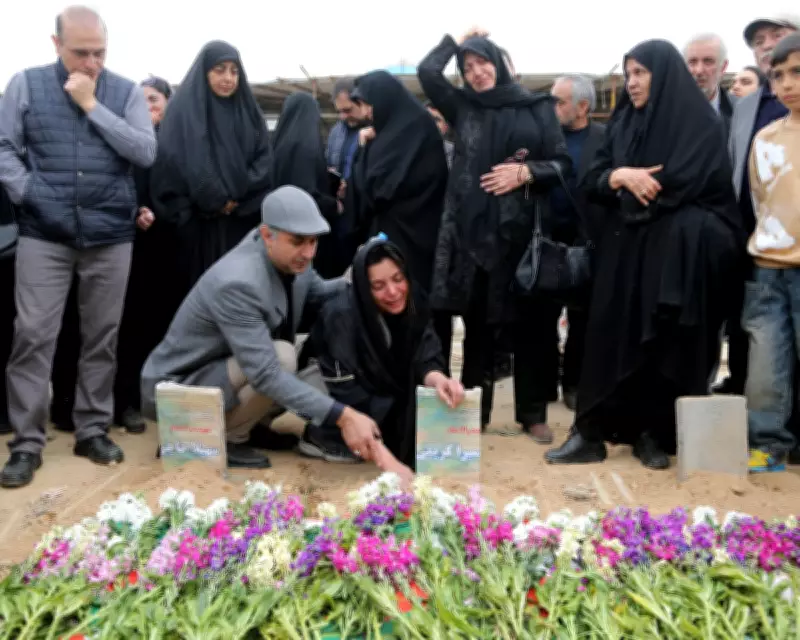
As Eid al-Fitr concluded, people visited the Behesht-e Zahra cemetery in Tehran to honour deceased relatives, a tradition overshadowed by the relentless backdrop of war. Typically, the days following Nowruz, the Persian New Year, bring a vibrant resurgence to the city with spring blossoms and reopened businesses, but this year, Iranians are grappling with maintaining a semblance of ordinary life amidst constant explosions and airstrikes.
Adapting to a New Reality
Farhad, a photography editor in Tehran, noted that residents are increasingly normalising the conflict. "It's difficult, but we're adapting and trying to return to our daily lives as much as possible. There's no alternative. We're tired. We just want peace," he said. Overnight explosions lit up the skyline as Israel launched fresh airstrikes, yet by morning, joggers resumed their routines in Pardisan Park, illustrating the stark contrast between danger and normalcy.
While schools and universities remain closed, shops, restaurants, and cafes are slowly reopening. Aylar, a 39-year-old human rights worker, described the bizarre duality of her experiences. After sheltering with her cats initially, she invested in an expensive VPN to bypass internet blackouts and connect with relatives abroad. "On the same day, I also went for coffee and chocolate cake with friends on what felt like a sunny spring day. These conflicting realities are bizarre," she shared.

Human Cost and Personal Stories
The official death toll has stalled at around 1,500, but estimates from the Iranian Human Rights Activists News Agency suggest the real figure may exceed 3,000, with many more injured. For some, the violence hits dangerously close to home. Azadeh, a 46-year-old researcher and cinematographer, was with her pregnant sister when a strike occurred just 200 metres away. "I held her tightly in my arms to protect her from shrapnel and in that moment, I felt so helpless," she recounted from Tehran, adding that she now lives in constant fear for her family.
The conflict has prompted an exodus of international students, such as Hasina, a 26-year-old Afghan medical student who returned to Taliban-controlled Afghanistan via a arduous journey. "It was sad and scary to leave, and it was difficult to return. At the border, many of us women got into trouble with the Taliban because we arrived without a male guardian. I hope to be back in Iran soon," she said from Herat, noting that being with family was preferable to hiding from bombs in Tehran.
Societal Divisions and Uncertain Future
Deep societal divisions persist in Tehran, polarising the city. While most Iranians oppose the war, some view it as an opportunity for political change, hoping it might lead to the fall of the Islamic Republic. After the death of Ayatollah Ali Khamenei was announced, spontaneous celebrations erupted with shouts of "azadi" (freedom), while government supporters mourned with vigils and prayers.
As attacks intensify, pro-government gatherings have become nightly occurrences, with chants of "God is great, Khamenei is the leader" and "death to America, death to Israel." Farhad highlighted the internal conflict: "Our society is divided. Some believe this war could lead to a free, democratic government backed by the US, while others dismiss this, pointing to the failures of the US across the region. At the same time, many are suffering and being killed. Why aren't there anti-war protests in the US? It seems that nobody cares."
Abbas, a 41-year-old Tehran resident, voiced concerns about the conflict becoming a recurring pattern, referencing last year's 12-day war with Israel. The uncertainty is compounded by fears that without significant political shifts, such violence could define Iran's future, leaving citizens to navigate a fragile balance between tradition and turmoil.