James Meek's Emotional Return to a Kyiv Under Siege
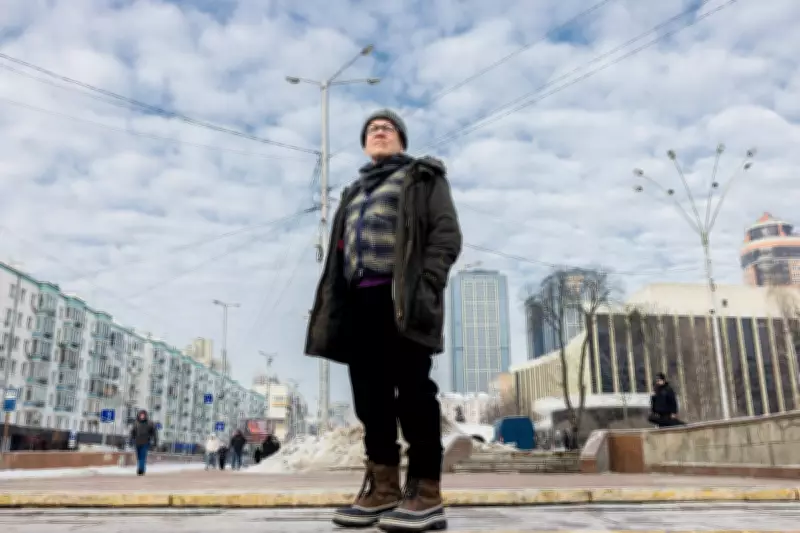
Stepping off the night train into Kyiv, novelist James Meek was flooded with memories of his life there three decades ago. His first flat, located just opposite Volodymyrskyy market, was reached after a five-day drive from Edinburgh in November 1991. At that time, he navigated the city with a paper map, speaking minimal Russian and no Ukrainian. Recently, Meek returned to a Kyiv fighting for survival, where the echoes of the past mingle with the harsh realities of war.
A Market Transformed by Time and Conflict
The market near his old home is now neater and quieter, not solely due to the war but because of gradual changes over the years. In the early 1990s, peasant farmers sold abundant goods like sour cream and cottage cheese, while vendors from the Caucasus offered exotic fruits. Today, these items are still available but packaged on supermarket shelves by big firms. The meat counter has lost its shrine to pork fat, and only one pickle seller remains, hinting at a shift from homemade abundance to commercial distribution.
Meek managed to enter the stairway of his former apartment, finding it cleaner and brighter than he remembered. The smell of old vegetables and kidneys is gone, and lightbulbs are no longer stolen. However, a Russian attack had recently severed power connections, leaving parts of the city without running water. With photographer Iva, he risked the tiny, clanking lift, reflecting on her experiences with drone attacks near the front lines. No one was home at his old place, as many have fled due to the war and winter bombardment.

Journal Entries and Wartime Paradoxes
Early journal entries from Meek's time in Kyiv often focused on food, such as a smoked goose Christmas lunch before the Soviet Union's collapse. He recalled buying a live carp from a state shop, only to struggle home with the thrashing fish. This winter, arriving as a foreigner with memories felt almost indecent amidst the city's current crisis. Kyiv has been under Russian attack longer than the Soviet Union fought Hitler, with drones and missiles targeting essential services. Meek grappled with whether to write beyond bearing witness, fearing it might diminish the complexity of Ukraine's pre-invasion life.
There's a paradox for returnees: while war is evident through cold radiators and power cuts, many changes aren't immediately visible. Most advertising hoardings now promote military units, and destruction is widespread but not omnipresent in a city larger than Paris or Rome. The most obvious change is the proliferation of speculative apartment blocks from the 2000s and 2010s, often clashing with older architecture. One such building now stands next to Meek's old block, housing a branch of PrivatBank, linked to oligarch Ihor Kolomoisky, now imprisoned.
Urban Development and Corruption Debates
The chaotic redevelopment of Kyiv isn't just an outsider's concern; locals discuss it too. This legacy reflects corruption and resistance predating Putin's invasion. Russia's war began as intervention in an inter-Ukrainian struggle between pro-EU liberals and a corrupt elite. At his second Kyiv home, Meek found the old flat demolished for a faux art nouveau business centre. Campaigner Dmytro Perov explained how developers often replace historical buildings with short-lived modern structures, citing a design life of only 49 years for some projects.
Perov noted that many preservation activists have joined the military, with some killed, leaving few to oppose renewed development. He sees the Russian assault and commercial destruction as two fronts in one war. Despite this, moments of resilience shine through: cafes operate on generators, a friend presses vinyl records, and residents club together for batteries during blackouts. Oleksandr, a new acquaintance, shared how his building survived a drone attack, though a wrong lift button revealed a devastated floor.

Daily Struggles and Human Stories
In the metro during an air raid, exhausted citizens faced disrupted journeys, highlighting the immense effort to maintain daily life. Visiting the left bank, Meek saw Soviet-era utilities suffering disproportionately from Russian strikes. In a heated tent, he met Alla, a 79-year-old former military clerk living without heat or electricity after a drone attack killed neighbours. Her calm demeanor belied the stress of a son serving in the east and a home turned into a giant fridge.
Later, Meek and Iva heard Broneslava, an 87-year-old, screaming from a balcony about freezing to death. They found her alone, without food or power, and arranged for her hospitalization and reunion with relatives. This story underscored the plight of many trapped in cold, dark rooms. Meek's ex-mother-in-law, born in a trench during Nazi occupation, now faces blackouts, reminding him of Kyiv's enduring hardships.
Media and Political Shifts
Meek recalled the early 1990s foreign press corps, including Oleksandr Tkachenko and Yulia Mostova. Tkachenko, once a Reuters journalist, later worked for oligarchs and served as culture minister before resigning amid scandal. He described his career move as natural, though acknowledging ego-driven choices. Mostova, editor of Mirror of the Week, criticized Tkachenko for serving oligarchs while she fought corruption. She linked urban despoliation to selfish profit-seeking, contrasting it with wartime heroism.
Both Tkachenko and Mostova chose to stay in Kyiv, embodying patriotism through resilience. Before leaving, Meek visited his last Kyiv flat, now gentrified, and spoke with Lesia Donets, a PR agency co-runner committed to the war. She emphasized preserving Kyiv's identity as symbolic of independence, citing activist Serhii Myronov, who restored historic doors before being killed in action. Donets argued that staying in Ukraine is itself an act of patriotism, uniting diverse voices in the fight for freedom.