Lebanon's Displaced Shiites Face Growing Hostility Amidst War and Evictions
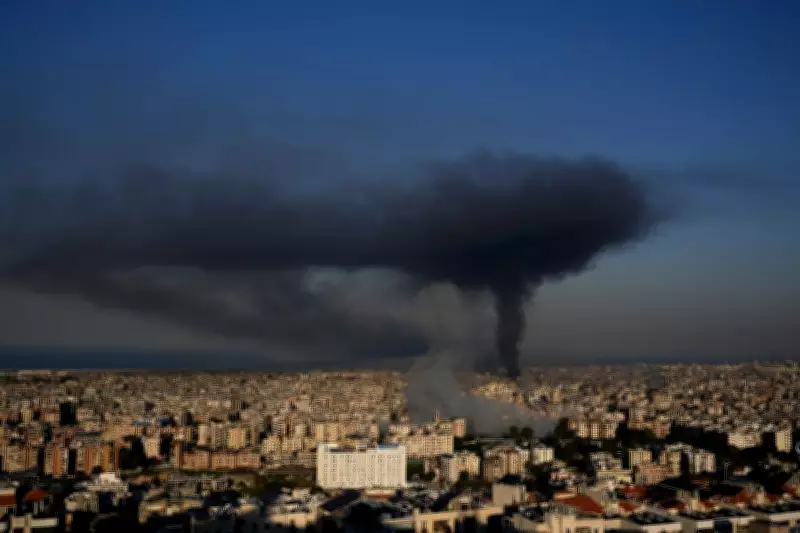
A growing number of Shiite families displaced by the ongoing war in Lebanon are reporting increasing hostility and discrimination in towns where they have sought refuge. Many feel unwelcome and face evictions, inflated rents, and suspicion from local residents, exacerbating sectarian tensions in a country already deeply divided.
Personal Struggles and Dignity in Displacement
Hussein Shuman, a 35-year-old perfume company employee, fled the heavy bombardment of Beirut's southern suburbs when the Israel-Hezbollah war erupted in early March. Rather than attempting to rent an apartment in areas deemed "safe" due to Hezbollah's absence, Shuman chose to set up a small tent in central Beirut for his wife and two young children. He even declined an offer from a friend to stay in the Christian mountain town of Zgharta, preferring the hardships of tent life to potential humiliation.
"By staying here I have my dignity and respect," Shuman said, as he received an open-air haircut near his flooded tent. "We will not stay in a place where we are going to be humiliated." His story reflects the limited options for over 1 million displaced people, mostly Shiites, who face widespread discrimination in housing and community integration.

Sectarian Tensions and Housing Discrimination
In a country with a history of sectarian conflict, including a 15-year civil war, displaced Shiites encounter significant barriers. Landlords in Christian areas often refuse to rent to them or demand exorbitant rents and deposits that few can afford. Fatima Zahra, 42, from Beirut's southern suburbs, revealed that she and her sister sold their finest jewelry to pay a $5,000 upfront charge for two months' rent.
In some Beirut neighborhoods, displaced families must undergo security checks by landlords who inform agencies to verify any links to Hezbollah before allowing them to rent. This scrutiny stems from rising fears as Israeli airstrikes target Hezbollah officials or Iran's Revolutionary Guard members in predominantly Christian, Sunni, and Druze areas, leading hosts to worry that militants are hiding among civilians.
Violence and Community Backlash
The conflict has intensified social frictions, with incidents like an Israeli airstrike in mid-March on an apartment in Aramoun killing three people, prompting local residents to call for displaced individuals to leave. Similar strikes in Bchamoun killed three, including a four-year-old girl displaced from Hezbollah strongholds. Although Israel did not announce targets, neighbors assumed Hezbollah links, fueling anger.
"Had we known that they were linked to Hezbollah, we would have kicked them out," said an angry apartment owner in Bchamoun. In late March, a missile explosion over the Christian Keserwan region led to attacks on displaced Shiites in Haret Sakher near Jounieh, with residents shouting, "We don't want them here," and accusing some displaced of labeling hosts as "Zionists" for criticizing Hezbollah.
Political and Humanitarian Concerns
Lebanese leaders express deep concern over potential civil strife. Legislator Taymour Joumblatt, leader of the Druze-led Progressive Socialist Party, emphasized, "The most important thing is to reduce sectarian pressures on the ground. Our Shiite brothers are part of this country and our humanitarian duty is to help them." Meanwhile, U.S. Ambassador Michel Issa faced criticism for stoking sectarianism by stating the U.S. asked Israel to spare Christian villages, though with no guarantees if Hezbollah infiltrates.
Fearing escalating tensions, the Lebanese army has increased street presence, with commander Gen. Rudolphe Haikal urging troops to be "firm in the face of any attempt to undermine internal stability." Police, including SWAT units, patrol major intersections and tent cities like Shuman's to prevent friction. Municipalities, such as in the Sunni town of Naameh, have segregated schools for displaced Shiites and Sunnis to avoid conflicts.

Broader Implications and Economic Paralysis
The war has caused widespread destruction and paralyzed Lebanon's economy, which is still reeling from a historic crisis that began in late 2019. The country has not recovered from the previous Israel-Hezbollah conflict in 2024, and the renewed fighting exacerbates humanitarian and sectarian challenges. Maha Yahya, director of the Carnegie Middle East Center, noted, "The Israeli targeting campaign has created a lot of paranoia. If you see a displaced person, maybe you wonder, 'What if this person is a target?'"
As displaced Shiites navigate hostility and evictions, the risk of internal conflict looms large, threatening Lebanon's fragile social fabric amidst ongoing warfare and economic collapse.