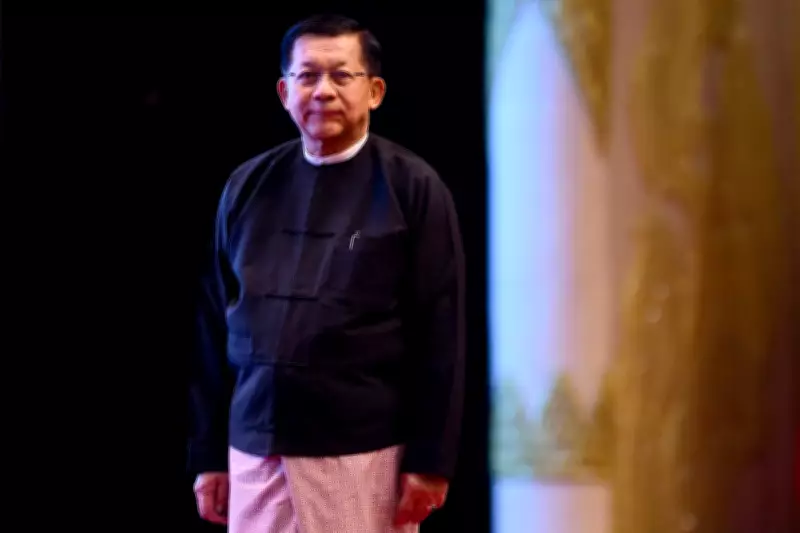
Myanmar's Dictator Assumes Civilian Presidency Amid Global Outcry
In a move reminiscent of political theatre, Myanmar's military leader Min Aung Hlaing has been sworn in as a civilian president in the grandiose capital of Naypyidaw. Despite the ceremonial fanfare, this transition is widely seen as a facade, with international observers and the Burmese population rejecting it as a sham. The event underscores the junta's ongoing grip on power, even as global efforts to hold Min Aung Hlaing accountable for human rights abuses gain momentum.
A Legacy of Atrocities and Repression
For over 15 years, Min Aung Hlaing has served as the supreme commander of Myanmar's armed forces, overseeing what the United Nations describes as a reign of terror. Under his leadership, tens of thousands of civilians have been killed through indiscriminate airstrikes, forced disappearances, and torture. The military has systematically used sexual violence, including rape, as a weapon of war, while transnational crimes such as scam centres and human trafficking have flourished. Millions have been forcibly displaced, exacerbating Southeast Asia's refugee crisis.
Min Aung Hlaing is also the architect of the 2017 clearance operations against the Rohingya people, an ongoing genocide that forced over 700,000 refugees into Bangladesh. Documented atrocities include mass murder, gang rape, arson attacks, and the burning of entire villages, with horrific incidents such as babies thrown into flames and young boys beheaded. This brutal campaign has drawn condemnation worldwide, yet the dictator now ascends to a civilian role with full state honours, mocking democratic principles.

Sham Elections and International Legal Challenges
The swearing-in follows sham elections where political opponents were banned, incarcerated, and tortured. Min Aung Hlaing's military-backed Union Solidarity and Development Party claimed a landslide victory, as reported by pro-military state media, despite minimal support in previous polls. Concurrently, new charges of genocide and crimes against humanity have been filed against him in Indonesia, adding to existing arrest warrants from Argentina and allegations in the Philippines and East Timor. The International Criminal Court prosecutor has also signaled intent to pursue his arrest.
Indonesia's new penal code allows for universal jurisdiction, enabling prosecution regardless of the perpetrator's nationality or crime location. As the world's most populous Muslim country, Indonesia finds Min Aung Hlaing's actions against Rohingya Muslims particularly egregious, especially given the influx of refugees into its territory. The Myanmar Accountability Project, alongside Rohingya survivor Yasmin Ullah and Indonesian public figures, filed a complaint in Jakarta, with authorities formally accepting the case under universal jurisdiction—a first in Southeast Asia.
Escalating Violence and Cabinet Appointments
Recent data reveals escalating atrocities, with UN reports indicating a 53% increase in civilian deaths from airstrikes in 2025, totaling at least 982 fatalities. The electoral period in late 2025 and early 2026 saw over 400 aerial attacks, killing more than 170 civilians and making 2025 the deadliest year for children since 2021. Min Aung Hlaing's new cabinet includes figures linked to egregious crimes, such as Lieutenant General Tun Aung, the defence minister who oversaw airstrikes on non-junta areas, and Lieutenant General Nyunt Win Swe, the home minister sanctioned for suppressing protests.
With China's role in supplying military equipment, the appointment of Tin Maung Swe, former ambassador to Beijing, as foreign minister highlights geopolitical complexities. Amid this backdrop, pressure for accountability is building, with civil society groups advocating for justice. The response of governments to Min Aung Hlaing's presidency serves as a litmus test for their commitment to the rule of law and public sentiment.

The Dawn of Universal Jurisdiction in Southeast Asia
The case in Indonesia marks a potential turning point, signaling the emergence of universal jurisdiction in Southeast Asia. As Min Aung Hlaing consolidates power, international legal actions offer hope for victims seeking redress. The Myanmar Accountability Project and allies continue to push for investigations and proceedings, emphasizing that accountability for atrocity crimes is crucial in the face of ongoing repression. This development underscores a growing trend where global norms challenge impunity, even in regions with complex political landscapes.