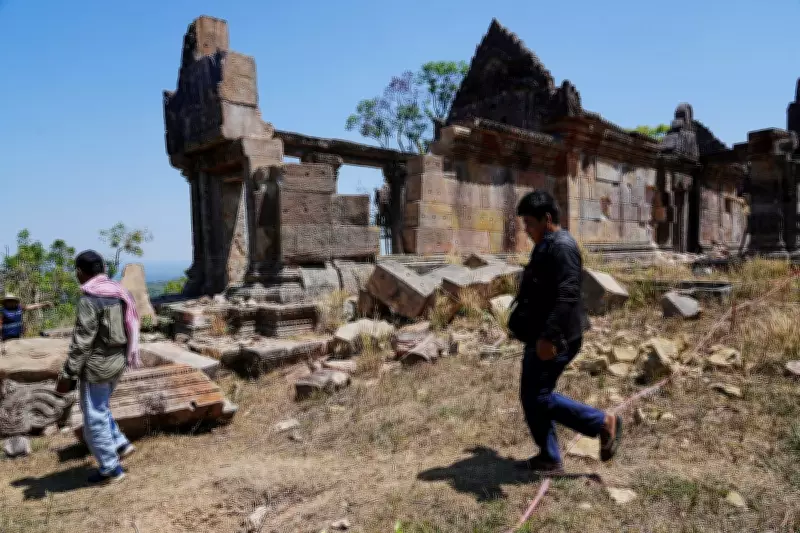
Ancient Cambodian Temple Faces Imminent Collapse After Border Clashes
The 11th-century Preah Vihear temple, a revered UNESCO World Heritage site perched on a 525-metre cliff in the Dangrek Mountains, is now in grave danger of structural collapse following renewed border fighting between Cambodia and Thailand. This ancient Khmer Empire structure, built by the same civilization that constructed Angkor Wat, has endured decades of sporadic conflict, but recent intense combat has left it critically damaged.
Decades of Conflict Take Their Toll
Cambodia and Thailand have engaged in on-again, off-again border disputes over the Preah Vihear temple for generations, with tensions escalating significantly in recent years. The temple was designated a UNESCO World Heritage site in 2008, a decision that intensified Thai nationalism and contributed to armed conflicts in 2008 and 2011. The International Court of Justice ruled in 1962 that the temple and its surrounding area belong to Cambodia, a ruling reaffirmed in 2013.
However, the fragile ceasefire that ended bitter fighting three months ago has done little to protect the ancient site. Cambodian officials report that the temple sustained damage in 142 locations during July clashes and at 420 more locations during heavier, more sustained combat in December. All five of the temple's notable gateway pavilions were damaged, with three almost unrecognizable.

A Temple Transformed from Sanctuary to Battlefield
Where tourists once admired elaborate carvings and magnificent views over the Cambodian plains, there is now stone debris, artillery craters, and the ashes of burnt vegetation. The site has been closed to tourism due to unstable walls and concerns about unexploded ordnance, with areas roped off and dotted with land mine warnings.
"The temple has turned quiet, and its beauty looks so sorrowful because of the tragedy," said Hem Sinath, archaeologist and deputy director-general of Cambodia's National Authority for Preah Vihear. Conservation staff, groundskeepers, and troops remain stationed in and around the temple, from which Thai soldiers can be seen just across the border.
Accusations and Counterclaims
The two nations offer conflicting narratives about the temple's militarization and damage. Cambodia's Information Minister Neth Pheaktra accused the Thai military of deliberately damaging the temple, stating: "Preah Vihear temple belongs to all humankind. It is not an enemy of Thailand."
Thailand has argued that Cambodia militarized the temple by installing weapons systems, storing ammunition, and using it as a surveillance base, thereby voiding its wartime protection under international law. Thai Army spokesperson Maj. Gen. Winthai Suvaree insisted that Thai forces directed their fire strictly at military targets.
Immediate Threats and Restoration Challenges
Hem Sinath expressed grave concern about the upcoming rainy season, which typically begins in late May or early June: "Experts have predicted that during the upcoming rainy season, some structures on the verge of collapsing could finally fall."
Restoration efforts face significant obstacles:
- Previous renovation projects involving India, China, and the United States have been suspended since fighting broke out
- Urgent repair projects are hindered by safety and security concerns along the still-volatile border
- No independent outside evaluations of the damage are currently available
- The ancient northern staircase, previously restored through U.S.-funded conservation, sustained severe hits from repeated bombardment
"We have a plan; we want to do a repair – the sooner the better, but as you see, it depends on the situation along the border," Hem Sinath explained.
Human Cost of the Conflict
The temple damage represents just one aspect of the broader humanitarian crisis. Cambodia has reported that more than 640,000 people were displaced from border regions during the fighting, with almost 37,000 yet to return to their homes. Each nation blames the other for starting the fighting that flared in July and December.
As the fragile ceasefire holds, the fate of this 1,000-year-old cultural treasure hangs in the balance, caught between national pride, historical claims, and the immediate realities of border conflict.