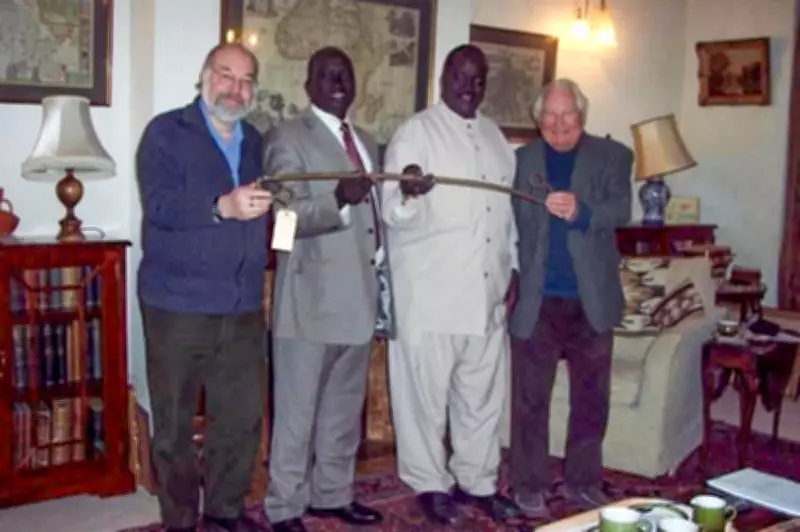
In South Sudan, a prophet's sacred stick is helping to fuel a violent struggle for political power, drawing on ancient tribal history to influence modern conflicts. According to oral tradition, during a tribal battle fought over a century ago, a prophet raised his stick and summoned a thunderbolt that killed a crowd of fighters from a rival tribe.
The Legend of Ngundeng Bong's Dang
That stick is known as Ngundeng Bong's dang, and its reputation as a magical and dangerous weapon has endured through generations. Not only has its mythical status persisted, but it also plays a significant role in the latest cycle of violence in the world's youngest nation. The dang has emerged as a contentious relic in the quarrel between South Sudan President Salva Kiir and opposition leader Riek Machar, who took ownership of the stick years ago.
Prophecy and Political Ambition
Machar is believed by his followers to be the gap-toothed, left-handed man who would become president in fulfillment of Ngundeng's prophecy. While this belief sustains Machar's political struggle, it also makes him a target for his opponents. Kiir and Machar come from different ethnic groups: Kiir is Dinka, the country's largest group, while Machar—like Ngundeng—is Nuer, the second largest.

Fighting exploded along ethnic lines when Kiir and Machar disagreed in 2013. Kiir claimed Machar was plotting a coup, prompting Machar to launch a rebellion that escalated into a deadly civil war, resulting in an estimated 400,000 deaths. Machar returned as Kiir's deputy following a 2018 peace deal that has since collapsed. Now, fighting has escalated so severely that authorities are ordering civilians to evacuate rebel-held towns, despite Machar being under house arrest and accused of treason.
Spiritual Motives in Conflict
Some rebels, including a militia known as the White Army, believe they are fighting to fulfill Ngundeng's words and finally install Machar as president. Spiritual motives influence many combatants, with independent researcher Mawal Marko noting, "Very much of the conflict is linked to spirituality. Most of the people fighting, especially the eastern Nuer, you find so many fighting in the name of Ngundeng."
Douglas H. Johnson, the British-American historian who brought the dang back to South Sudan, compares the stick's authority to a parliamentary speaker's mace, necessary for official business to proceed. Machar is said to keep the dang as a religious object, using it to galvanize political support, according to Johnson and others who spoke to The Associated Press.
Historical Context and Prophecies
South Sudanese mythology is rich with tales of cruelty, and the fight between Kiir and Machar represents the latest chapter in the hatred Ngundeng himself witnessed and later sought to stop: Dinka against Nuer, Nuer against Dinka. Ngundeng's prophecies were expressed in songs that some people still play online today, searching for revelations about their country's fate.
Christopher Tounsel, a historian of greater Sudan at the University of Washington, commented on the ambiguity of these prophecies: "If we look at a prophecy progressively, there is always room for doubt. That's the most powerful thing: What people think and what they feel. That is the thing that can be the most impactful—not what it is, but what people perceive to be."
The Stick's Journey and Symbolism
Ngundeng, who died in 1906, is believed to have predicted South Sudan's independence and foreseen violence. He prophesied a messianic Nuer leader for South Sudan who lacked facial marks, was left-handed, gap-toothed, and had been with a white woman—traits Machar is said to possess. The dang, fashioned from a tamarind tree root and decorated with copper wire, measures about 110 centimeters long. One end broke during the 1878 battle won by the Nuer, and Ngundeng never used it as successfully again.
After Ngundeng's son was shot dead trying to use it against colonial troops, the stick was collected as a trophy and presumed lost until discovered in Bournemouth by Johnson. He bought the relic and returned it to South Sudan in 2009, where Machar received it in a ritual involving a slaughtered white ox. The dang's return was seen as a national event, with Kiir warning it should not be used to wage war.

Current Political Implications
While serving as vice president, Machar kept the dang in his house, showing it to visiting Nuer leaders to build his coalition. Johnson noted that if Machar has the stick, it's understandable Kiir "would be worried that it was out of the control of the government." Machar's spokesman, Puok Both Baluang, stated that freeing Machar would be "synonymous with the release of peace," yet the 73-year-old remains a formidable opponent for Kiir, who has governed without an electoral mandate for 15 years.
Authorities plan elections in December, but a vote without Machar on the ballot could disenfranchise the Nuer. Their rivalry dates to the 1990s, when Machar led a breakaway unit during the independence war, leading to accusations of treachery and a massacre targeting Dinka. This sowed lifelong distrust between the two leaders.
Uncertain Future and Cultural Heritage
It is unclear if the dang remains in Machar's house, but archivist Peter Tako described it as "the heritage of South Sudan," though not housed in national archives. He said, "We hear it is with Riek Machar. I don't even talk about it," noting its sacred nature and embedded political authority. As South Sudan grapples with ongoing violence, the dang continues to symbolize the deep-seated ethnic and spiritual divisions driving the nation's political power struggle.