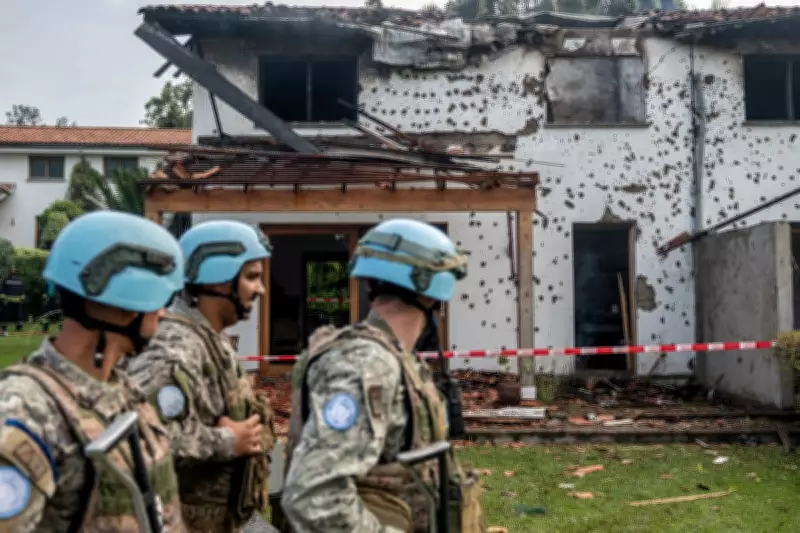
The United Nations has issued a stark warning about the rapidly deteriorating security situation in the mineral-rich eastern regions of the Democratic Republic of Congo. During a critical briefing to the UN Security Council on Thursday, acting top envoy Vivian van de Perre detailed an alarming escalation in hostilities, marked by the increasing deployment of heavy weaponry and offensive drone technology.
Expanding Conflict Zones and Regional Risks
Van de Perre, who leads the nearly 9,000-strong UN peacekeeping mission MONUSCO, reported that despite the withdrawal of Rwanda-backed M23 rebels from Uvira in January under international pressure, violent clashes have intensified across North Kivu and South Kivu provinces. The conflict now threatens to spill over into neighbouring regions, with front lines shifting dangerously close to Burundi's border. This geographical expansion significantly heightens the risk of a broader regional conflagration that could destabilise Central Africa.
New Tactics and Civilian Threats
The envoy highlighted two particularly concerning developments in the conflict's evolution. First, the fighting has spread from its traditional epicentres in North and South Kivu into Tshopo province, indicating a worrying geographical expansion. Second, and perhaps more immediately dangerous, is the growing use of heavy weapons and drones in urban environments. These tactics pose severe risks to civilian populations and critical infrastructure, with recent incidents affecting sites including Bangoka Airport in Kisangani and areas within Goma town itself.

M23 Consolidation and Humanitarian Crisis
Compounding the military escalation, van de Perre noted that M23 rebels are establishing parallel administrative structures in territories under their control, including the strategically important city of Goma. This development further undermines state authority and creates substantial obstacles for humanitarian organisations attempting to deliver essential aid to affected populations. Eastern Congo has endured decades of instability, with government forces battling over 100 armed groups, primarily competing for control of the region's valuable mineral resources.
International Diplomacy and Peace Efforts
In response to the crisis, officials from Congo, Rwanda, and the United States convened in Washington last week, agreeing on coordinated steps to de-escalate tensions. Following her Security Council briefing, van de Perre emphasised to reporters that the "extremely volatile" situation necessitates full implementation of all existing agreements. She advocated for an immediate ceasefire as the first critical step, followed by reopening airports and ensuring freedom of movement for peacekeeping forces.
Massad Boulos, who chaired the council meeting and serves as a senior adviser to US President Donald Trump on African and Arab affairs, affirmed that "MONUSCO remains indispensable to the success of the peace process." He stated that resolving the eastern Congo conflict represents "a matter of highest priority" for the Trump administration, echoing van de Perre's call for all parties to honour their commitments, particularly regarding ceasefire observance.
The situation in Ituri province also remains alarming, with numerous casualties resulting from rebel group attacks on mining sites. As the conflict enters this dangerous new phase with advanced weaponry and expanding geographical reach, the international community faces mounting pressure to prevent further civilian suffering and regional destabilisation.