Underground School in Nikopol Provides Sanctuary from Russian Drone Attacks
In a harrowing dispatch from the frontline city of Nikopol, World Affairs Editor Sam Kiley reports on children, parents, and teachers who face daily threats from Vladimir Putin's deadly quadcopters. The city, situated perilously close to Russian forces, has become a hunting ground for drone pilots operating from the captured Zaporizhzhia nuclear power station.
The Daily Gauntlet of Survival
Nikopol, still under Ukrainian control, has seen its population halve to approximately 50,000 since the war began, with about 6,500 children among those remaining. Positioned directly on the frontline, the city endures daily attacks that have persisted for four years. Roads into Nikopol present a dangerous gamble, with residents racing along icy routes hoping to avoid either drone strikes or freezing accidents.
Russian pilots operate First Person View drones (FPVs) from the nuclear plant across the river, close enough to see Nikopol's streets with the naked eye. These operators take grim satisfaction in witnessing their victims' faces as they dive quadcopter killers onto chosen targets.

A Subterranean Educational Haven
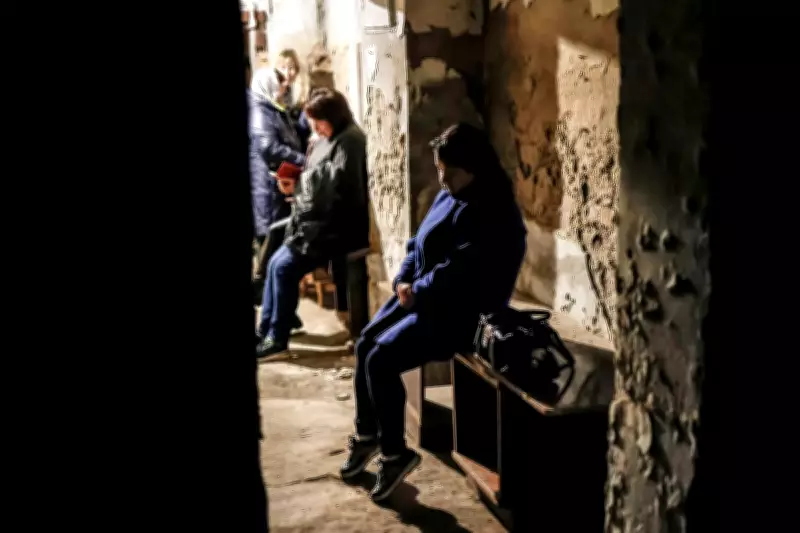
Despite the constant danger, half of Nikopol's inhabitants have chosen to stay. They navigate the streets like hunted prey while sending their children to underground schools for safety. At School Number 6, the main atrium stands silent except for occasional footsteps, while outside, the distant crack and thump of drones penetrating bad weather rattle the hall windows.
Teachers lead students into cellars decorated with instructional posters about spotting unexploded bombs and evading drones. In one windowless classroom, twenty seven- and eight-year-old Ukrainian children greet visitors with smiles, their laptops open before them as teacher Iryna Sichkarenko conducts English lessons.
This underground space provides warmth and security where learning and friendship can flourish—something impossible above ground for more than half these children's lives.
Psychological Toll on Young Minds
Bohdan, aged seven, reads aloud with dramatic inflection from a story about Grandpa Frost, though whimsy holds little place in these youngsters' realities. His mother, Inna Liaskovska, describes how her son loves school but suffers from anxiety-induced emotional explosions.
"Sometimes he gets nervous. He can react very childishly and he can't hold his emotions," Liaskovska explains. "He needs to release them. He releases them through hysterics, shouting for no reason."
She attributes this to the constant sense of being hunted whenever they leave their flat, recalling incidents where drones forced them to hide behind trees or run for building entrances. Despite having evacuated to Poland for three months in 2022, they returned because, as Liaskovska states, "Home is home."
Teenage Desocialization and Future Concerns
The underground school, largely funded by Street Child International, offers counseling, social support, supplementary education, and meals. Anatasia Ukhan, Street Child's local manager and a teacher with a thirteen-year-old child, warns about increasing desocialization among teenagers.
"These children don't know how to communicate with each other; they are closed," Ukhan observes. "Especially teenagers... With them, it's the hardest. Small kids, they are still sincere and open, and they hope for the best. But the teenagers, grades 6 to 9, are much more difficult. They are closed. They don't talk to anyone."
She emphasizes that this psychological damage will create significant future problems for the community.
Statistical Realities and Strategic Shifts
Putin has intensified attacks on civilian targets over the past year, focusing particularly on Odesa, Kramatorsk, and Ukraine's energy systems. The Russian president aims to drive Ukraine from illegally annexed eastern territories and cripple the country long-term.
Meanwhile, so-called "peace talks" led by the United States—which has adopted a largely pro-Russian stance demanding Ukrainian concessions for mineral rights and cease-fires—have yielded no results.

In Nikopol, the steady state of attacks has evolved with the introduction of deadly-accurate drones. Battlefield statistics reveal drones kill approximately 80 percent of people they hit while wounding the remainder—a reversal of traditional artillery casualty patterns.
Why Residents Remain
Fifty-three of Nikopol's fifty-eight schools have been struck by Russian bombs, with additional explosions regularly hitting downtown areas. Sophia Prokopenko, fifteen, explains that residents have become experts at distinguishing between drone and artillery threats, enduring incidents daily.
"You go out into the street, and you can see or hear a drone. You go to training—a drone. If not a drone, then artillery," Prokopenko describes. "To training, to the store, to the pharmacy, just going out to throw out the trash—they are everywhere."
She insists the underground school represents their salvation: "We just can't gather in another place. If we go to a cafe—a drone, FPV, or artillery—and that's it; there's no cafe and no people. School is the only place where we can hide from this cruel world."
When asked why her family hasn't left, Prokopenko responds: "Of course, it's very scary, very difficult to constantly be in such a state. Many have left—abroad, to other cities, to relatives, to Western Ukraine—but still, the best place remains at home, no matter how hard it is here."
This steadfast determination to remain in their homeland appears to be something Putin has failed to comprehend fully, as Nikopol's residents continue their daily struggle for normalcy amid extraordinary circumstances.