Freed Venezuelan Activist Vows to Fight for Democracy After Maduro's Downfall
Jesús Armas was asleep inside Venezuela's most infamous political prison, El Helicoide, at the start of January when a thunderous explosion and a blackout heralded the dawn of a new era. The activist recalls roars of excitement echoing through the jail's cells as confused guards scurried about, signaling that something monumental was unfolding. Inmates began singing Venezuela's national anthem, a powerful cry against tyranny: "Glory to the brave people! ... Down with the chains! ... Death to oppression!"
Armas and his fellow prisoners had no clue what triggered the pre-dawn commotion on 3 January, though some speculated it was linked to the United States. Only three days later, during a rare family visit, did the 39-year-old learn that Venezuela's authoritarian president, Nicolás Maduro, had been captured in a nocturnal assault ordered by Donald Trump. "In that moment I realised ... we had a real opportunity to have a transition to democracy," Armas said last week after being released from El Helicoide after 14 months—one of over 440 political prisoners freed following Maduro's demise.
The Reality of a Slow Transition
Four days after his release, Armas was still grappling with the most startling twist in Venezuela's turbulent recent history and its implications for the country's future. "It's weird," he admitted, while preparing to join the latest pro-democracy protest since Maduro's downfall. "We are not totally in a transition, but I think we are a few steps in that direction."

Just two months earlier, at the height of Maduro's increasingly despotic rule, such public displays of defiance were unthinkable and would likely have been brutally suppressed by security forces. In 2024, more than 2,400 people—including Armas, who was abducted and tortured by armed men—were imprisoned as the dictator tried to silence allegations of election theft. However, since Maduro's removal, the mood has shifted, with recent polls showing a surge in optimism among Venezuelans after years of repression, hardship, and despair.
Last week, Armas was among thousands of mostly young demonstrators who gathered in cities across Venezuela to demand a full transition to democracy and the complete emptying of political jails. "I have the right to be in the streets and that's why I'm here," said María Fernández, 21, who participated in a rally on the palm-dotted campus of the Central University of Venezuela (UCV). Agustín González, a 20-year-old law student, added that he was marching to reject both "imperialist tutelage and continued authoritarianism" for his homeland.
The Complicated Aftermath of Maduro's Removal
The fact that Venezuela's return to democracy was not fully secured by Maduro's toppling is explained by his vice-president, Delcy Rodríguez, a UCV alumna, taking immediate control. Trump officials concluded that leaving Venezuela in Rodríguez's hands, rather than installing Nobel-winning opposition leader María Corina Machado, was the best way to avoid violence and secure access to Venezuela's vast oil reserves after the surgical strike on Maduro's military base.
"Delcy has done a very, very good job and the relationship is strong. The oil is coming out and a lot of money is being made," Trump said on Friday after his energy secretary, Chris Wright, visited Caracas—the most senior US official to do so in years. Six weeks after Maduro's abduction, Rodríguez remains in power, along with many key figures from his regime, including interior minister Diosdado Cabello and defence minister Vladimir Padrino López.
In a rare interview with NBC News, Rodríguez insisted free and fair elections would "absolutely" be held but declined to specify a timeline. Her brother, national assembly chief Jorge Rodríguez, dashed hopes for an "immediate" vote. Armas understands this bewildering disconnect between the undeniable changes brought by Maduro's overthrow and the persistence of Venezuela's undemocratic status quo better than most.

From Prison to the Streets: A Personal Journey
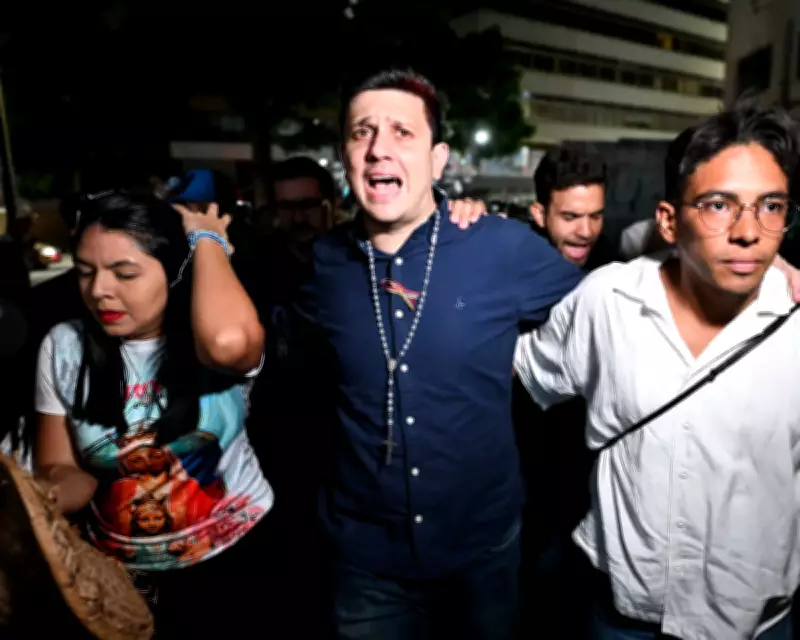
On 8 February, Armas recalls El Helicoide's director approaching him with the news that his prison nightmare was over: "Jesús, come with me ... you're getting out." Hours later, intelligence agents drove him to his family home to reunite with his 90-year-old father, whom he feared might die during his incarceration. "He didn't say anything. He just cried," the opposition leader remembered of their emotional hug after months apart.
Soon after, Armas was cruising through Caracas's streets in a convoy of motorbikes alongside colleagues, including Juan Pablo Guanipa, a well-known opposition politician also recently released. "It was amazing ... People were screaming [with] excitement," he said. However, the elation was short-lived. As night fell, armed heavies seized Guanipa, disappearing with him before he reappeared under house arrest with an ankle tag. "I was in shock," said Armas, who immediately understood the limits of Venezuela's incipient political thaw. "I thought: 'OK, if this is happening to Juan Pablo, it's going to happen to me too.'"
Armas suspected senior officials were alarmed by the outpouring of emotion following Guanipa's release and feared demands for democracy might spiral out of control if not contained. "They must be worried this could grow as people lose their fear ... that this could be like a snowball that will grow and grow and grow," said the activist, who returned to Caracas in 2021 after studying at the University of Bristol on a UK Chevening scholarship and living in London.
Armas believes regime efforts to thwart a South American glasnost by targeting figures like Guanipa, who was released on Thursday after the national assembly approved a limited amnesty law, might slow but not halt the march towards democracy. "Right now my role is to lead the reorganisation of the opposition movement in Caracas and to try to be the voice of the political prisoners," he declared. "I'm going to fight until every political prisoner is free ... And I will try to fight until we have a transition to democracy."