War Displaces Nearly One Million Lebanese in Humanitarian Catastrophe
In a devastating escalation of conflict, nearly one million people in Lebanon have been forced from their homes in just ten days, according to aid organisations. The Norwegian Refugee Council reports this figure represents approximately one in every seven residents of the small Mediterranean nation, overwhelming government resources and shelters.
Shelters Overwhelmed as Families Face Desperate Conditions
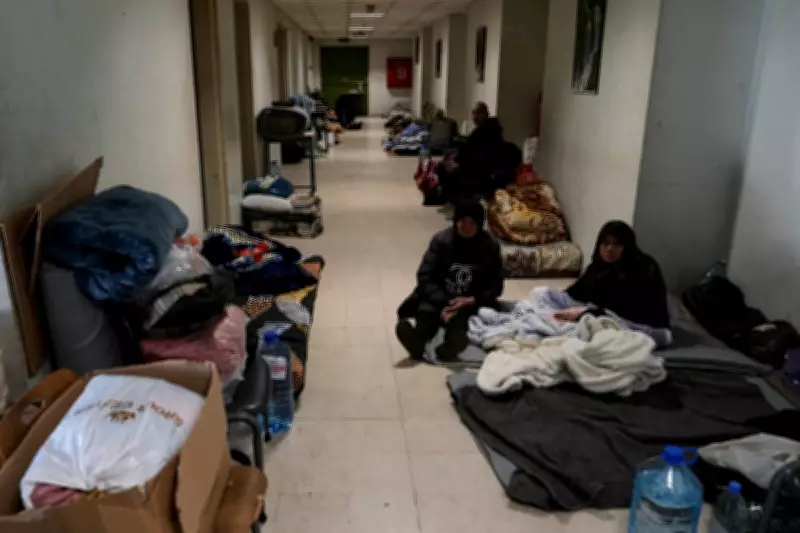
Fatima Nazha, a wheelchair user, described sleeping on Beirut's streets for two days with her family after fleeing their home in the southern suburbs. "All the schools turned into shelters were full," she explained, noting they couldn't afford hotel accommodation. The family eventually separated, with Nazha and her husband moving into a tent at Lebanon's largest sports stadium while their children and grandchildren found shelter near Sidon.
The Lebanese government, grappling with severe financial constraints, has managed to accommodate only about 120,000 displaced people despite frantic efforts to open additional shelters and secure supplies. Nazha contrasted this displacement with the previous conflict over a year ago that uprooted more than a million Lebanese, stating the current situation is "far more difficult."

Intensified Conflict and Sudden Evacuation Orders
The current hostilities began when Israel ramped up airstrikes following Hezbollah rocket attacks launched after Iran's Supreme Leader Ali Khamenei was killed. Israel issued mass evacuation orders that caught many residents unprepared, including Nazha who was unable to gather her belongings. "The strikes used to target a specific area, but now they're hitting all the areas," she observed.
Lebanon's Health Ministry confirmed on Friday that the conflict has claimed more than 700 lives, including 103 children. The violence has shattered any sense of safety, particularly after an overnight Israeli strike killed at least eight people and wounded over thirty others in Beirut's Ramlet el-Bayda neighborhood, where many displaced had pitched tents.
Stadium Shelters and Growing Humanitarian Needs
At the national sports stadium, now serving as a makeshift shelter, more than 800 people sleep in semi-open corridors beneath the stands. The facility offers toilets and sinks but lacks showers and has only sporadic electricity. "It's not enough that they bring us food," Nazha commented from her foldout bed. "A tin of sardines or a loaf of bread or a gallon of water, that's not enough."
Naji Hammoud of Lebanon's Youth and Sports Ministry, overseeing the stadium conversion, described the situation as "a race against time" as aid workers scramble to pitch tents. Mathieu Luciano, head of the International Organization for Migration in Lebanon, warned during a press briefing that "the needs are escalating much faster than our capacity to respond."
Internal Divisions and Economic Pressures
Resentment toward Hezbollah has surged within Lebanon's deeply divided society, with many Lebanese hoping the militant group wouldn't respond to the attack on Iran. Internal tensions continue to simmer as the conflict disrupts daily life.
Economic pressures have compounded the crisis:
- Landlords have increased apartment rents to dissuade new tenants fearing their properties might become targets
- Hotels have implemented stricter guest vetting since Israel struck two hotel rooms, claiming to target Iranian Revolutionary Guard members operating in Beirut
- Those without family connections or financial means have resorted to sleeping on streets or in cars around central Beirut
Mass Exodus and Gridlocked Escape Routes
The displacement occurred with unprecedented speed compared to previous conflicts. "What took months took days," observers noted, referring to Hezbollah's initial rocket attack followed by Israel's swift bombardments. Israel first called for evacuation from villages south of the Litani River, then warned residents to leave Dahiyeh, a densely populated Shiite suburb on Beirut's southern edge.

All main roads leading to the capital from southern Lebanon became gridlocked as people scrambled for safety. Seganish Gogamo, an Ethiopian worker who fled Nabatieh, described spending "two days on the road" before finding shelter in a Beirut church hosting migrant workers from Asia and Africa.
Uncertain Future and Border Tensions
With approximately 100,000 Israeli troops amassed along the UN-mandated Blue Line dividing the two countries, many fear an anticipated ground invasion. Some residents, like Joe Sayyah from the Christian border village Alma al-Shaab, initially remained hoping their community would be spared as Israel has mostly targeted Shiite areas where Hezbollah operates.
Sayyah and others appealed to the Vatican and United States, describing themselves as bystanders with no military presence. However, when a friend was killed by an Israeli drone strike while watering plants, they knew it was time to leave. After a funeral Mass in Beirut, Sayyah expressed the grim realization that "this time around, there's a huge possibility we may not be able to go back to our village."
As humanitarian groups struggle with years of underfunding and the government scrambles to respond, Lebanon faces a deepening crisis with no end to the fighting in sight.