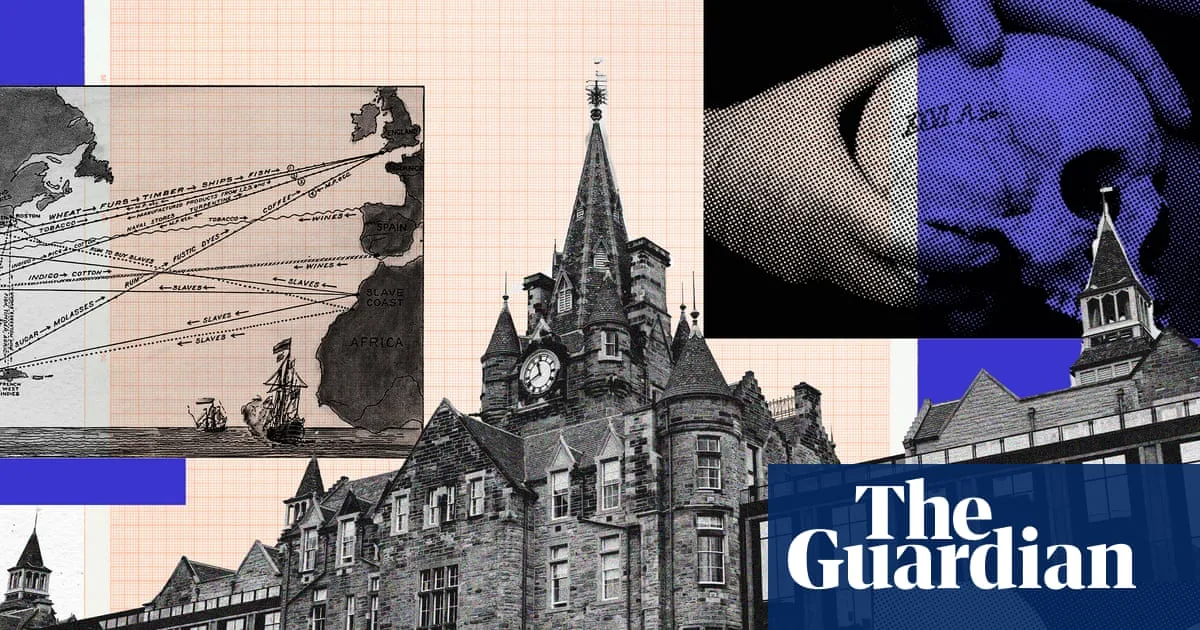
Behind a series of locked doors at the University of Edinburgh's Anatomical museum lies the 'skull room', a rarely visited chamber containing around 1,500 human skulls in mahogany-framed glass cabinets. Hundreds of these were shipped to Scotland by supporters of phrenology, the discredited 18th-century belief that intelligence and character could be determined by skull shape.
The collection tells a story about the role played by one of the UK's oldest and most respected universities in creating and perpetuating ideas about racial superiority from the late 1700s onward. This prompted the university to commission the most extensive review by any UK institution into its connections with transatlantic slavery and empire.
The inquiry examined the conduct of its academics at the time, as well as the university's current demographics and underrepresentation of Black professors and students. Research fellows spent months going through archives and reading lecture notes from the 1700s.

Severin Carrell, the Guardian's Scotland editor, noted that debate within the university about its role in slavery has grown in recent years. The University of Glasgow became the first UK institution to critically examine its role in transatlantic enslavement in 2018, triggering similar reviews by other bodies including the Church of England and the National Trust.
The Black Lives Matter protests in 2020 further accelerated these conversations. The Edinburgh review now stands as the most extensive investigation of its kind carried out by any UK university, with the institution set to announce what actions it will take in response to the findings.