The architectural world is in mourning following the death of Frank Gehry, the legendary Canadian-American architect whose sculptural, titanium-clad buildings redefined city skylines across the globe. The award-winning designer passed away at the age of 96 after a brief respiratory illness.
A Legacy Cast in Titanium and Imagination
Frank Gehry's career was a testament to radical creativity, leaving behind a portfolio of structures that are as much public art as they are functional buildings. His work challenged conventional geometry, employing undulating forms and unconventional materials to create breathtaking landmarks.
Perhaps his most famous creation is the Guggenheim Museum in Bilbao, Spain. Completed in 1997, its shimmering, ship-like form is credited with revitalising the entire city, a phenomenon often termed the "Bilbao Effect." This building alone cemented his status as a starchitect whose work had the power to transform urban fortunes.

Masterpieces From Dundee to Disney Hall
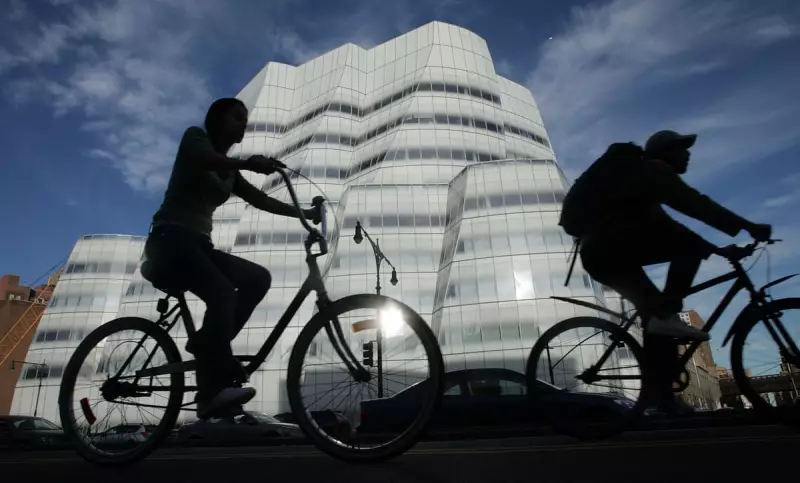
Gehry's influence was truly international. In the United States, his Walt Disney Concert Hall in Los Angeles (2003) is a symphony of stainless steel curves, while his first New York building, the IAC Building (2007), features a distinctive glass facade resembling billowing sails.
His vision also graced the United Kingdom. London's Serpentine Gallery Pavilion in 2008 was a temporary yet iconic structure, and the Maggie's Centre in Dundee, Scotland provides a nurturing, architecturally profound space for cancer care. Other global highlights include:
- The Dancing House in Prague, a deconstructivist landmark.
- The Luma Foundation tower in Arles, France, a swirling aluminium-clad structure.
- The Marqués de Riscal winery hotel in Elciego, Spain, adorned with his signature titanium ribbons.
- 8 Spruce Street in New York, a rippling residential skyscraper.
The End of an Architectural Era
Frank Gehry's death marks the closing of a chapter for contemporary architecture. His fearless approach to design, blending art with engineering, inspired a generation and proved that buildings could be both profound cultural statements and beloved public attractions. His structures, scattered from Las Vegas to Düsseldorf, will stand as permanent monuments to a uniquely inventive mind.
While the architectural community reflects on his immense contribution, the public can continue to experience his genius firsthand by visiting his buildings—museums, concert halls, and universities that continue to awe and inspire millions around the world.