Avian Art Transforms Hong Kong's Lantau Island with Migratory Bird Murals
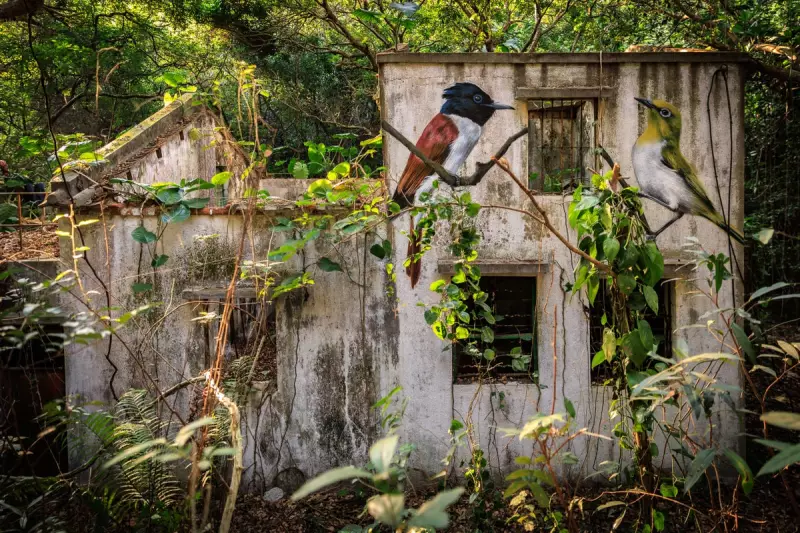
Across the weathered and neglected walls of a Hong Kong island, an extraordinary collection of bird murals has emerged, bringing vibrant life to forgotten spaces. These painted creatures perch delicately on concrete ledges, nestle into peeling stucco, and occasionally appear to soar across the rooftops of stone houses. This remarkable flock has settled in Wang Tong Village, a tranquil corner of Lantau Island situated on Hong Kong's southwestern periphery.
The Flock Project Takes Flight
This artistic flock differs significantly from living birds - each magnificent creature is meticulously crafted from paint. The murals serve a purpose far beyond mere decoration or drawing attention to overlooked places. They exist to narrate the incredible stories of the extraordinary journeys undertaken by migratory birds that pass through Hong Kong's territories.
The visionary behind this initiative, Dominic Johnson-Hill, found inspiration through conversations with his ornithologist neighbour. Learning about the Amur falcon's remarkable migration - traveling from Manchuria, pausing briefly on Lantau Island, then continuing across Myanmar, India, and Madagascar before reaching South Africa - sparked a profound realisation.

"I just assumed these birds lived on the island," Johnson-Hill recalls. "But they're not. They're passing guests."
From Vision to Vibrant Reality
That initial sense of wonder evolved into what would become The Flock Project. Johnson-Hill looked at the abandoned house adjacent to his own property and imagined a magnificent red-billed blue magpie painted across its wall. "They just seemed to belong there," he explains.
To transform this vision into reality, Johnson-Hill sought an artist capable of painting birds with both anatomical accuracy and emotional depth. He discovered British muralist Rob Aspire, renowned as "The Birdman" for his intricate and expressive avian artworks. What began with a single bird mural quickly expanded - a year later, Johnson-Hill invited Aspire back to create seven additional murals across the island.
Ecological Significance and Artistic Harmony
Each bird species was carefully selected for specific reasons:
- Ecological presence within Hong Kong's environment
- Visual harmony with the surrounding architecture
- Symbolic resonance with particular locations
A brilliant kingfisher now keeps watch over a stream where fishing has been prohibited, while a Swinhoe's white-eye blends seamlessly into walls near trees where its distinctive, fluting call still echoes through the air.
Nearly all murals adorn abandoned homes, with one notable exception. High on Sunset Peak, 868 meters (approximately 3,000 feet) above sea level, a long-tailed shrike appears to perch naturally on the rooftop of a ninety-year-old stone house, surveying the magnificent mountain landscape unfolding below.
Community Engagement and Conservation Awareness
The murals have attracted hundreds of visitors, many traveling from Hong Kong's urban centres to explore Lantau's quieter corners. Visitors wander trails and village alleys, with some weekend explorers bringing chalk to mark arrows, transforming village paths into treasure maps for subsequent bird hunters.
This artistic initiative demonstrates how noticing beauty can become the first step toward wanting to protect it. Johnson-Hill has developed an online map to guide visitors and is planning the project's next phase, which will depend on what opportunities emerge - perhaps another derelict building brought to his attention, or conditions that make another bird mural possible.
Birds migrate, disappear, and sometimes return - or sometimes they don't. People follow similar patterns, with villages emptying while walls remain standing. Now, some of those walls feature painted birds, creating lasting memories of both the artwork and the remarkable creatures they represent.