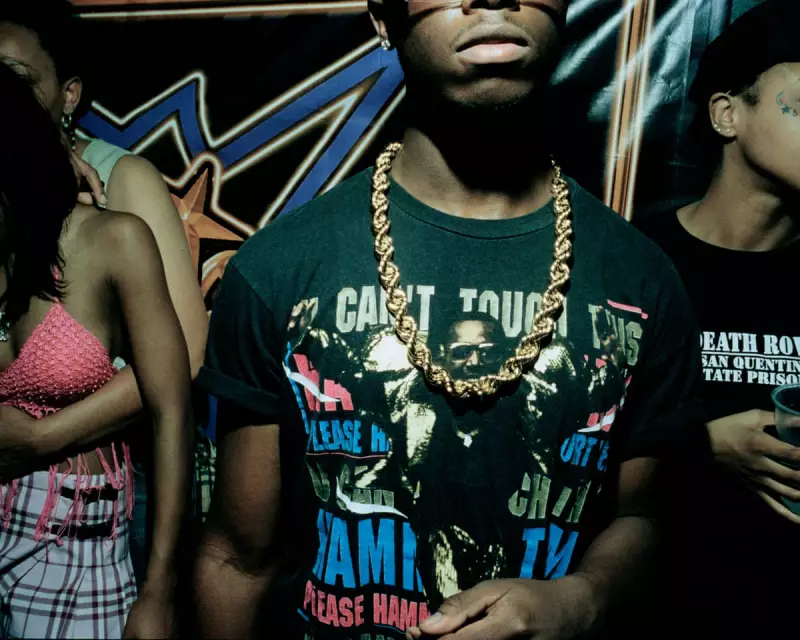
A captivating new archival exhibition in London is shining a spotlight on the vibrant and often overlooked stars of the city's Black queer nightlife scene. Titled Reunion 79-21: Revisiting Black Queer London Clubland, this showcase boasts a rich collection of images spanning from the late 1970s to 2021, offering a visual journey through decades of riotous and transformative club culture.
Chronicling a Cultural Evolution
The exhibition traces the emergence and evolution of Black queer club culture against a backdrop of significant social challenges. It addresses issues such as racial exclusion, homophobia, the devastating HIV/AIDS crisis, ongoing gentrification, and the persistent erasure of Black queer histories from mainstream cultural narratives. By doing so, it provides a powerful testament to the resilience and creativity of this community.
Insights from the Photographers
Photographer Jason Manning, whose work features prominently, reflects on the nuances of documenting these spaces. He notes, "Being outside of a situation or scene can be a useful position to be in and can facilitate the documentation process. At the same time, participating, even momentarily, can be a rewarding process both in terms of capturing material and feeling closer to the subject matter." Manning emphasises that his most successful nightlife images often depict intimacy, where his presence as a photographer is hardly noticed, allowing for a celebration of the environment and its people.

He also highlights the diverse characters that populate night spots, stating, "There are always a multiplicity of characters populating night spots. Often people off to the side who are perhaps more reticent about being the centre of attention can also add to the narrative." Regarding fashion and expression, Manning adds, "The crowd will always bring their own colour to the event in more or less subtle ways. Permissive spaces seem to propagate fresh and innovative fashion statements, blurring the boundaries between irony, acceptability and taste."
Historical Highlights and Personal Stories
The exhibition includes works from other photographers like Dave Swindells, who shares personal anecdotes behind his images. One shot captures Tony Rahaman at The Lift at Stallions in 1983, with Swindells explaining, "Photographers often start out by snapping their family and friends, and I did the same. I was fortunate that my brother Steve was a club promoter, so my first nightlife photos were taken at The Lift, a pioneering gay night where the music was mostly Black American imports and the crowd were predominantly queer and very diverse."
Another image features Winn Austin at the Kinky Gerlinky Voguing Ball in 1990, with Swindells recalling, "I've got so many shots of Winn Austin, the magisterial co-host of Kinky Gerlinky, sashaying along the catwalk while introducing the riotous competitors and guest stars at spectacular Kinky Gerlinky parties." He describes this closeup as a favourite, taken next to an 18th-century-inspired light fitting at the Café de Paris.
Iconic Venues and Performances
The photographs transport viewers to iconic London venues such as Area in Vauxhall, The Candy Bar in Soho, Heaven, and The Downbeat in Frith Street. These spaces were hubs of creativity and community, where drag queens, voguers, and performers like Roy Inc and Juicy Lucy made their mark. Swindells recounts a Halloween party at Legends in Mayfair, where Roy Inc dressed in drag for the first time, set to perform to Stephanie Mills' "The Medicine Song," with Juicy Lucy as a backing singer.
He also mentions The Embassy as a prestigious location for one-nighter clubs like The Lift, noting its reputation as a queer-friendly venue with an excellent sound system. At The Downbeat, a piano bar in Soho, guests like Victoria Wilson-James (later of Soul II Soul) and others sang along to Motown and soul classics, creating an inclusive atmosphere.
Curatorial Vision and Exhibition Details
Curated by Shaun Wallace, Reunion 79-21 aims to revisit and celebrate the legacy of Black queer London clubland. The exhibition is showing at the Great Pulteney Street gallery in London until 25 January, offering a rare opportunity to explore this dynamic cultural history through photography.

By presenting these images, the exhibition not only preserves memories but also sparks conversations about identity, community, and the ongoing fight for recognition in the face of societal pressures. It serves as a vibrant reminder of the power of nightlife as a space for expression, solidarity, and joy.