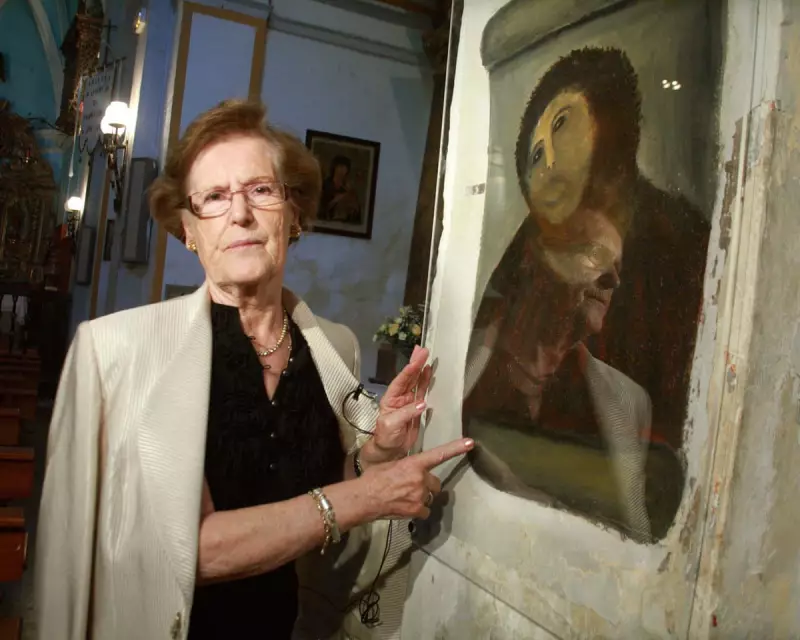
In the small Spanish town of Borja in 2012, an act of artistic goodwill spiralled into an international sensation that would redefine the concept of art restoration. What began as a well-intentioned attempt to repair a deteriorating fresco of Christ culminated in the creation of an iconic, albeit heavily altered, image known globally as the 'Monkey Christ' or 'Potato Christ'. The unlikely artist at the centre of this storm was an 81-year-old amateur restorer named Cecilia Giménez.
The Fateful Restoration Attempt
The original artwork, titled 'Ecce Homo' (Behold the Man), was a delicate fresco painted by Elías García Martínez in the early 20th century. It adorned the wall of the Sanctuary of Mercy church in Borja. By 2012, the painting had significantly deteriorated due to moisture, with parts flaking away. Concerned for its preservation, Cecilia Giménez, a devoted parishioner with some informal artistic training, took it upon herself to restore the image without seeking official permission from the church authorities or cultural heritage bodies.
Her intervention radically transformed the serene visage of Christ. The original delicate features were covered by a crude, disproportionate face with misshapen eyes, a distorted mouth, and what appeared to be a furry, monkey-like texture. When the result was revealed, it sparked immediate uproar. The Giménez family initially tried to keep the incident quiet, but photographs leaked, spreading like wildfire across Spanish media and then the world. The fresco was swiftly dubbed 'Ecce Mono' – a pun on the original title, with 'mono' meaning monkey in Spanish.

Global Infamy and an Unexpected Turn
The reaction was initially one of universal mockery and horror from the art world. Experts decried it as one of the worst restoration disasters in history. However, the story took a remarkable and unforeseen turn. Instead of becoming a forgotten scandal, the botched restoration captured the global public's imagination. The bizarre image became a viral internet meme, symbolising well-meaning but catastrophic failure.
This online fame translated into tangible, real-world consequences for the quiet town of Borja. Tourist numbers skyrocketed, with thousands of visitors making pilgrimages to the Santuario de Misericordia not to see a masterpiece, but to witness the 'Monkey Christ' for themselves. The church began charging a small entry fee, with the proceeds initially intended to fund a proper restoration. However, the influx of cash and attention created a dilemma.
Recognising the cultural and economic phenomenon they had inadvertently created, local officials and the diocese decided to preserve Giménez's version. They argued it had taken on a new cultural meaning of its own. The funds were used to support a local charity caring for people with disabilities, a cause dear to Giménez, whose own son had cerebral palsy. Over a decade, the fresco generated an estimated half a million euros in revenue from ticket and merchandise sales, providing vital funds for the charity and boosting the local economy.
A Legacy of Resilience and Unlikely Success
For Cecilia Giménez, the journey was intensely personal and painful. She faced years of intense ridicule and legal battles over copyright and ownership of the image. The experience took a significant toll on her health and wellbeing. Yet, as time passed, the narrative began to shift. From a figure of fun, she gradually became seen as a symbol of resilient eccentricity. Her unwavering defence of her actions – she always maintained she was acting to save a painting she loved from ruin – and the positive outcomes for her town and charity fostered a more sympathetic view.
The 'Ecce Homo' of Borja stands today not as a pristine classical artwork, nor simply as a joke. It exists as a unique cultural artefact of the internet age—a testament to how public perception can radically alter the value and meaning of art. It raises complex questions about authorship, preservation, and the sometimes-blurry line between disaster and success. The story of Cecilia Giménez is ultimately one of unintended consequences, where a local act of devotion spawned a global icon, proving that in the modern world, not all fame is conventional, and not all legacy is planned.

The fresco remains on display, a must-see stop on unconventional tourist trails. It serves as a permanent reminder that the stories we tell about art are often as powerful as the images themselves, and that sometimes, a restoration can create something entirely new, for better or worse.