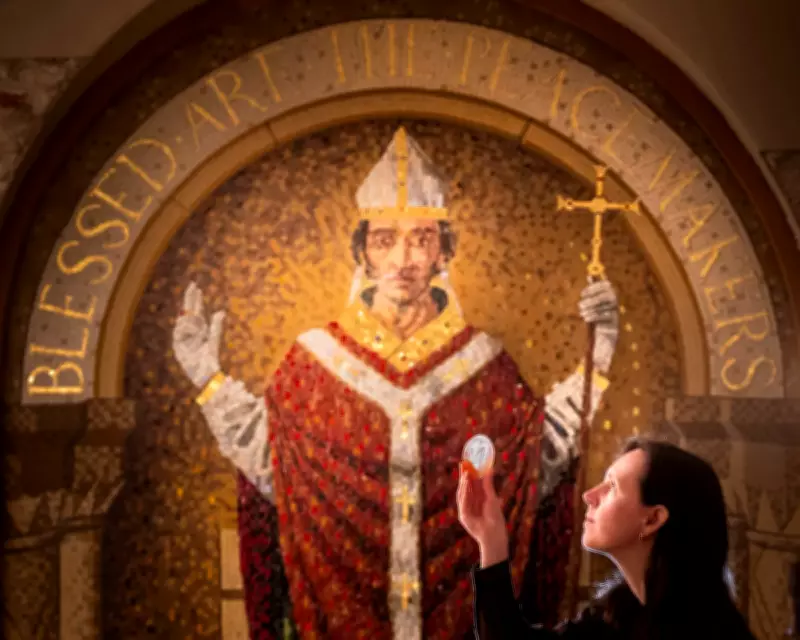
Digital Resurrection Brings York's Overlooked Saint to Life
An innovative digital exhibition has opened at York Minster to commemorate the 800th anniversary of a nearly-forgotten medieval saint, using cutting-edge technology to resurrect a lost shrine that once drew pilgrims from across England.
Miracles and Mysteries of William of York
The exhibition celebrates St William of York, a 12th-century archbishop whose remarkable life and posthumous miracles have faded from public memory despite his status as York's patron saint. William Fitzherbert served as Archbishop of York twice during turbulent times, facing opposition from Cistercian monks who initially deemed him unsuitable for the position.
His return to York from Rome in 1154 prompted such enthusiastic crowds that the wooden Ouse Bridge collapsed under their weight. According to legend, William called upon divine intervention, resulting in no fatalities - an event recorded as his first miracle. This dramatic incident established his reputation as a protector of the people, though his sudden death shortly afterward while celebrating mass remains shrouded in suspicion to this day.

The Lost Shrine Reborn Through Technology
At the heart of the exhibition lies a stunning digital recreation of William's original shrine, which once stood as an imposing 3.8-metre monument in York Minster's nave. Created by visual effects company Viridian FX, the cinematic experience allows visitors to witness the shrine's former glory for the first time in centuries.
"The shrine is absolutely stunning," said Jennie England, research coordinator at York Minster. "It reflects the high regard William was once held in, though he is now largely forgotten. That is one of the joys of this exhibition - bringing his story and significance back to public awareness."
The original shrine, erected in the 14th century, became one of England's most significant pilgrimage sites before being dismantled during Henry VIII's Reformation. Fragments were carefully buried across York, with three of the four corners subsequently discovered and now cared for by York Museums Trust.
Remarkable Artefacts and Enduring Legacy
Alongside the digital recreation, visitors can examine physical fragments of the original shrine and other remarkable artefacts connected to William's life. These include a 12th-century ivory casket likely brought to York by William during his travels, a contemporary bible, and a curious 13th-century stone slab bearing the inscription: "Which fell on the head of Roger of Ripon."
"We don't quite know who Roger of Ripon was," England explained regarding the mysterious slab found in a York drain during the 19th century. "But he survived, and a miraculous incident was reported in the 1280s when a stone fell on someone's head."
William's canonisation by Pope Honorius III in 1226 followed numerous reported miracles, including curing a woman who had accidentally swallowed a frog. His legacy continues to influence York Minster through surviving stained glass, artwork, and architectural elements inspired by his veneration.
Modern Technology Meets Medieval Devotion
Dominic Barrington, Dean of York, emphasised how the exhibition bridges historical devotion with contemporary technology. "The artistry William inspired has left a lasting impression on this very building," he said. "Yet this artistry is not a thing of the past. Our craftspeople are using incredible technology and traditional skills to reveal lost shrines and tell important stories."
The exhibition represents a significant achievement in digital heritage preservation, allowing modern audiences to experience a pilgrimage site that shaped medieval England. By combining archaeological fragments with virtual reconstruction, York Minster offers visitors a unique opportunity to engage with a saint whose story has been overlooked for centuries.
Both "St William of York: Life and Legacy" and "Recreating St William's Shrine: A Cinematic Experience" open to the public, inviting exploration of how digital innovation can resurrect historical narratives and sacred spaces that physical remains alone cannot fully convey.