Don McCullin's 'Broken Beauty' Exhibition at Holburne Museum, Bath
Few individuals have confronted as much horror as Don McCullin, the celebrated photographer now aged 90. Over decades, he witnessed major conflicts and disasters firsthand, capturing them in stark black and white images that have left an indelible mark on photojournalism. His latest exhibition, Broken Beauty, at the Holburne Museum in Bath, offers a profound exploration of his work, spanning more than 60 years from his early career to recent projects.
Ancient Ruins and Modern Horrors
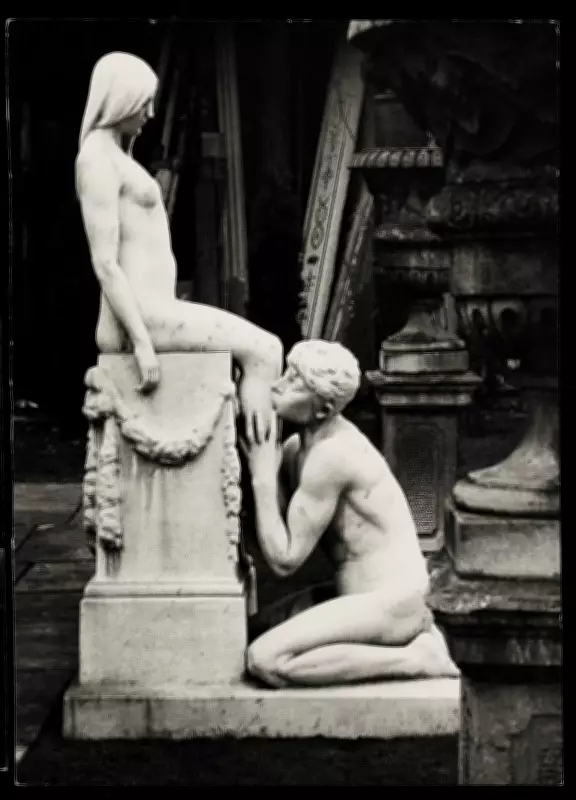
The exhibition opens with four recent photographs of ruined Roman sculptures, presented against black backgrounds to create a floating effect. These images, reminiscent of museum postcards, depict ancient myths of ambition, desire, and domination. A crouching Venus with missing arms and a half-shattered head, a hermaphrodite struggling against a lascivious satyr, and a headless Amazon battling the cruel Emperor Commodus on horseback are among the subjects. Their pockmarked surfaces and broken limbs symbolise the collapse of great empires and the fragility of ideals over time, much like marble itself.
McCullin seems to seek continuity in these sculptures, suggesting that humanity has always been prone to violence and will likely remain so. This theme serves as a justification for his lifelong dedication to representing such horrors through his photography. One might wonder if his images of conflict will acquire a similar beauty with the passage of centuries, as these ancient ruins have.

From War Zones to Somerset Landscapes
After ceasing to cover wars in the mid-1980s, McCullin turned to photographing the landscapes of Somerset, where he resides, in search of solace and healing. However, his countryside scenes are far from tranquil. He transforms a pond into what appears as a pool of blood and depicts spindly trees scratching the sky like torn limbs. These moribund visions turn open spaces into oppressive, brooding environments haunted by ghosts, making it challenging to discern any beauty in the darkness he portrays.
A Career Spanning Decades
This small but impactful exhibition covers over six decades of McCullin's work, starting with his first published picture of a notorious gang in Finsbury Park, London, in 1958, which launched his career. It includes iconic images from the Biafran war and the Aids crisis, presented in an unfussy and straightforward manner that allows the drama of his photographs to speak for themselves. These images offer glimpses into some of the bleakest moments in living memory, with a particular focus on young men—highlighting their propensity for violence, as well as their resilience and grief.
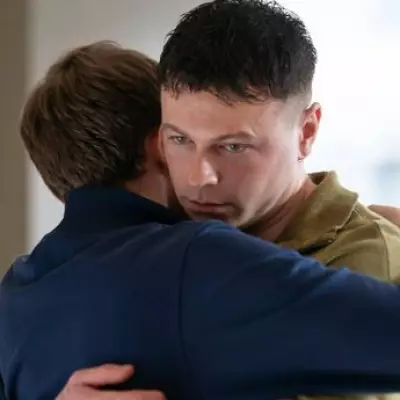
One harrowing photograph shows a group of young Christian Phalangists mocking the dead body of a teenage Palestinian girl, a scene that remains deeply unsettling even upon repeated viewings. Another captures a 15-year-old boy at his father's funeral, his face glossy with tears after losing him to Aids. Images of young landmine victims awaiting medical aid, topless Palestinian soldiers carrying guns, and a shell-shocked US marine with a vacant stare reflect the shared horror experienced by both fighters and the photographer. These young men, once symbols of future optimism, are depicted as ruined bodies amidst wrecked homes.
UK Work and Liminal States
The exhibition also features several pictures from McCullin's extensive body of UK work, showcasing industrial landscapes, workers, homeless individuals, and poverty on the peripheries. A striking image of a homeless man in Shoreditch, London, sleeping standing up, exemplifies McCullin's attraction to liminal states—those precarious moments between life and death, past and present.

The Speed of Conflict and the Bluntness of Peace
McCullin's conflict photographs possess a sense of speed and immediacy that his later work cannot replicate. A triptych from Belfast in 1971 captures riot police edging around a building corner, poised for an attack by a man in a suit armed with a plank, freezing the moment he hurls his weapon blindly towards their shields. In contrast, his landscapes, as McCullin himself has described, are the blunt side of the knife—unable to pierce or wound viewers in the same way. Alongside the ancient ruin photographs and still lifes from his garden shed, these landscapes may serve as a reprieve for both the audience and McCullin.
Spectral Presence and Proximity to Devastation
McCullin's interest in landscapes and still lifes stems from the spectral presence of his previous subjects; he has spoken of seeing the twisted smiles of corpses everywhere. While Broken Beauty offers only a brief introduction to his immense contribution to photojournalism, it powerfully demonstrates that his work feels most alive when in proximity to devastation and death. The exhibition runs from 30 January to 4 May at the Holburne Museum in Bath, inviting visitors to explore these themes in depth.