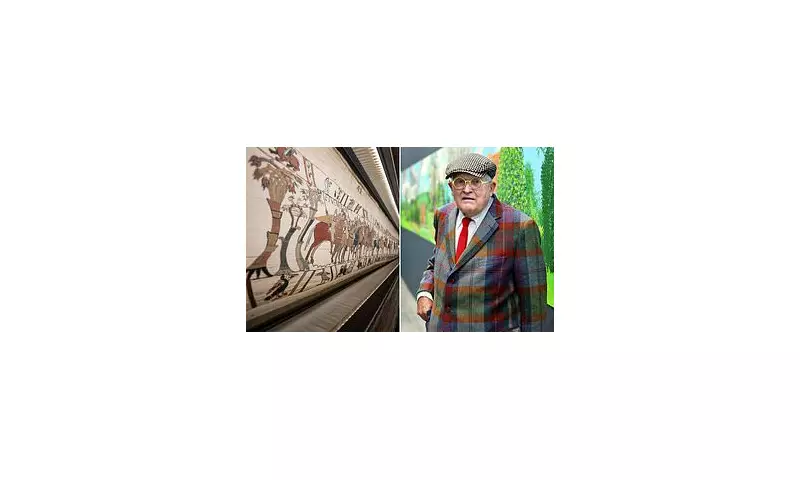
Renowned British artist David Hockney has launched a fierce, last-minute campaign to halt what he calls a 'madness' – the planned loan of the historic Bayeux Tapestry from France to the British Museum in London.
A 'Priceless' Artefact at Risk
In a passionate article for the Independent, the 88-year-old painter, who now resides in Normandy, argued that the 11th-century embroidery is too fragile to survive the journey across the Channel. The tapestry, which is over 70 metres long and depicts the story of the Norman Conquest of 1066, has not left French soil for nine centuries.
Hockney described the proposed move, scheduled for September 2027 while its home at the Bayeux Museum is renovated, as a 'vanity' project. He warned that the physical and environmental risks are substantial, stating that 'any damage would be irreversible, and even successful transport could shorten the tapestry’s lifespan'.

Hockney's Personal Plea and Expert Concerns
The artist, who first saw the tapestry in 1967 and has visited it over twenty times in the last three years, called it a work that has 'defined my life'. He emphasised its immense age and delicate state, noting the weakened linen backing and vulnerable wool threads. 'Rolling, unrolling or handling it in a new way can cause damage,' he cautioned, based on his own research.
Hockney also dismissed the reported £800 million government insurance valuation as 'meaningless', insisting the cultural treasure is 'priceless'. His concerns echo those of some French art experts, though officials in both countries maintain the move is feasible.
Museum Assurance and Government Backing
The British Museum has strongly defended the plan. Its director, Nicholas Cullinan, reassured the public that the museum's world-leading conservation team are experts in handling such delicate materials. He noted that the institution routinely manages thousands of international loans, including objects older than the tapestry.
The eye-watering insurance cover is provided through the UK's Government Indemnity Scheme, which saves museums from costly commercial premiums. A Treasury spokesperson stated the scheme allows for major exhibitions that boost visitor numbers and provide public benefit, having saved UK institutions an estimated £81 million.
Despite these assurances, Hockney remains unconvinced, accusing the British Museum of seeking the loan primarily to boast about visitor numbers. As the tapestry has already been removed from display in France and placed in storage, the debate over balancing public access with preservation intensifies.