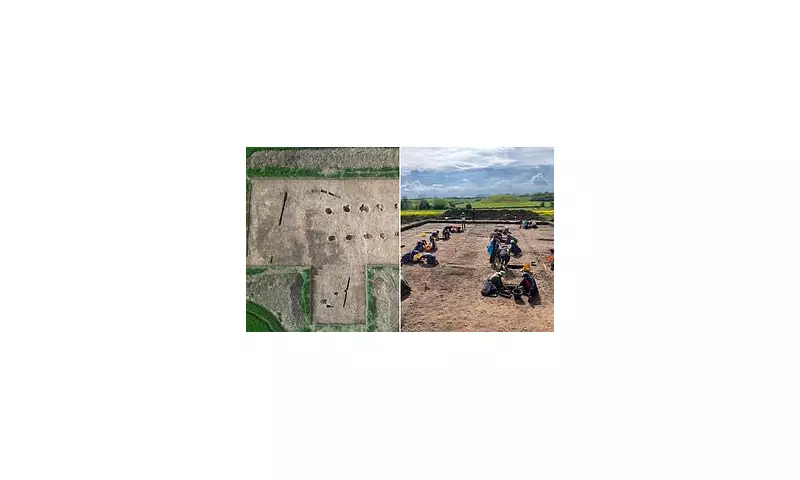
Archaeologists from the University of York believe they have made a landmark discovery: the remains of a high-status hall that likely belonged to Harold Godwinson, the last Anglo-Saxon King of England. The find near Skipsea Castle in East Yorkshire offers a rare glimpse into a world largely erased by the Norman Conquest.
A Site of Wealth and Power
The excavation, co-led by University of York lecturer Jim Leary, took place near the site of Skipsea Castle. This Norman motte-and-bailey fortress was built around 1086 on an ancient lake, but the team's focus was on what lay beneath. Their six-year project has revealed compelling evidence of a significant Anglo-Saxon lordly centre.
Key findings include a large timber hall, a rare sunken tower with a cellar, and a malthouse containing a tandoori-style oven. Charred seeds found in the oven confirmed its use for malting, likely for brewing beer. The team also uncovered a piece of worked amber being prepared for jewellery, described by Mr Leary as the "standout find" that underscores the site's luxury.

Linking the Evidence to the Last Saxon King
Historical records show the land was owned by Harold Godwinson before his death at the Battle of Hastings in 1066. While there is no concrete proof he visited, the archaeology strongly suggests a site fit for a king. The sunken tower is a particularly telling indicator of high status.
"The tower is an indicator of a high-status site, the Malthouse is also an indicator of high-status. It is not the sort of thing that is normally found," Mr Leary told The Mail. He noted a similar tower owned by Godwinson in Bosham, Sussex, is depicted in the Bayeux Tapestry.
The hall was built on top of the earlier malthouse, which has been dated to between 750 and 850 AD. The sequence of structures paints a picture of continuous, wealthy occupation.
Unearthing a Lost Settlement
The discovery may solve a historical mystery. The team suggests this could be the lost lordly centre of Cleeton, a settlement recorded in the Domesday Book but since vanished. The ongoing dig has already revealed evidence of even older, Iron Age ritual activity at the site.
Co-director Elaine Jamieson expressed surprise at the scale of the finds, particularly the rare sunken tower and unsuspected malthouse. "It has given us more and more every single year that we have been excavating," she said.
The site serves as a field school for University of York undergraduates, who Mr Leary said have had their first taste of excavation "blow us away." The discoveries will feature in the new series of the BBC's Digging for Britain in January, with excavations set to continue for several more years.