Metropolitan Opera's 'Carmen' Production Team Demands Name Removal in Artistic Protest
In a dramatic dispute that has rocked the world of opera, the entire production team behind Bizet's "Carmen" at the Metropolitan Opera has ordered their names stripped from programmes and promotional materials. This unprecedented move comes as a direct protest against management's decision to significantly alter the staging of the production without the creators' consent.
Radical Restaging Sparks Creative Backlash
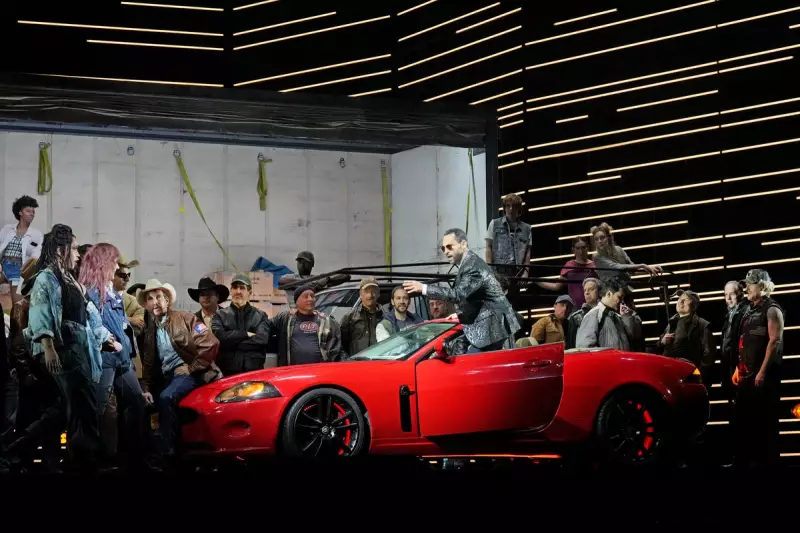
The controversy centres on director Carrie Cracknell's modern interpretation of the classic opera, which originally premiered at the Met on December 31, 2023. Cracknell's production boldly relocated the action from early 19th century Seville to a contemporary American industrial town, transforming the character Escamillo from a traditional bullfighter into a rodeo star.
In the original staging, Escamillo made his dramatic entrance in a red Jaguar convertible that crossed the stage as he began his famous Toreador's Song, accompanied by his entourage in three pickup trucks. All vehicles moved on wires guided by sophisticated computer automation, creating a striking visual spectacle that defined the production's modern aesthetic.

Financial Pressures Force Controversial Cuts
In the restaged version, the Met's management eliminated the Jaguar and two of the pickup trucks entirely. Escamillo now walks onto the stage with his followers, some pushing a motorcycle, while only one stationary pickup truck remains from the original concept.
"We were furious," declared set designer Michael Levine, who has worked on half a dozen Met productions including acclaimed stagings of Tchaikovsky's "Eugene Onegin" and Puccini's "Madama Butterfly." "I didn't want my name attached to the production because it's not a representation of the original artistic intent. I've never come across anything on this level where they literally change the basic concept."
Met general manager Peter Gelb defended the decision as purely economic, stating: "It was really an economic decision. We decided it was incredibly expensive to run, and it was not particularly effective. We decided to cut it." Gelb revealed the changes would save more than $300,000 in production costs.
Production Team Unites in Protest
Levine received notification of the changes last autumn from John Sellars, the Met's assistant general manager for production, who cited the company's "terrible financial straits" as justification for the cuts. When Levine and Cracknell attempted to negotiate alternative solutions, such as placing the vehicles on the stage turntable, they found the Met unwilling to compromise.
Following Levine's decision to remove his name, the Met gave the rest of the production team just one day to decide whether they would follow suit. Director Carrie Cracknell, costume designer Tom Scutt, lighting designer Guy Hoare, projection team rocafilm/Roland Horvath, and choreographer Ann Yee all joined the protest, demanding their names be removed from programmes.
The programmes now show only the conductor and chorus master listed, followed by revival stage director Melanie Bacaling and several inches of white space where the production team's credits would normally appear.
Broader Financial Context and Historical Precedents
The dispute occurs against a backdrop of significant financial challenges at the Metropolitan Opera. On Tuesday, Gelb announced 22 layoffs from the administrative staff of 284, temporary salary cuts of 4-15%, and a reduction of next season's programme by one opera to just 17 productions. These measures are projected to save $15 million this fiscal year and $25 million in 2026-27.
This is not the first time the Met has faced artistic rebellion over staging changes. The most recent similar incident occurred after Graham Vick's production of Verdi's "Il Trovatore" was met with laughter and boos on opening night in December 2000. After the Met restaged it by the third performance, Vick and his production team withdrew their names for the 2002-03 revival.

A person familiar with the Met's planning revealed that the company intends to bring back Richard Eyre's 2009 production of "Carmen" in a future season. That staging premiered on December 31, 2009, and ran for 79 performances over six seasons through 2019.
Artistic Relationships Damaged and Future Implications
The dispute has significantly damaged relationships between the Met and some of its most respected collaborators. "Now, of course, I don't trust the Met," Levine stated bluntly, despite being scheduled to return next season for Leoš Janáček's "Jenůfa" under director Claus Guth.
Gelb expressed hope for reconciliation, saying: "I consider Michael to be one of the greatest designers in the world. We're very proud to have had many of his great designs on our stage."
Cracknell's production of "Carmen" runs through Friday, marking its 30th performance over two seasons. The 45-year-old director, who received a Tony nomination for "Seawall/A Life" starring Jake Gyllenhaal and an Olivier nomination for Berg's "Wozzeck" at the English National Opera, referred questions about the dispute to Levine through her management agency.
The Metropolitan Opera could not recall a previous instance of a retired production returning to the stage, making the potential revival of the 2009 "Carmen" staging particularly noteworthy. This dispute highlights the ongoing tension between artistic vision and financial reality in one of the world's most prestigious opera houses.