The chief executive of the Obama Foundation has provided a detailed insight into the former US president's long-awaited library project, directly confronting persistent criticism over its bold architectural design.
A Monumental Project Meets Community Scrutiny
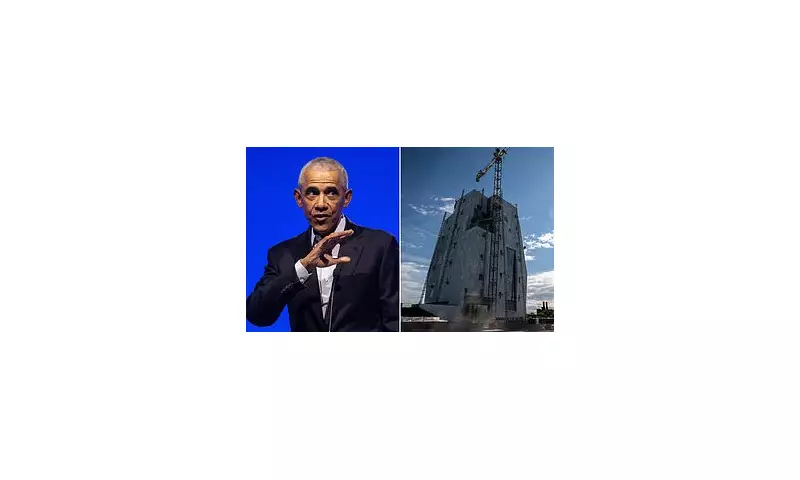
Valerie Jarrett, CEO of the foundation, confirmed to CBS News Chicago that the institution is on track to open its doors to the public in June of next year. The sprawling complex, situated on a 19.3-acre campus in Chicago's South Side, will feature parks, playgrounds, and a central museum tower that has drawn mixed reactions for its stark, 225-foot tall appearance.
Despite Jarrett's enthusiasm, the modern, grey monolithic structures have been labelled an 'eyesore' by some locals and commentators online, with some even comparing the aesthetic to buildings from the Star Wars universe.

The total cost of the foundation centre has soared upwards of $850 million (approximately £700 million), marking it as one of the most significant cultural investments in the area's recent history.
Inclusion as a Core Design Principle
In her defence of the project, Jarrett emphasised that diversity and inclusion were not afterthoughts but foundational pillars. She explained that the investment aims to demonstrate how diversity can 'better represent the community in which we're located and be a national model for how you can be inclusive and have a world-class product.'
A key operational priority has been contracting with racially diverse businesses. 'Because we believe inclusion is actually a strength,' Jarrett stated. Having grown up near the site, she added that it was personally satisfying that the Obamas chose her own community for this transformative project.
Jarrett also revealed that Barack Obama remains intimately involved in the development, frequently contributing ideas on programming and design tweaks. 'I wish that people could be a fly on the wall to see how many times in the course of the day that I hear from President Obama,' she said.
Addressing the Architectural Controversies
During a tour of the site, Kim Patterson from the Obama Foundation addressed specific design choices that have raised eyebrows. The limited number of windows on the main museum building, for instance, is intentional to protect precious artwork and artefacts from damaging sunlight.
When questioned about the unusual shape of the tower, Patterson clarified that it is meant to symbolise four hands coming together, highlighting the importance of collective action—a theme central to Obama's political career.
The foundation has also shown flexibility based on community feedback. An initial plan for a parking garage was scrapped after residents worried it would block sunlight to their gardens. Instead, a colourful playground will occupy the space, with parking moved underground.
'When the person who is running the organization is a former community organizer, you can imagine that from day one, he wanted to ensure the community was a part of this process,' Jarrett noted.
The first completed facility, the 'Home Court', has already opened. This 60,000 square-foot activities centre features an NBA-regulation basketball court emblazoned with Obama's iconic 'Yes We Can' and 'Hope' slogans. It was designed by the Black-owned architecture firm Moody Nolan.
Jarrett expressed her ultimate hope for visitors: 'I hope they not only learn about President Obama and the people upon whose shoulders he stands, but also a little bit something about themselves and how they can go and bring change home to their own communities.' The full Obama Presidential Center is scheduled for completion in 2026.