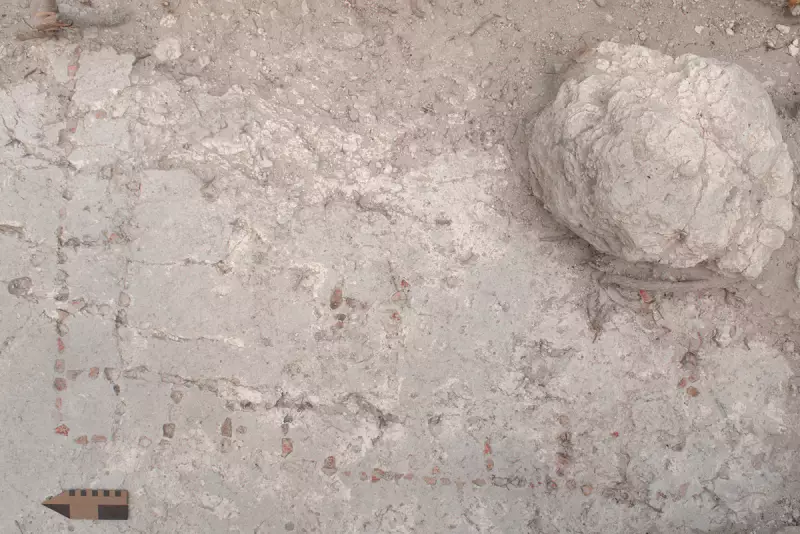
Archaeologists working in the dense jungles of Guatemala have made a remarkable discovery, unearthing a rare and intricately designed board game from the ancient Mayan world. The find provides a fascinating new window into the leisure activities and social customs of one of history's most advanced civilisations.
A Game Carved in Stone and Time
The discovery was made at the site of Naachtun, a once-significant Mayan city. The game board, identified as Patolli, is a strategy-based game similar to ludo and was commonly played across Mesoamerica, often involving elements of gambling. What makes this particular board exceptional is its construction.
Unlike simpler boards etched into stone or painted on surfaces, this example is a detailed floor mosaic. It measures an estimated 78 centimetres wide by 110 centimetres long and is composed of 45 squares formed from 478 individual tile sections. The small red tiles are believed to have been crafted from fragments of broken ceramic vessels.

An Integral Architectural Feature
Researchers have dated sections of the board to the fourth century AD. The meticulous mosaic construction suggests this was not a portable object but an original, fixed part of the building's design. This indicates the space may have been specifically designated for gaming or social gathering, highlighting the cultural importance of such pastimes.
"This is a singular example of a floor mosaic used for a game in the ancient world," noted the research team. The permanence and effort invested in creating the board imply that games like Patolli held significant ritual or social value beyond mere entertainment.
New Insights into Ancient Maya Life
The discovery at Naachtun offers more than just an ancient artefact; it provides tangible evidence of daily life and social interaction. Understanding how the Maya played allows historians to build a richer picture of their society beyond the well-documented realms of warfare, astronomy, and pyramid construction.
This find follows other recent discoveries, such as a Mayan god sculpture in Mexico, which together are continually reshaping our understanding of Mesoamerican cultures. The Patolli board stands as a testament to the sophistication and artistry of the Maya, reminding us that play and competition have been central to human culture for millennia.