Robert Crumb Exhibition Review: Sexual Deviancy Elevated to Art Form
Walking into the David Zwirner gallery in London presents an unnerving experience, as visitors confront their deepest fears and anxieties splayed across the walls. This is the distinctive power of Robert Crumb, the wiry, difficult, and awkwardly horny artist who has spent over half a century creating underground comics that lay bare his neuroses while reflecting our own.
From Comic Books to Gallery Walls
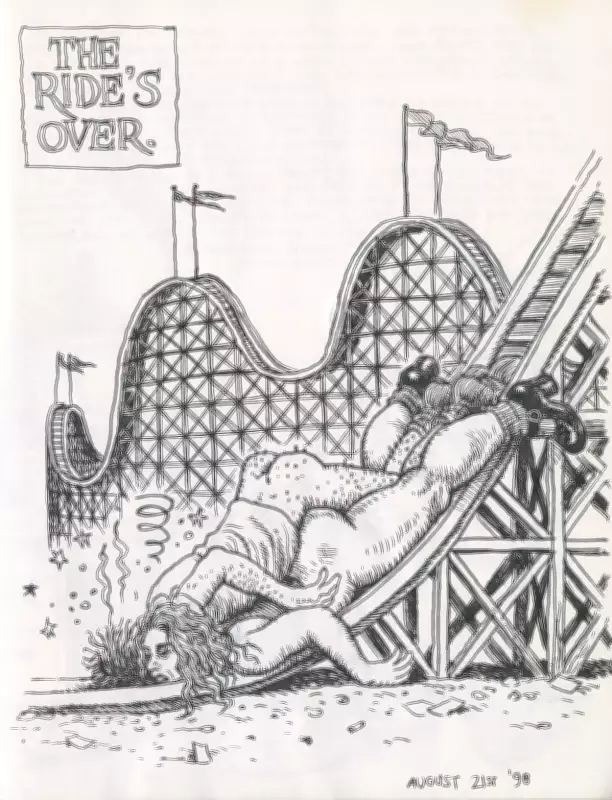
Now in his eighties, Crumb is being celebrated in an ultra-high-end London gallery, with pages torn from his notebooks and framed as fine art. Yet this work is anything but fine—it is filthy, angry, and paranoid. Classic Crumb imagery features skinny men quivering with worry, fear, and hormones in a cruel, uncaring world, populated by towering women in thigh-high boots.
The most effective pieces are the simplest visual one-liners. In one drawing, Crumb depicts himself being flushed down a toilet, accompanied by graffiti reading: "Here I sit and can't get started, tried to shit and merely farted." This combination of abject misery and gross humour defines Crumb's world. Other self-portraits show him with a gun pressed to his big goofy head or whingeing about being misunderstood.

A World of Neurosis and Glamazons
Crumb's vision presents a nasty, brutal, and politically anguished reality. One image features an alien lamenting human greed and deception, while a miserable man with a dripping nose weeps: "I've blown my life, I'm fucked." Throughout, happy, healthy humans are shown ignoring the poor, tortured weirdos around them.
The only solace in this bleak universe comes from women—giant, towering, buxom Amazons whom Crumb worships and idolises. He clings desperately to their thick legs as a broken, terrible dork finding something pure in their presence. One almost sweet drawing shows a little bald man in a hospital gown telling a huge glamazon that he is filled with happiness and love, with bold letters in the sky proclaiming: "Every moment is significant!"
Gallery Context and Artistic Merit
The exhibition's downstairs section displays prints from a 1980s notebook, while upstairs features mainly original drawings. These works are direct, hilarious, and experimental, showcasing Crumb's excellent compositional eye, brilliant line work, and uniquely distinctive style. Here, paranoia and horniness intensify, with men either throttling their own genitals or pulling their hair out—presenting total sexual deviancy or total anguish with no middle ground.
One notable exception is a portrait of Crumb's wife, Aline Kominsky-Crumb, swimming in the Mediterranean. This piece feels different—not horny, paranoid, gross, or intense, but simply loving, pure, and joyful, offering a rare moment of unblemished happiness in an otherwise vile world.
The Debate Over Gallery Display
Questions arise about what is gained from presenting Crumb's work in a gallery context, framed on walls rather than in printed publications. At best, this approach allows time and space to consider each image as a single, important, elevated entity rather than just another anxious page in a continuous stream. At worst, it destroys the reading experience, undermining the original intention and format. Narrative, comic-book style images particularly suffer when isolated on walls.
While Crumb is undoubtedly worthy of exhibition in a swanky Mayfair gallery, there is equally nothing wrong with comic books themselves—they are cheap, easy, dirty, and real, much like the artist.
Regardless of format, Crumb remains singular and hilarious. As one wall downstairs declares in big letters: "There's no end to the nonsense," and let's hope not, because when the nonsense comes from Crumb, it is pretty damn brilliant.