Royal Opera House Erupts in Controversy as Stand-in Performer Faces Audience Backlash
Extraordinary scenes unfolded at London's prestigious Royal Opera House this week when the institution's head of music was forced to step into a leading role at the last minute, sparking a dramatic division among audience members.
Unexpected Substitution Sparks Audience Uproar
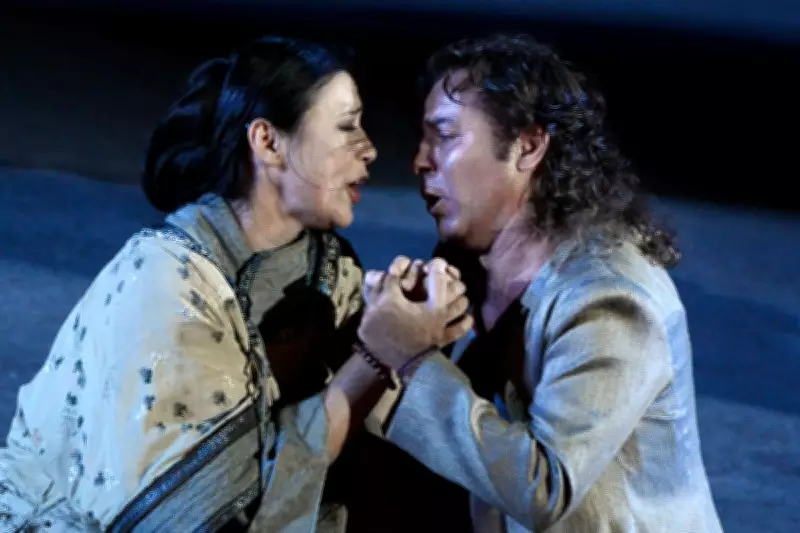
During Tuesday evening's performance of Giacomo Puccini's final opera Turandot, French tenor Roberto Alagna fell ill following the second act, preventing him from completing his role as Prince Calàf. In what has been described as an exceptionally rare situation, Richard Hetherington, the Royal Opera House's head of music since 2017, was given just ten minutes' notice to take over the demanding part.
According to multiple reports, the performance resumed for the third act but with significant alterations. Most notably, Prince Calàf's iconic aria "Nessun Dorma" was omitted entirely from the production. Hetherington, wearing casual chinos and trainers rather than traditional costume, reportedly sang from the wings while a choreologist performed his movements on stage in full costume.

Mixed Reactions from Disappointed and Sympathetic Patrons
The unconventional solution prompted strong reactions from those in attendance. Several audience members reportedly booed the performance, with some leaving the auditorium early. One attendee claimed that objects were thrown in protest at the compromised production.
However, other patrons expressed admiration for Hetherington's bravery in stepping into what is widely considered one of Puccini's most challenging tenor roles with virtually no preparation. "I was kind of thinking, 'Wow, that man deserves a medal,'" audience member Kate Daly told The Times, capturing the divided sentiment among opera-goers.
Compromised Performance and Institutional Response
The production concluded before the opera's final scenes, finishing at the dramatic point where the character Liu takes her own life. Writer Kenan Malik, who was present at the performance, described the evening as "disappointing, dramatic and a strangely appropriate ending all at the same time" while praising Hetherington as "brave and impressive" for his efforts.
In response to the unprecedented situation, the Royal Ballet and Opera organisation sent emails to ticket holders on Wednesday offering 50 percent credit toward future performances. A spokeswoman for the institution confirmed that Alagna had been "taken unwell" during the performance and expressed wishes for his "swift and full recovery."
Background on the Performers and Production
Richard Hetherington joined the Royal Opera House's music staff in 2001 and has built a substantial career, including performing the title role in the British premiere of Henze's Pollicino. His unexpected substitution highlights the specialised nature of major opera roles, with many leading houses unable to maintain understudies for every performance.
Turandot represents Puccini's twelfth and final operatic work, left incomplete upon his death in 1924. The version performed today incorporates a completion of the third act by Italian composer Franco Alfano, which includes the reprised "Nessun Dorma" that was notably absent from Tuesday's compromised performance.
The incident has sparked broader conversations about audience expectations, performer welfare, and the challenges of maintaining theatrical productions when unexpected circumstances arise in world-class cultural institutions.