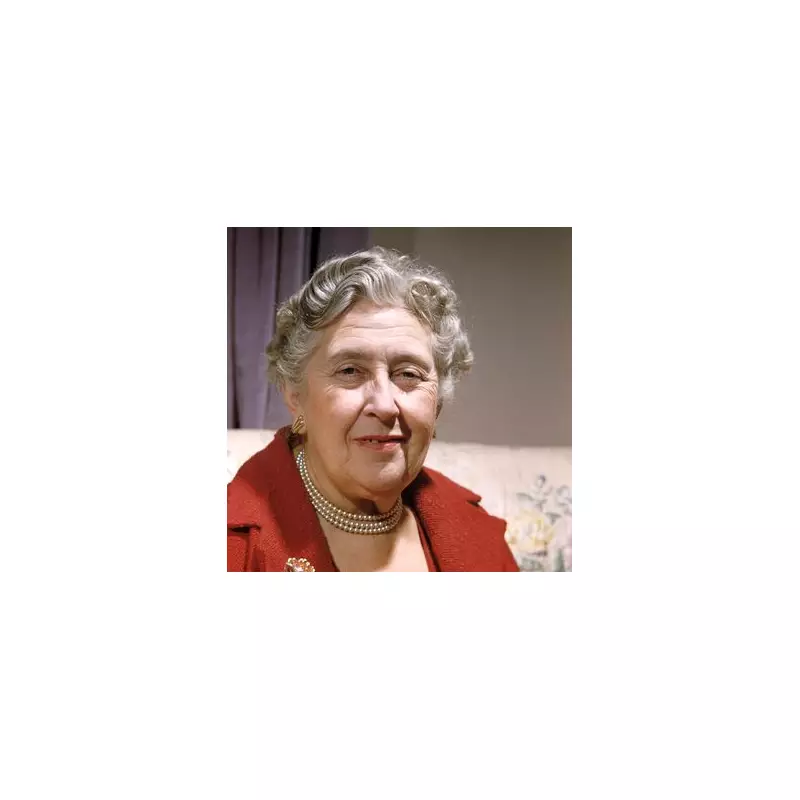
Half a century since the world's bestselling novelist laid down her pen, Agatha Christie is poised for a remarkable resurgence in 2026. A perfect storm of major adaptations, exhibitions, and literary anniversaries is set to introduce the Queen of Crime to a whole new generation of fans.
A Landmark Year for the Queen of Crime
This January, a star-studded Netflix adaptation of her novel The Seven Dials Mystery will premiere, bringing her intricate plotting to a global streaming audience. This is just the beginning of a year-long celebration. October will see a blockbuster exhibition dedicated to her work open at the British Library, while spring promises a festival in her honour.
"I think Agatha Christie is having a real renaissance," says author and lifelong fan Tina Hodgkinson. "With the 50th anniversary of her death and the 100th anniversary of her breakthrough novel, 2026 is going to be huge." Hodgkinson credits Christie's pioneering role in crime fiction for her timeless appeal, noting she invented many plot devices now taken for granted, from the unreliable narrator to the isolated setting.

Uncovering London's Central Role
Hodgkinson has channelled her expertise into a new book, Agatha Christie's London: A Historical Guide to the Queen of Crime's Capital. The work investigates the profound importance of the city, both in Christie's private life and as a recurring backdrop for her stories, from Hercule Poirot's flat to the haunts of Tommy and Tuppence.
"The city had a special place in Agatha's heart - it's a real thread which runs through everything," Hodgkinson explains. Christie visited London as a child, later owned several homes there, and was a passionate interior designer. The author's own detective work involved delving into archives, even writing to the National Gallery to ascertain which paintings were on display on a specific date in 1922 to ensure accuracy for her book.
From Apothecary's Hall to Global Fame
Christie's unique knowledge of poisons, which features in over 40 of her stories, stemmed from her wartime work. She qualified as an apothecary's assistant, taking exams at London's Apothecaries' Hall. Her first novel, The Mysterious Affair at Styles, introduced Hercule Poirot in 1920.
While her professional star rose, her personal life faced turmoil in 1926 following her mother's death and her first husband Archie's request for a divorce. This precipitated her infamous 11-day disappearance, a national mystery that ended at the Swan Hotel in Harrogate. Hodgkinson views this as a mental health crisis. "I think this was a terribly painful time for her - she was very distressed," she notes.
Happiness returned with her 1930 marriage to archaeologist Max Mallowan. Her travels with him informed later works. A key London location was the Isokon Building in Camden, where she wrote prolifically, including the play she thought would run for eight months: The Mousetrap. It has now been thrilling audiences for over 70 years.
Dame Agatha Christie died in 1976 at age 85. Reflecting on her subject's legacy, Tina Hodgkinson muses on what she would ask the author today: "I'd ask her what a typical week in her life in London might be... She was a fascinating woman. She was so talented and overcame whatever challenges came her way."
As 2026 unfolds, it is clear that the ingenious puzzles and timeless stories of Agatha Christie are far from being forgotten, ready to captivate audiences once again.