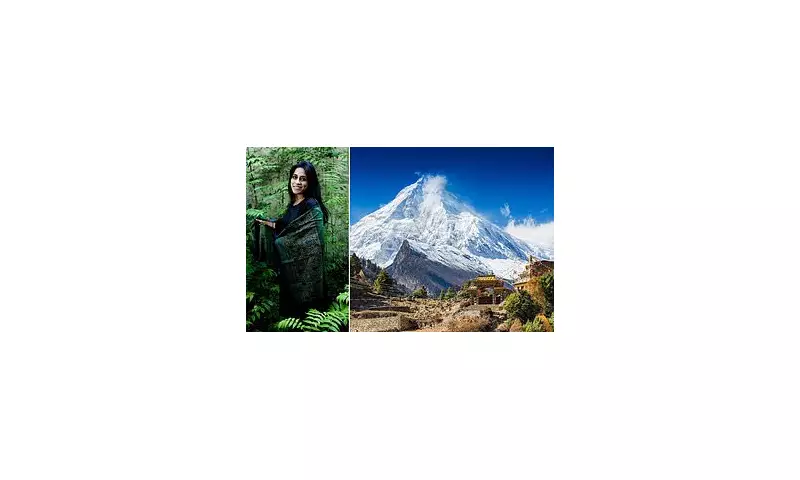
During a fierce monsoon downpour, acclaimed author Anuradha Roy faced a life-or-death moment on a treacherous mountain road. Trapped in a taxi with her dog, Jerry, she was forced to drive through a violent rockslide, a harrowing experience that encapsulates the stark realities of life in the Indian Himalayas.
A Terrifying Journey Through the Monsoon
The incident occurred one afternoon as Roy and her small dog were returning to their home in the hill-station village of Ranikhet. As rain fell with what she describes as ‘annihilating force’, their taxi became the target of a barrage of boulders. Stuck on a narrow road 6,000 feet up, with sheer drops on one side, their only choice was to push forward or risk being buried alive.
Roy turned to see Jerry covered in glass shards, trembling on the back seat. This story of extreme jeopardy is one of many in her new book, Called by the Hills, which chronicles a quarter of a century living amidst the breathtaking yet brutal landscape of the Himalayan range.

The Idyllic Yet Unforgiving Mountain Life
Roy and her husband discovered a derelict cottage facing the mountains in the early 2000s and decided to settle, founding a publishing house despite the initial lack of phones or internet. What began as a peaceful idyll, however, is persistently challenged by the forces of nature, now intensified by human activity.
The book details a catalogue of hardships that define existence in such a remote place:
- Droughts that spark devastating forest fires.
- Torrential rains and floods that wash away roads and seedlings.
- Leeches that attach themselves unnoticed.
- Emboldened leopards that began snatching dogs like Jerry in broad daylight during the pandemic lockdowns.
After 25 years as an astute observer, Roy concludes that climate change and human intervention are root causes of the growing difficulties in the region.
A Testament to Resilience and Natural Beauty
Despite the dangers, Called by the Hills is a work brimming with life, positivity, and vivid description. Roy writes so compellingly of her cottage garden and the majestic mountain views that she evokes a powerful sense of homesickness for a place the reader may never have visited.
Every page celebrates the local flora and fauna, from an unyielding lime tree to roses climbing walls and barbet birds seemingly enchanted by Mozart. The people are drawn with equal affection, particularly the formidable housekeeper known as ‘the Ancient’, who becomes the unquestioned authority on all domestic matters.
Even procuring plants involves a unique bureaucratic dance with Mr Singh at the government orchard, a day-long ritual of tea and negotiation. Lyrically combining memoir, nature, and travel writing, Roy’s work is a powerful testament to the enduring allure of a beautiful, if demanding, part of the world.