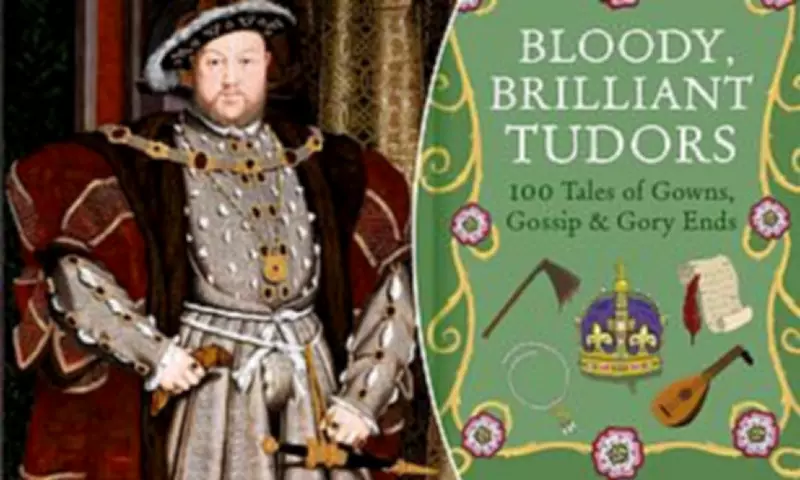
Bloody Brilliant Tudors: A Grisly Journey Through History
Today marks Friday the 13th, a date often associated with superstition and bad luck. However, no matter how much misfortune you might perceive in the air, consider yourself fortunate that you were not born during the Tudor period. Whether you were a pauper, a princess, or even a pea, this was a notoriously dreadful era to be alive.
Henry VIII's Creative Cruelty
In her captivating new book, Bloody, Brilliant Tudors, Elizabeth Goff takes readers on a whirlwind tour through the strangest and most gruesome tales of the period. This rollicking narrative balances humour and horror in equal measure, offering a fresh perspective on a well-documented dynasty.
Henry VIII's penchant for beheading is widely known, but his creativity in executions extended far beyond the axe. He held a particular revulsion for poisoners, condemning them to be boiled alive—a spectacle performed before eager crowds of spectators. The ghosts of these unfortunate souls might find some solace in knowing that Henry's own death was far from dignified.
By the time of his demise, his waist measured a staggering 54 inches, and his putrefying corpse became so gaseous that his lead-lined coffin exploded during the journey to Windsor. Remarkably, Queen Elizabeth I's coffin experienced a similar explosive fate, proving that the Tudors certainly knew how to make a dramatic exit.
The Coveted Role of the Groom of the Stool
One of the delightful aspects of Goff's book is her attention to the side characters in the Tudor soap opera. Take, for example, the groom of the stool—or, in layman's terms, the royal bottom wiper. Surprisingly, this was perhaps the most coveted position in the royal court, often reserved for nobility.
Not only did this role involve the honour of cleaning the royal posterior, but it also placed the holder in charge of monitoring the monarch's health, a responsibility best left to the imagination. It was a position of uncommon trust, providing direct access to the king's ear—and rear.
Catherine Carey, a niece of Anne Boleyn, served in this capacity during the early reign of Queen Elizabeth I and was deeply adored. When she fell ill, the Queen herself tended to her in her final hours. Elizabeth was devastated by her death, but might take comfort in knowing that Carey's descendant now sits on the throne as King Charles III.
Gossipy Tales and Historical Tidbits
The lineage traces through Catherine's daughter, Lettice Knollys, eventually reaching Cecilia Bowes-Lyon, Countess of Strathmore and Kinghorne, who was the mother of Queen Elizabeth The Queen Mother. Unlike many historians, Goff does not shy away from sharing gossipy stories from the era.
For instance, one persistent rumour suggested that Elizabeth died at age ten and was replaced by a red-headed boy of the same age. This was, of course, a misogynistic fabrication devised to explain how a woman could be such a fearless ruler. Goff's inclusion of these 16th-century tidbits offers readers a vivid sense of contemporary sentiments and rumours.
Divided into 100 bite-sized tales, Bloody, Brilliant Tudors is perfect for those looking to revisit the terrible Tudors or simply to remind themselves how lucky we are to live in the present day. The book is available now, providing a compelling blend of education and entertainment.