The Unlucky Legacy of Friday the 13th
The ominous date of Friday the 13th has long been associated with misfortune and superstition, with its roots deeply embedded in historical events and ancient beliefs. From breaking mirrors to encountering black cats, the day is shrouded in a reputation for bringing bad luck that can allegedly last for years. However, the origins of this fear stretch back nearly two millennia, intertwining religious betrayal, medieval curses, and mythological chaos.
Biblical Betrayal: The Last Supper and Crucifixion
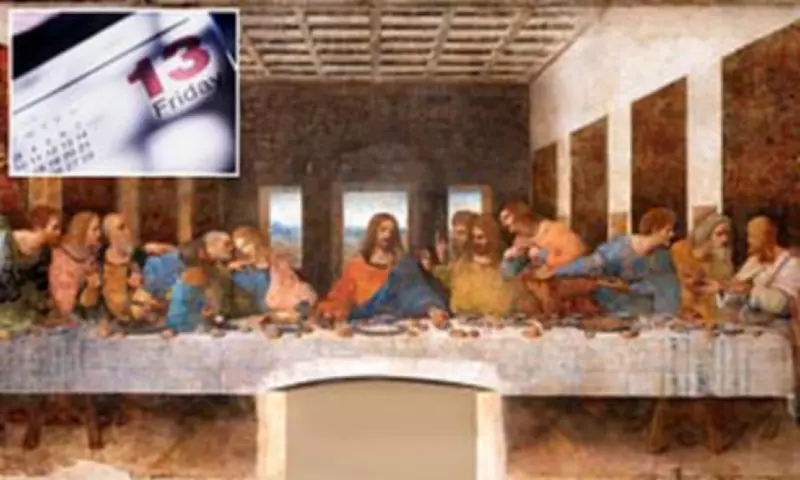
The foundation of Friday the 13th's unlucky stigma is believed to originate from the Last Supper, where Jesus dined with his 12 disciples around 33 AD. During this gathering, Jesus foretold his imminent death and revealed that one among them would betray him. Judas Iscariot, often considered the 13th guest, subsequently betrayed Jesus to the Sanhedrin, the Jewish religious council, leading to his trial before Roman governor Pontius Pilate and crucifixion on a Friday.
This pivotal event cemented the number 13 as a symbol of negativity and misfortune within Christian and Catholic traditions, often linked to death and treachery. The focus on Fridays intensified as Jesus was crucified on Good Friday, prompting Christians to observe fasting and penance in memory of that day. This dual association of Friday and the number 13 laid the groundwork for centuries of superstition.
Medieval Curses: The Knights Templar Massacre
Another significant historical betrayal occurred on Friday the 13th in 1307, when King Philip IV of France and Pope Clement V orchestrated a coordinated mass arrest of the Knights Templar, a powerful Christian military order. The order's leader, Grand Master Jacques de Molay, was captured and burned at the stake. According to legend, de Molay cursed both the king and pope for their betrayal, and both men died within a year, further solidifying the date's infamous reputation.
This medieval event reinforced the notion that Friday the 13th was a day of treachery and dire consequences, weaving it into the fabric of European folklore and fear.
Literary and Cultural References
Despite these ancient origins, the first published reference to Friday the 13th as unlucky appeared in French literature in 1834. In the Revue de Paris magazine, an article by the Marquis de Salvo described a Sicilian count who killed his daughter on Friday the 13th, explicitly stating, "It is always Fridays and the number thirteen that bring bad luck!" This passage is documented in the Library of Congress as one of the earliest ties between the day and number as sources of misfortune.
That same year, the play Les Finesses des Gribouilles by Claude-Louis-Marie de Rochefort-Luçay and Philippe-François Pinel Dumanoir directly referenced Friday the 13th, with a character lamenting, "I was born on a Friday, December 13th, 1813, from which come all of my misfortunes!" These cultural mentions helped popularize the superstition in the modern era.
Norse Mythology: Loki's Chaotic Arrival
The ancient ties to Friday the 13th extend even further back to Norse mythology, where a popular story links the number 13 to chaos and death. In a banquet at Valhalla, 12 gods were gathered when the trickster god Loki arrived uninvited as the 13th guest. Loki then tricked the blind god Hodr into shooting an arrow made of mistletoe at Balder, the god of light and joy, causing Balder's death and plunging the world into darkness and mourning.
The connection to Friday stems from the day being named after Frigg, Balder's mother and the Norse goddess of love and marriage, who was deeply grief-stricken by her son's death. These beliefs originated from oral traditions during the Viking Age (793 to 1066 AD) and were first written down in Iceland in the 13th century. This mythological background even influenced the term Friggatriskaidekaphobia, coined by psychotherapist Donald Dossey in the 1980s to describe the fear of Friday the 13th.
Enduring Superstitions and Modern Impact
Today, Friday the 13th remains a day steeped in superstition, with common beliefs including:
- Breaking a mirror, which is said to bring seven years of bad luck.
- Walking under a ladder, thought to invite misfortune.
- Opening an umbrella indoors, considered a harbinger of trouble.
- Seeing a black cat cross your path, often viewed as an omen of ill fate.
These practices, combined with the historical and mythological origins, have created a lasting legacy of fear. From biblical betrayal to medieval curses and Norse chaos, Friday the 13th continues to captivate and unsettle people worldwide, proving that ancient traditions can still shape modern perceptions of luck and destiny.