In the crowded genre of nature-inspired memoirs, a new contender has landed with a less-than-graceful thud. Candida Meyrick's Be More Bird: Life Lessons from a Hawk attempts to find profound human wisdom in the daily life of a Harris hawk, but the result is a contrived and often puzzling read that struggles to get off the ground.
From Novelist to Hawk Owner: The Book's Origins
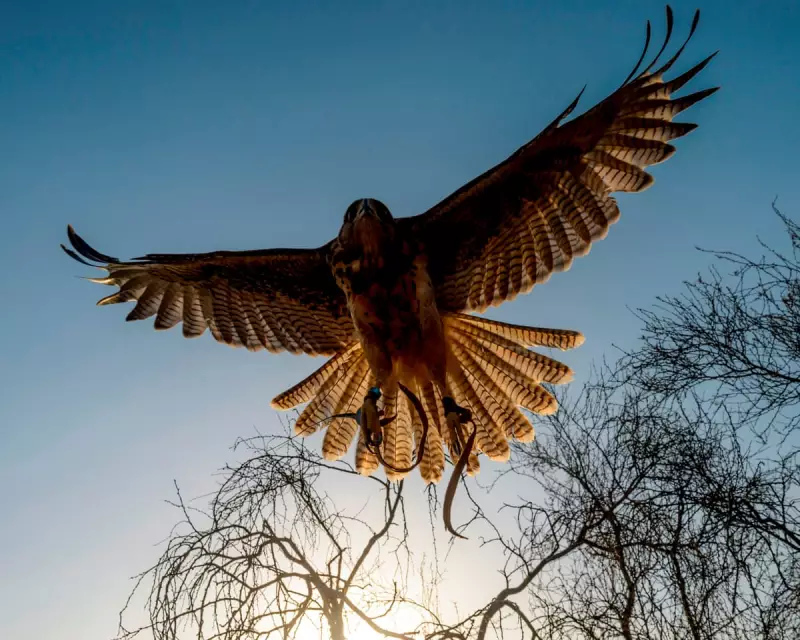
The story begins in July 2020, when the author, better known as novelist Candida Clark, became the owner of a Harris hawk named Sophia Houdini White Wing, or simply 'Bird'. This feathered predator hunts the fields of Dorset near the New Forest, capable of taking down rabbits but showing a marked preference for cock pheasants—and more recently, casting a hungry eye on the family's peacocks.
Meyrick's central premise is that Bird possesses a rich inner life from which we grounded humans can learn. The book is structured around 20 brief "life lessons" extrapolated from the hawk's behaviour. For instance, Bird's refusal to accept substitute snacks from her owner is framed as an exhortation to "stay true to your higher self". Her calmness when threatened by buzzards translates to "hold your ground, you're stronger than you think". Other maxims include "Stay humble. Keep working at it" and the cryptic "Just show up; and when you can't, don't".

The Gripping Reality Overshadowed by Metaphor
The book's fundamental flaw, according to the review, is that this speculative anthropomorphising edges out the genuinely fascinating facts of Bird's physical existence. The reader learns that as a female, Bird is a third larger than any male Harris hawk, and that her mother could bring down a roe deer. The Harris hawk is described as more even-tempered than the "psycho" goshawk and steadier than the speedy peregrine, which is why Bird was originally acquired for Meyrick's young son.
Bird's bodily life is precisely calibrated. Her ideal hunting weight is 2lb 4.2oz. If she reaches 2lb 6.5oz, she becomes "fed up" and may fly off, believing she can survive alone. If she drops to 2lb 2oz, she turns sluggish and waits for handouts—presumably failing her own lesson about staying true to a higher self. The annual moult between the spring and autumn equinoxes, when hunting with hawks is illegal, is another captivating detail. Yet Meyrick layers it with heavy metaphysics, suggesting the hawk sheds "crappy feathers, grudges, grievances, mess, broken bits".
A Genre Feeling Overstretched
The review suggests Meyrick's approach may be an attempt to distance her work from other successful titles in this niche sub-genre. Helen Macdonald's award-winning H is for Hawk (2014), recently adapted into a film starring Claire Foy, covered similar terrain. Chloe Dalton's 2024 memoir Raising Hare also explores lockdown salvation through caring for an orphaned leveret. Whether consciously or not, Be More Bird feels like an attempt to cash in on this trend, resulting in a book that seems forced and plodding.
Ironically, the author occasionally seems aware of her own overreach. She frets that "Bird’s revelations elude me. I grasp at them, hating the rising phrases, pretentious, unwieldy – not what I mean at all." Despite this self-awareness, the "rising phrases" continue to pile up until they collapse under their own weight. Statements like "memory, the gift of memory, is celestial, airborne, just like Bird" leave the reader baffled.
In the end, Be More Bird, published by William Collins at £16.99, is judged a missed opportunity. It sidelines the authentic, thrilling biology of a magnificent raptor in favour of strained self-help clichés. It is, the review concludes, exactly the sort of book about which the formidable Sophia Houdini White Wing might have something stern but ultimately uplifting to say.