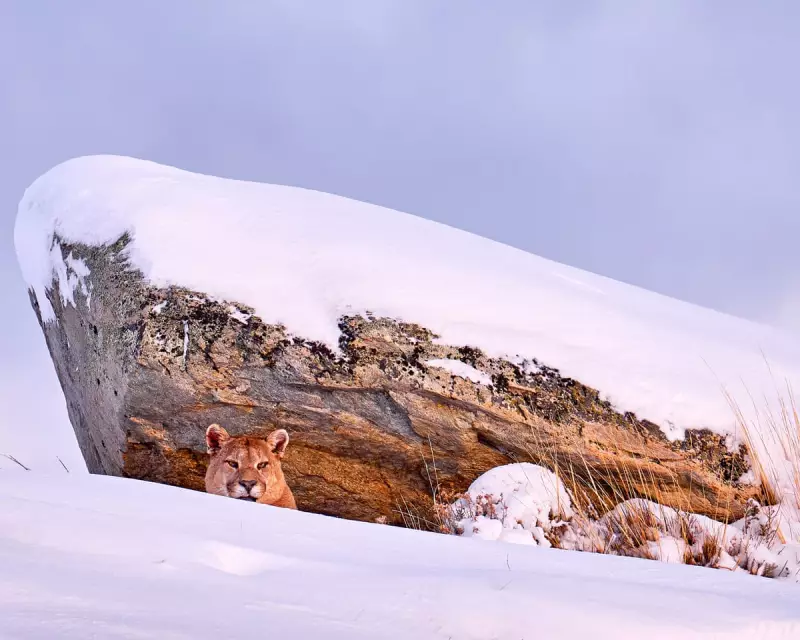
The Puma by Daniel Wiles: A Visceral Tale of Cyclical Violence
The eponymous puma proves to be an elusive presence in Daniel Wiles's compelling new novel. This work serves as a serious and intense historical narrative, delving into themes of paternal struggle and the relentless cycle of violence.
A Father's Journey from England to Patagonia
In the early 1950s, Bernardo, a morally ambiguous figure, relocates with his young son James from England to the Patagonian woods, the place of his own childhood. While James dreams innocently of becoming a footballer, Bernardo is haunted by shadows of his past, recalling a youth marked by twilight hurts and emotional emptiness. This setting establishes a poignant backdrop for the unfolding drama.
Navigating Past and Present Traumas
The plot intricately weaves between present-day Patagonia and past events in Liverpool and France, gradually revealing the violence Bernardo both fled and encountered. As a civilian during the Blitz and a British army medic in Normandy, he walked directly into turmoil. A sudden tragedy in the narrative sharply divides the book, transforming Bernardo's quest for a sense of home into a relentless pursuit of revenge.

Tension and Obsession in the Wilderness
The first part of the novel masterfully builds tension through makeshift father-son domesticity, leaving readers on edge with anticipation. However, the second part, where Bernardo hunts the elusive puma, may feel less gripping to some. It immerses readers in detailed descriptions of brush, bramble, rocks, and mountain ridges, alongside visceral elements like blood, pus, and shivers. Bernardo's life becomes measured in dwindling bullets, with the puma evolving into his sole possession and purpose, sustaining him both physically and mentally.
Critiques of Masculinity and Colonialism
The novel powerfully critiques 20th-century masculinity by depicting the nonhuman world as a victim of Bernardo's unresolved human emotions. Imagistic parallels are drawn between a man shot on a French battlefield and an innocent puma cub seen through a rifle sight, highlighting this displacement of hurt. A brief encounter with a Mapuche man, who resisted Spanish colonisation, contrasts capitalist destruction with sustainable indigenous livelihoods, underscoring themes of exploitation and resilience.
Stylistic Elements and Literary Ambition
While the voice in The Puma is more uneven compared to the compelling Black Country dialect of Wiles's debut, Mercia's Take, the prose remains stylishly elliptical. Sentences like "The massive stretch of metamorphic rock, old and scarred and capped a thin white like flashes of bone amongst skin" blend scientific precision with elegant simile, reflecting the dialect of literary fiction. Though less distinctive than its predecessor, the novel extends Wiles's sincere ambition to explore marginalised histories through viscerally affecting storytelling.
The Puma by Daniel Wiles is published by Swift, priced at £14.99, offering readers a profound exploration of human nature and historical trauma.