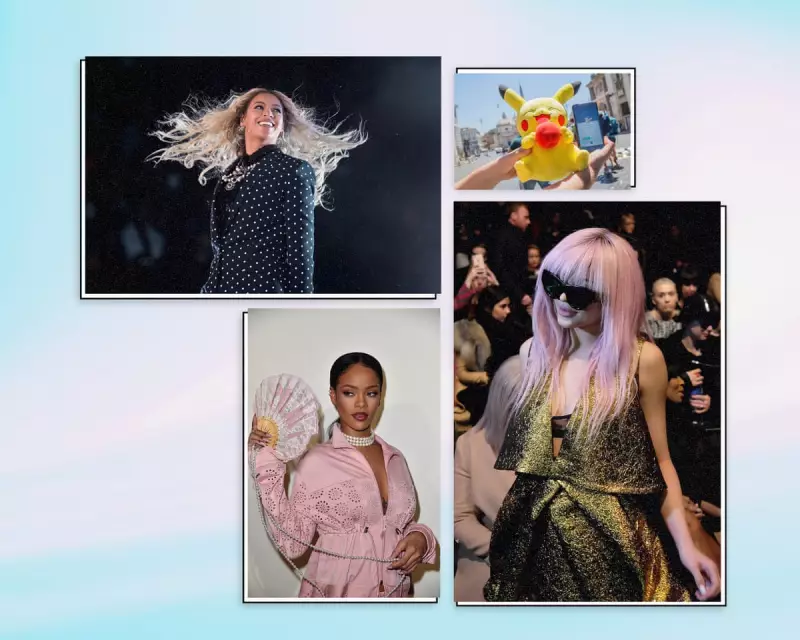
Social media feeds across the UK have been hijacked by a wave of wistful reminiscence, plunging users back into the rose-tinted world of 2016. From Beyoncé's seminal visual album Lemonade and the global phenomenon of Pokémon Go to Rihanna's Anti and Kylie Jenner's iconic millennial pink hair, the digital landscape is echoing with memories from eight years ago.
The Aesthetics of a Bygone Era
The trend is visually unmistakable. Platforms like Instagram and TikTok are flooded with grainy, filtered images of purple sunsets, flower-crown selfies, and specific fashion choices. The uniform of the moment—ripped jeans, plastic chokers, and olive-green utility jackets—has made a startling comeback. Harper's Bazaar famously labelled 2016 "the last good year," a sentiment echoed by everyone from Nobel laureate Malala Yousafzai to a legion of online influencers posting their own decade-old throwbacks.
The poster girl for this resurgence, for better or worse, is Kylie Jenner, who recently shared nostalgic images from that period with the caption, "You just had to be there." The look was defined by millennial pink hair, thigh-high boots paired with T-shirt dresses, and heavy, full-glam makeup that revitalised the cosmetics industry. For many, seeing these styles return provokes a powerful sense of recognition.

A Paradoxical Year: Pop Culture Highs and Global Lows
However, this romantic revision of 2016 raises a critical question: was it truly a golden year? A closer look reveals a far more complex and often dark period. 2016 was the year that kicked off Brexit following the June referendum, saw the shocking election of Donald Trump as US President, and witnessed the return of Pauline Hanson to Australian politics.
Pop culture was also marked by significant loss, with the deaths of beloved icons including David Bowie, Alan Rickman, Carrie Fisher, Prince, and George Michael. It was the year of Jared Leto's poorly received Joker in Suicide Squad, while the #MeToo movement was still a year away from exploding into public consciousness. Furthermore, the colourful, experimental fashion of the early 2010s began to mute into a more corporate, 'girlboss' aesthetic.
Why Are We Yearning for 2016 Now?
So why the collective nostalgia? For millennials who came of age then, it represents a time when adulthood still felt electrifyingly new. It was an era of Stranger Things premiering, Beyoncé's Lemonade and Frank Ocean's Blonde dominating speakers, and sugary pink Starbucks drinks being a dietary staple. Pokémon Go briefly achieved a unique cultural peace, driving people outside en masse. It was, for many, the final moment of pre-2017 optimism before the world seemed to become "so scary, so quickly."
Contrast this with the opening weeks of 2024, already mired in the characteristic chaos of the 2020s, from geopolitical threats to tragic news events. In this context, the siren song of a simpler-seeming past is potent. Yet, as the article argues, losing oneself in a rose-tinted past is not a healthy coping mechanism.
A Potential Antidote to Modern Gloom
Despite its horrors, 2016 did produce great art and cultural moments. This current bout of nostalgia might actually serve as a cure for the new-year funk, offering a reminder of resilience. The sheer awfulness of some 2016 events arguably made many more aware of social and political injustice. The trend encourages a re-appraisal, suggesting we can learn from past mistakes while cheriting the creativity that flourished.
Ultimately, while we reminisce about avocado toast and Snapchat filters, the article concludes on a forward-looking note: 2026 may yet become another beloved year in hindsight. We haven't even had a full month of it yet, leaving the future open for new moments worthy of nostalgia.