American Psycho's Enduring Grip: From 80s Satire to Modern Manosphere
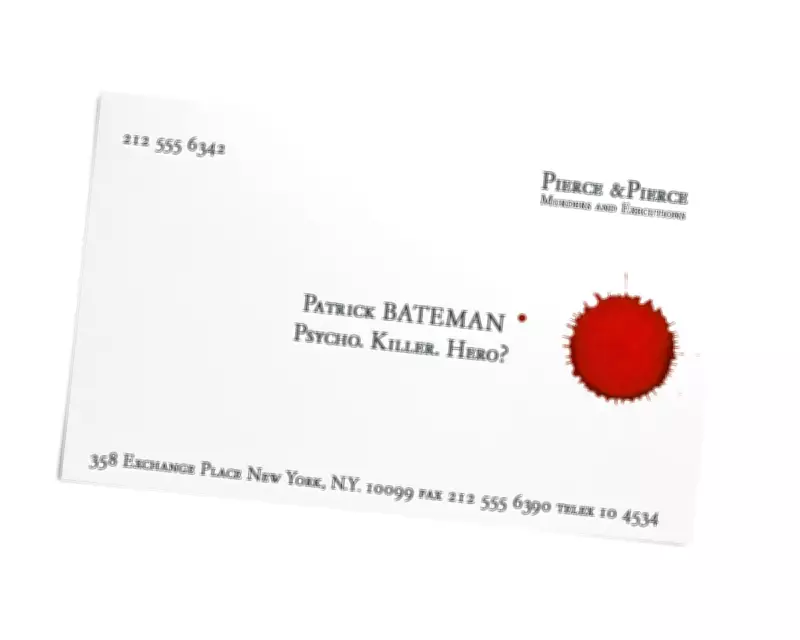
Patrick Bateman’s business card lies discarded in a rehearsal room at the Almeida theatre, a bone-coloured relic with raised black lettering. Nearby, streaks of blood stain the walls and a hand axe rests ominously. It’s a stark reminder that, thirty-five years after Bret Easton Ellis’s novel American Psycho unleashed its protagonist on a rampage of sadistic violence, we’ve never stopped wanting more.
A Legacy of Controversy and Relevance
Since its publication, Bateman has stabbed his way through a Hollywood film, a hit musical, and countless internet memes. A remake starring Austin Butler is in development, but first, a reworked musical returns to its origins at the Almeida. Watching rehearsals, where cast members harmonise around typeface names, one wonders: how does a story about 1980s Wall Street bankers remain so pertinent today? Should we be concerned?
To answer, we must understand Bateman himself. Obsessed with designer labels, male grooming, and absurd fine dining, his existence satirised US capitalism under Reagan. Yet, critics initially missed the satire. The Guardian’s Joan Smith dismissed it as “nasty, brutish and long,” while moral panic over graphic violence led Simon & Schuster to drop it. Ellis kept his advance, finding a new publisher, but controversy lingers—the novel still sells shrink-wrapped in Australia.

The Author's Admission and Cultural Resonance
Ellis once claimed inspiration from his father and Wall Street bankers, but later admitted he was writing about his own “rage … boredom … loneliness, alienation.” He wasn’t alone in relating to these themes. Over time, the novel transcended scandal to become a slow-burn success. Ellis noted it wouldn’t be widely read if it merely attacked yuppie culture; instead, people respond to a “larger feeling” of dark energy.
Arty Froushan, playing Bateman in the new musical, says friends called it the “perfect role” for him. With preppy looks and status-anxiety, Froushan captures Bateman’s neuroses. He believes the internet, especially Instagram, amplifies this “constant neurotic comparison,” fostering disconnection and discouraging empathy. It’s a chilling thought that Bateman’s obsessions—over frown lines or social media holidays—might echo in us all.
Hilarity Amid the Horror
Yet, much of American Psycho’s appeal lies in its unremitting humour. Over 400 pages, plot gives way to bitchy dialogue and running jokes, like discussions on the Patty Winters Show about toddler murderers. At a U2 concert, Bateman ponders if The Edge wears Armani, not knowing who he is. The ultimate joke: nobody recognises anyone, blurring identities into one.
Mary Harron’s film condensed the story into 100 minutes, incorporating Bateman’s music reviews with his violence, defining the public’s view. But the novel’s length drags readers into Bateman’s inane world, masterfully maintained by Ellis, who started writing at 22. Influenced by style mags like GQ, Ellis’s detached tone mirrors today’s TikTok voices narrating mundane routines.
Crashing into Modern Debates
American Psycho enraged feminists on release, and its gratuitous sex and violence scenes might not pass today’s scrutiny. Ellis researched autopsies, depicting maimed sex workers and frozen heads. Often, Bateman’s intrusive thoughts chill more than his actions, like casually mentioning a rape before discussing venue acoustics.
Reading it feels like a guilty secret—not something for a first date or a commute. But is it misogynistic? Harron saw her film as an attack on male fragility, asking: what’s going on with men now? This question resonates widely, from Oxford’s Bullingdon Club—linked to prime ministers Cameron and Johnson—to Andrew Tate’s followers, who fetishise status and dehumanise women.
From Satire to Aspiration
Director Rupert Goold, restaging the musical as his Almeida swansong, says the book has a “Dostoevsky quality” evoking loneliness, mapping onto modern malaises like the manosphere. He cites fitness influencers living Bateman-esque routines. Ironically, Bateman has become an aspirational figure for those he mocks, hailed as a “sigma male” in memes, despite his need to fit in.

This misunderstanding stems from surface-level readings. Kanye West drew inspiration from Bateman’s apartment, and Ron DeSantis used Bateman footage in an anti-LGBT video. Bateman’s idol, Donald Trump, now mirrors him in obsession with surface and constructed realities. Like Bateman, Trump could “shoot somebody” and get away with it, hiding in plain sight.
A Lethal Satire for Our Times
Today’s politics often seem “beyond satire,” but Ellis warned where hyper-masculine capitalism was heading. Distracted by gore, we missed the message. Now, with real-life analogues in power, American Psycho stands as a lethal satire, its dark comedy more pertinent than ever in an era of incels, tech bros, and fractured identities.
American Psycho runs at the Almeida theatre, London, until 14 March, inviting audiences to confront its enduring, unsettling relevance.